Occupational health has become an essential component of modern workforce management as industries prioritize employee safety, productivity, and long term well-being. Rising workplace health risks and stronger regulatory oversight continue to accelerate investments in specialized therapeutic solutions. Growing awareness of preventive healthcare, mental wellness, and occupational disease management is creating significant opportunities across healthcare systems and industrial sectors.
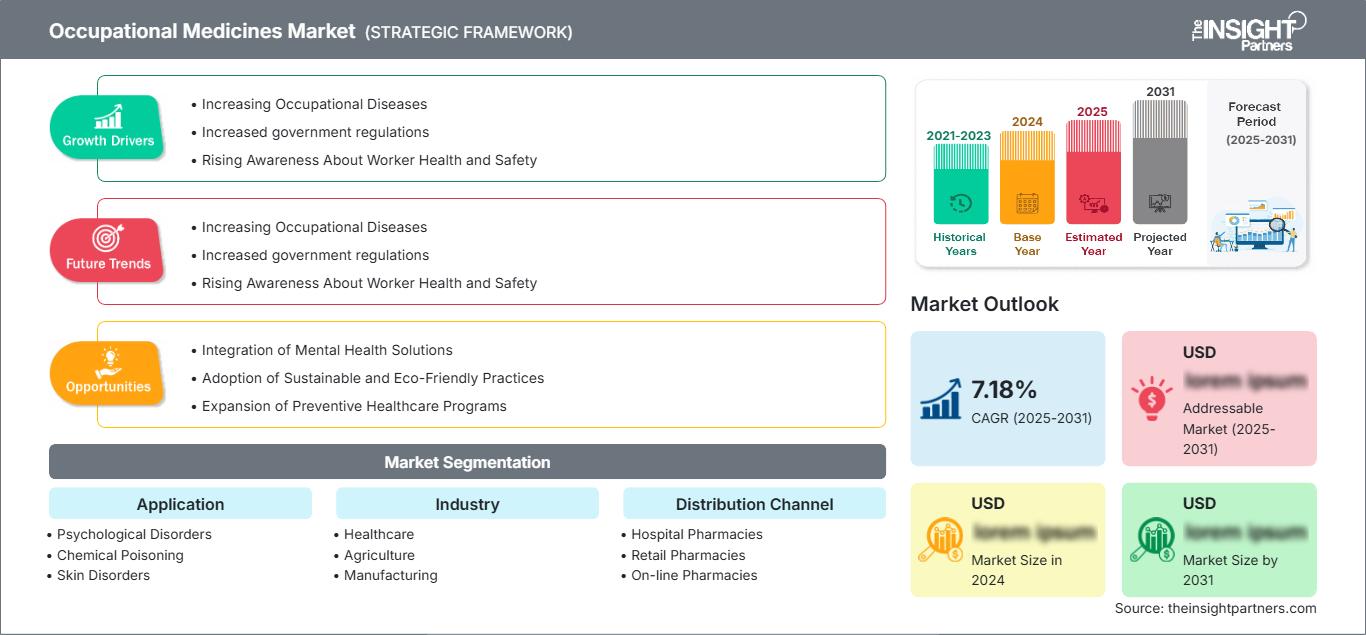
The Occupational Medicines Market is projected to grow from US$ 5.6 billion in 2025 to US$ 9.1 billion by 2034, registering a CAGR of 5.55% during the forecast period from 2026 to 2034. Growth is supported by increasing occupational diseases, expanding workplace health regulations, and the adoption of preventive healthcare initiatives across industries. The market covers applications including psychological disorders, chemical poisoning, skin disorders, chronic respiratory diseases, musculoskeletal disorders, and other occupational health conditions. Distribution continues through hospital pharmacies, retail pharmacies, and online pharmacies, ensuring wider accessibility to treatments.
Get Sample PDF @ https://www.theinsightpartners.com/sample/TIPRE00008680
Rising Occupational Diseases Driving Industry Expansion
The increasing prevalence of work-related illnesses remains one of the strongest growth drivers for the Occupational Medicines Market. Rapid industrialization, urbanization, and expanding manufacturing activities have increased employee exposure to hazardous chemicals, dust, toxic fumes, and repetitive physical strain.
Workers employed in construction, mining, manufacturing, agriculture, petroleum, and healthcare industries face elevated risks of respiratory disorders, musculoskeletal injuries, skin diseases, and occupational poisoning. As employers recognize the financial and operational impact of workplace illnesses, investments in preventive medications and specialized treatment solutions continue to rise.
Additionally, growing awareness regarding occupational cancers and chronic workplace illnesses is encouraging pharmaceutical companies to develop targeted therapies designed specifically for occupational healthcare requirements.
Government Regulations and Workplace Safety Programs Fuel Growth
Government agencies worldwide continue strengthening workplace health regulations to minimize occupational injuries and chronic illnesses. Regulatory organizations encourage regular health screenings, vaccination programs, occupational surveillance, and mandatory employee safety standards.
Increasing compliance requirements are encouraging employers to implement workplace medical programs that include preventive medications, early diagnosis, rehabilitation, and long term disease management. Workers’ compensation programs also contribute to higher adoption of occupational medicines for treating chronic workplace injuries.
Healthcare providers and employers increasingly collaborate to establish integrated occupational health services that improve employee outcomes while reducing healthcare costs. These developments continue creating favorable conditions for sustained industry expansion.
Preventive Healthcare and Mental Health Solutions Create New Opportunities
Preventive healthcare has emerged as a major focus within occupational medicine. Organizations increasingly invest in employee wellness initiatives that include routine medical examinations, vaccination campaigns, ergonomic workplace improvements, nutrition counseling, and health education programs.
Mental health has also become an important component of occupational healthcare. Rising workplace stress, anxiety, depression, burnout, and sleep disorders are encouraging employers to include psychological support services alongside pharmaceutical treatments.
The integration of mental health medications, counseling services, and digital health monitoring platforms presents substantial opportunities for pharmaceutical companies and healthcare providers seeking to expand their occupational health portfolios.
Sustainability is also influencing product development. Manufacturers are exploring environmentally responsible production methods, biodegradable packaging, and safer formulations that align with corporate sustainability objectives while protecting employee health.
Market Segmentation Highlights
The Occupational Medicines Market is segmented across several major categories:
By Application
- Psychological Disorders
- Chemical Poisoning
- Skin Disorders
- Chronic Respiratory Diseases
- Musculoskeletal Disorders
- Others
By Industry
- Healthcare
- Agriculture
- Manufacturing
- Construction
- Petroleum and Mining
- Others
By Distribution Channel
- Hospital Pharmacies
- Retail Pharmacies
- Online Pharmacies
Among applications, musculoskeletal disorders and chronic respiratory diseases continue generating strong demand due to their widespread occurrence in physically demanding occupations. Hospital pharmacies remain a major distribution channel because of specialized treatment requirements, while online pharmacies continue gaining momentum through improved accessibility and digital healthcare adoption.
Regional Landscape and Competitive Environment
North America maintains a leading position due to advanced occupational healthcare infrastructure, stringent workplace safety regulations, and growing awareness regarding employee wellness. The United States continues to represent a significant contributor owing to increasing occupational disease incidence and comprehensive regulatory frameworks.
Europe follows closely with well-established occupational safety policies and preventive healthcare initiatives. Meanwhile, Asia Pacific is expected to witness substantial growth driven by expanding industrialization, increasing manufacturing activities, improving healthcare infrastructure, and rising investments in worker safety programs across China, India, Japan, and Southeast Asia.
Major companies operating in the Occupational Medicines Market include:
- Eli Lilly and Company
- Bristol-Myers Squibb Company
- AstraZeneca PLC
- Amgen Inc.
- Johnson & Johnson
- Novartis AG
- Pfizer Inc.
- Sanofi
- Teva Pharmaceutical Industries Ltd.
- AbbVie Inc.
These organizations continue investing in research and development, product innovation, strategic collaborations, and portfolio expansion to strengthen their competitive positions and address evolving occupational healthcare needs.
Interested in Purchasing this Report? Click here @ https://www.theinsightpartners.com/buy/TIPRE00008680
Future Outlook
The Occupational Medicines Market is expected to demonstrate steady growth through 2034 as governments, employers, healthcare providers, and pharmaceutical companies place greater emphasis on employee health and preventive care. Expanding mental health initiatives, stronger workplace safety regulations, technological advancements in occupational healthcare, and increasing adoption of preventive medical programs will continue supporting long term industry development.
Related Report:
1) Antibody Drug Conjugates Market Analysis, Size, and Share by 2031
2) Pharmaceutical Excipients Market Growth, Trends & Demand by 2034
3) Enteral Nutrition Market Strategies, Top Players, Growth Opportunities
About Us –
The Insight Partners provides comprehensive syndicated and tailored market research services in the healthcare, technology, and industrial domains. Renowned for delivering strategic intelligence and practical insights, the firm empowers businesses to remain competitive in ever-evolving global markets.
Contact Us:
Ankit Mathur | The Insight Partners
E-mail: ankit.mathur@theinsightpartners.com
Phone: +1-646-491-9876
Also Available in : Korean German Japanese French Chinese Italian Spanish
