The Catalog Management Systems is gaining importance as businesses increasingly depend on accurate, centralized, and consistent product and service information across multiple digital and physical channels. Catalog management systems enable organizations to create, organize, enrich, update, and distribute catalog information efficiently. As e-commerce, omnichannel retail, digital marketplaces, and online B2B commerce continue to expand, companies are investing in technologies that can simplify product information management and improve customer experiences.
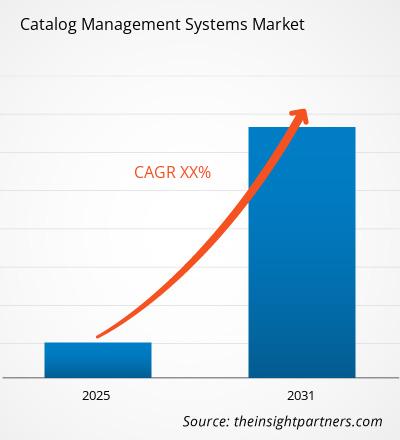
The Catalog Management Systems market size is expected to reach US$ 4.91 Billion by 2034 from US$ 2.08 Billion in 2025. The market is anticipated to register a CAGR of 9.99% during the forecast period 2026–2034.
Why Are Catalog Management Systems Becoming Important?
Modern customers expect detailed and accurate product information before making purchasing decisions. Missing specifications, outdated prices, incorrect product descriptions, or inconsistent images can negatively affect customer confidence. Catalog management platforms address these challenges by allowing businesses to manage product information from a centralized environment.
The increasing complexity of product portfolios is another important factor. Enterprises operating across multiple countries and markets may manage thousands or millions of products with different attributes, currencies, languages, pricing structures, and regulatory requirements. Manual catalog management becomes increasingly difficult as product volumes increase. Automation, workflow management, validation, and centralized governance therefore create significant value for organizations.
Get Sample PDF of the report @ https://www.theinsightpartners.com/sample/TIPRE00005956
What Are the Key Market Drivers?
The expansion of e-commerce is a major driver of demand for catalog management systems. Online retailers must continuously update product information while managing rapidly changing assortments and customer expectations. Centralized catalog platforms help businesses improve product discovery and ensure that shoppers receive relevant information.
Digital transformation initiatives across industries are also encouraging adoption. Catalog management is no longer limited to traditional retailers. Manufacturers, telecommunications companies, financial institutions, travel businesses, distributors, and technology companies can use catalog systems to organize complex product and service portfolios.
Another important driver is the increasing use of cloud-based technologies. Cloud deployment allows organizations to access catalog information from different locations and integrate catalog platforms with other enterprise applications. It can also provide scalability as companies add products, sales channels, users, and geographic markets.
Artificial intelligence and automation are further influencing the market. AI-enabled technologies can support product categorization, data enrichment, duplicate detection, content generation, attribute mapping, and data-quality validation. These capabilities can reduce manual work while improving the consistency and completeness of product information.
How Is E-Commerce Influencing Market Growth?
E-commerce has transformed product catalogs from static documents into dynamic digital assets. Businesses need catalogs that can respond quickly to changes in inventory, pricing, promotions, product specifications, and customer preferences.
Catalog management systems support this transformation by connecting product information with e-commerce platforms, marketplaces, enterprise resource planning systems, customer relationship management systems, and other applications. Integration capabilities enable organizations to move product information through their digital ecosystem more efficiently.
Personalization is another emerging area. Businesses increasingly want to display product information based on customer segments, geographic locations, purchasing behavior, and channel requirements. Catalog management systems can provide the structured product data required for personalized and context-aware commerce experiences.
Catalog Management Systems Market Segmentation
The Catalog Management Systems Market can be analyzed across several dimensions, including component, deployment, organization size, application, and industry.
By component, the Catalog Management Systems Market generally includes solutions and services. Solutions provide the core capabilities required to create, manage, organize, and distribute catalog information, while services can include implementation, integration, consulting, maintenance, and support.
By deployment, organizations can choose between cloud-based and on-premises models. Cloud deployment is gaining attention because of its scalability, accessibility, and potentially lower infrastructure requirements. On-premises deployment continues to serve organizations that require greater control over their infrastructure and data environment.
By organization size, large enterprises and small and medium-sized enterprises represent important customer groups. Large enterprises typically manage complex and extensive product portfolios, while SMEs are increasingly adopting cloud-based platforms to improve digital commerce capabilities without making substantial investments in internal infrastructure.
By application and industry, catalog management systems have relevance across retail and e-commerce, IT and telecommunications, BFSI, manufacturing, media and entertainment, travel and hospitality, and other sectors. Retail and e-commerce remain particularly important because of the direct relationship between product information quality and digital purchasing experiences.
What Opportunities Exist in the Market?
The growing adoption of marketplaces presents significant opportunities for catalog management vendors. Businesses selling through multiple marketplaces need to adapt product information to different platform requirements. Automated catalog transformation and synchronization can help sellers reduce operational workloads.
Another opportunity lies in cross-border commerce. International expansion requires businesses to manage multiple languages, currencies, regional regulations, taxation requirements, and market-specific product attributes. Advanced catalog platforms can help organizations manage these complexities from centralized environments.
AI-powered catalog management represents another important opportunity. Automated product description generation, image analysis, attribute extraction, classification, and data-quality monitoring could make catalog operations more efficient. As businesses increase their product portfolios, intelligent automation may become increasingly important.
Get the Premium Research Report @ https://www.theinsightpartners.com/buy/TIPRE00005956
What Challenges Could Limit Market Expansion?
Despite its growth potential, the Catalog Management Systems Market faces several challenges. Integrating catalog platforms with existing enterprise systems can be complex, particularly for organizations operating legacy infrastructure. Poor-quality data can also reduce the effectiveness of catalog management systems. Companies may need significant data-cleaning and governance initiatives before achieving the expected benefits.
Security and data privacy are additional considerations, especially when catalog systems are connected to multiple enterprise applications and cloud environments. Organizations must establish appropriate access controls, governance policies, and data-management processes.
Cost can also influence adoption among smaller businesses. While cloud-based solutions can reduce infrastructure requirements, implementation, integration, customization, and ongoing subscription costs may still represent challenges for organizations with limited technology budgets.
Regional Outlook
North America is an important market for catalog management systems due to the presence of established e-commerce businesses, technology companies, and digitally mature enterprises. The region’s focus on omnichannel commerce and enterprise digital transformation supports demand for catalog management technologies.
Europe is also expected to provide significant opportunities, supported by the expansion of digital commerce and the need for structured product information across multiple markets and languages.
Asia Pacific represents an important growth region as e-commerce adoption, smartphone usage, digital payments, and online marketplaces continue to expand. Countries across the region are investing in digital infrastructure, creating opportunities for catalog management providers.
Latin America and the Middle East & Africa are also developing markets, with increasing digitalization and growing online commerce creating additional demand for solutions that can manage product information efficiently.
Competitive Landscape
The competitive environment includes established enterprise software providers as well as specialized catalog and product information management companies. Vendors are focusing on cloud capabilities, artificial intelligence, integration, automation, data quality, scalability, and omnichannel distribution to differentiate their offerings.
- Claritum
- Coupa Software Inc.
- IBM Corporation
- Mirakl
- Oracle Corporation
- Proactis Holdings Plc
- Salsify, Inc.
- SAP Ariba (SAP SE)
- ServiceNow, Inc.
- Telefonaktiebolaget LM Ericsson
Future Outlook
The Catalog Management Systems Market is expected to continue evolving as businesses move toward increasingly data-driven commerce operations. Product information is becoming a strategic asset rather than simply an operational requirement. Companies need accurate, complete, consistent, and channel-ready information to compete in increasingly fragmented digital markets.
About The Insight Partners
The Insight Partners is a global leader in market research, delivering comprehensive analysis and actionable insights across diverse industries. The company empowers decision-makers with data-driven intelligence to navigate evolving markets and accelerate growth.
Contact Us:
- Contact Person: Ankit Mathur
- E-mail: ankit.mathur@theinsightpartners.com
- Phone: +1-646-491-9876
Also Available in :
Korean German Japanese French Chinese Italian Spanish
