The global Export Control Management Solution is entering a period of strong expansion as organizations face increasingly complex international trade regulations, sanctions, licensing requirements, and compliance obligations.
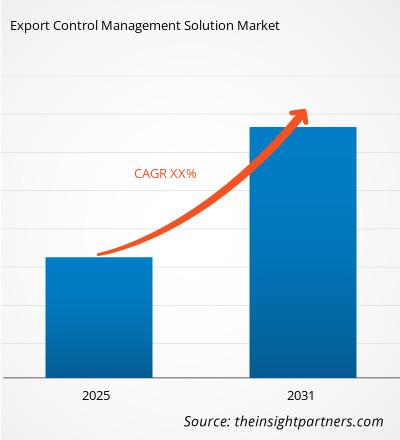
According to the latest market analysis, The global Export Control Management Solution Market size is projected to reach US$ 4.61 billion by 2034 from US$ 1.42 billion in 2025. The market is anticipated to register a CAGR of 15.82% during the forecast period 2026-2034.
Why Is the Export Control Management Solution Market Growing?
One of the primary factors driving market growth is the increasing complexity of global export regulations. Companies operating across multiple countries must navigate different regulatory frameworks, restricted-party lists, licensing requirements, embargoes, sanctions, and product-control classifications. Manual compliance processes can be time-consuming and increase the possibility of human error.
Organizations are therefore adopting specialized software to automate compliance workflows and maintain consistent controls across international operations. Modern solutions can integrate with enterprise resource planning, supply chain, customer relationship management, and logistics systems, enabling organizations to evaluate transactions before goods or technologies are transferred across borders.
Get Sample PDF of the report @ https://www.theinsightpartners.com/sample/TIPRE00019393
What Are the Key Trends in the Market?
- AI-Powered Compliance and Risk Assessment:-Artificial intelligence is emerging as an important technology trend in export control management. AI-enabled systems can analyze large volumes of transaction and product data, identify potential compliance risks, support classification activities, and prioritize transactions that require additional review.
- Real-Time Monitoring and Analytics:-Real-time data analytics is another major development. Businesses increasingly need visibility into transactions, customers, products, destinations, and regulatory requirements. Real-time monitoring can help identify potentially restricted transactions before they are completed.
- Cloud-Based and Integrated Platforms:-Cloud deployment is becoming increasingly attractive because it can provide scalable access to compliance capabilities across geographically distributed operations. Cloud-based systems can also simplify updates when regulatory requirements or restricted-party lists change.
How Is the Market Segmented?
The Export Control Management Solution Market is analyzed by component, enterprise size, and industry vertical. By component, the market includes solutions and services. Solutions provide the software capabilities needed to manage export-control processes, while services support implementation, integration, consulting, maintenance, and related activities.
By enterprise size, the Export Control Management Solution Market is divided into small and medium-sized enterprises (SMEs) and large enterprises. Large organizations with extensive international operations often require sophisticated compliance platforms because of their large transaction volumes and geographically distributed supply chains. Meanwhile, SMEs are increasingly adopting cloud-based solutions that provide compliance capabilities without requiring extensive internal infrastructure.
By industry vertical, the report covers healthcare, transportation and logistics, consumer goods and retail, and other industries. Each sector faces different compliance requirements depending on the products, technologies, destinations, and trading partners involved.
What Opportunities Are Emerging for Solution Providers?
The increasing need for streamlined compliance processes creates substantial opportunities for technology providers. Businesses want platforms that can simplify complex regulations and provide clear workflows for compliance teams.
One significant opportunity is the development of user-friendly platforms for real-time export tracking. Easy-to-use interfaces can help organizations improve adoption while providing compliance professionals with centralized visibility into transactions.
Another opportunity is AI-powered risk assessment. As businesses process larger volumes of international transactions, automated risk scoring and intelligent alerts can help compliance teams focus on higher-risk activities.
The expansion of global trade and increasingly complex supply chains also creates opportunities for providers that can offer solutions capable of supporting multiple jurisdictions and regulatory frameworks.
Get the Premium Research Report @ https://www.theinsightpartners.com/buy/TIPRE00019393
Which Regions Are Expected to Lead?
The Export Control Management Solution Market is geographically analyzed across North America, Europe, Asia-Pacific, South and Central America, and the Middle East and Africa. North America represents an important market because of its established technology ecosystem, extensive international trade activity, and strong focus on export compliance. The United States is specifically identified as a key market in the report.
Europe is also an important region because companies operating within and outside the European market must manage complex trade and compliance requirements. Asia-Pacific is expected to provide attractive growth opportunities as international trade, manufacturing activity, and digital transformation continue to expand.
What Challenges Could Affect Market Development?
Despite strong growth prospects, organizations face several challenges when implementing export control management solutions. Integration with legacy enterprise systems can be complex, particularly for organizations with highly customized IT environments.
Another challenge is maintaining accurate regulatory data. Export regulations and restricted-party requirements can change frequently, requiring businesses to keep their compliance systems updated. Organizations must also ensure that employees understand how to use automated tools effectively.
Data quality, cybersecurity, implementation costs, and the need for specialized compliance expertise may also influence purchasing decisions, particularly among smaller organizations.
Who Are the Key Market Players?
- AEB
- BMC Software, Inc.
- eCustoms
- FORMAT Software Service GmbH
- GTKonnect Inc.
- MIC Customs Solutions
- MIQ Logistics
- OCR Services, Inc.
- Precision Software
- Thomson Reuters
These companies compete through software capabilities, regulatory content, automation, integration, analytics, professional services, and geographic coverage. As demand for automated compliance continues to increase, vendors are expected to focus on AI, cloud platforms, real-time monitoring, and broader enterprise integration.
Future Outlook
The Future market development will likely be shaped by artificial intelligence, cloud computing, real-time analytics, automation, and integration with enterprise systems. Companies that invest in proactive export compliance can potentially reduce regulatory exposure while improving the efficiency and transparency of international trade operations.
About The Insight Partners
The Insight Partners is a global leader in market research, delivering comprehensive analysis and actionable insights across diverse industries. The company empowers decision-makers with data-driven intelligence to navigate evolving markets and accelerate growth.
Contact Us:
- Contact Person: Ankit Mathur
- E-mail: ankit.mathur@theinsightpartners.com
- Phone: +1-646-491-9876
Also Available in :
Korean German Japanese French Chinese Italian Spanish
