Barometric pressure sensors are precision devices designed to measure atmospheric pressure for weather monitoring, industrial automation, aviation, renewable energy, environmental sensing, and smart electronic applications. Modern barometric sensors utilize advanced MEMS technology, digital signal processing, and low-power architectures to deliver highly accurate measurements while maintaining compact size and long-term stability. These sensors are increasingly deployed in automated weather stations, drones, smartphones, aircraft systems, wind farms, industrial control systems, and Internet of Things (IoT) devices where precise atmospheric pressure measurement is critical for operational efficiency and decision-making.
Market Overview
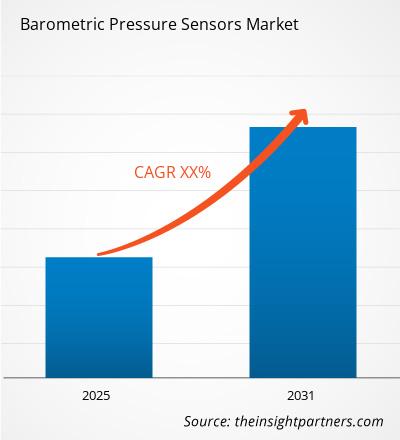
The Barometric Pressure Sensors Market was valued at US$ 1.65 Billion in 2025 and is projected to reach US$ 3.05 Billion by 2034, registering a CAGR of 7.03% during the forecast period 2026–2034. Market growth is driven by increasing deployment of automated weather monitoring systems, renewable energy installations, aviation infrastructure, industrial automation, and environmental sensing networks. Continuous advancements in MEMS sensor technology, digital calibration, wireless connectivity, and low-power electronics continue supporting long-term market expansion.
Key Market Insights
- Market Size (2025): US$ 1.65 Billion
- Forecast Market Size (2034): US$ 3.05 Billion
- CAGR (2026–2034): 7.03%
- Key Growth Driver: Rising demand for accurate atmospheric pressure monitoring across weather forecasting, renewable energy, and industrial applications
- Major Trend: Increasing adoption of miniature MEMS-based digital pressure sensors with enhanced calibration and reliability
- Forecast Period: 2026–2034
Get a Sample PDF of the Report: https://www.theinsightpartners.com/sample/TIPRE00021260
Market Drivers
Expansion of Weather Monitoring Networks
Governments and meteorological agencies continue expanding automated weather stations and environmental monitoring infrastructure, increasing demand for high-precision barometric pressure sensors.
Growth of Renewable Energy Projects
Wind energy developers require accurate atmospheric pressure data to optimize turbine performance, improve forecasting, and support efficient site assessment.
Increasing Industrial Automation
Industrial facilities are integrating pressure sensing technologies into automation systems, environmental controls, and process monitoring to improve operational efficiency.
Advancements in Aviation and Environmental Monitoring
Aircraft weather systems, unmanned aerial vehicles, and environmental observation networks increasingly rely on reliable pressure sensors for navigation, forecasting, and safety applications.
Market Trends
Miniaturized MEMS Sensor Technology
Manufacturers are developing smaller, lighter, and more energy-efficient MEMS pressure sensors suitable for portable electronics and IoT applications.
Enhanced Digital Calibration
Advanced factory calibration techniques are improving measurement accuracy, long-term stability, and resistance to environmental drift.
Wireless Environmental Monitoring
Wireless sensor networks are expanding the deployment of barometric pressure sensors across remote weather stations, industrial sites, and smart infrastructure.
Improved Environmental Durability
Modern sensor designs feature enhanced moisture resistance, rugged enclosures, and improved protection against temperature fluctuations for reliable outdoor operation.
Get the Premium Research Report @ https://www.theinsightpartners.com/buy/TIPRE00021260
Regional Analysis
North America
North America accounted for approximately 32%–35% of the global market in 2025 and is projected to grow at a CAGR of 6.6%–7.1% during 2026–2034. Market growth is supported by automated weather networks, aviation observation systems, wind energy development, and environmental monitoring modernization. The US represented approximately 78%–82% of North America’s market in 2025 and is expected to register a CAGR of 6.7%–7.2%, driven by national weather observation programs, aviation infrastructure, industrial automation, and climate resilience initiatives.
Europe
Europe held approximately 24%–27% of the market in 2025 and is anticipated to grow at a CAGR of 6.2%–6.8%. Germany, the UK, France, Italy, and Spain continue investing in renewable energy, weather forecasting systems, environmental monitoring, and industrial sensing technologies.
Asia-Pacific
Asia-Pacific captured approximately 28%–31% of the global market in 2025 and is projected to register the fastest regional growth with a CAGR of 7.5%–8.2% during 2026–2034. China, Japan, South Korea, India, and Australia continue expanding smart weather networks, renewable energy projects, industrial automation, and environmental monitoring infrastructure, creating significant opportunities for barometric pressure sensor manufacturers.
Middle East and Africa
The Middle East and Africa are steadily increasing investments in weather observation systems, renewable energy infrastructure, environmental monitoring, aviation modernization, and climate resilience initiatives, supporting long-term demand for advanced barometric pressure sensing technologies.
Segment Analysis
By Application
The Weather Networks segment accounted for approximately 58%–62% of the market in 2025 and is projected to grow at a CAGR of 6.5%–7.0% through 2034. Continued deployment of automated weather stations, meteorological observation systems, and environmental monitoring networks supports the segment’s dominant market position.
By End Use
The Wind Industry segment represented approximately 38%–42% of the market in 2025 and is expected to register the fastest growth with a CAGR of 7.4%–8.1%. Increasing investment in wind farm development, resource assessment, turbine optimization, and renewable energy expansion continues driving significant market growth.
Competitive Landscape
The Barometric Pressure Sensors Market remains moderately competitive as MEMS sensor manufacturers, industrial instrumentation companies, and environmental monitoring solution providers continue investing in advanced sensing technologies and digital integration. Companies are strengthening their competitive positions through innovations in low-power MEMS architectures, factory calibration, wireless connectivity, ruggedized sensor packaging, moisture-resistant designs, and intelligent pressure monitoring solutions. Strategic collaborations among weather monitoring agencies, renewable energy developers, industrial automation providers, aerospace companies, and IoT solution providers continue accelerating commercialization across multiple high-growth industries.
Key Players
- Apogee Instruments, Inc.
- All Weather, Inc.
- Bosch Sensortec GmbH
- TE Connectivity Germany GmbH
- Fluigent SA
- Infineon Technologies AG
- Murata Manufacturing Co., Ltd.
- NovaLynx Corporation
- OMEGA Engineering, Inc.
- Sensirion AG
Emerging Trends
The barometric pressure sensors industry is advancing through MEMS miniaturization, digital pressure sensing technologies, low-power electronics, wireless environmental monitoring, factory-calibrated sensor modules, rugged outdoor enclosures, advanced humidity protection, intelligent data acquisition systems, IoT-enabled weather monitoring, and high-precision atmospheric measurement platforms. Manufacturers are developing next-generation pressure sensors that deliver greater measurement accuracy, improved long-term stability, enhanced energy efficiency, reduced sensor drift, stronger environmental resistance, seamless digital integration, simplified installation, and reliable performance in demanding outdoor conditions. These technological advancements are expected to create significant growth opportunities across meteorology, renewable energy, aviation, industrial automation, environmental monitoring, smart infrastructure, agriculture, and connected IoT applications throughout the forecast period.
Future Outlook
The future outlook for the Barometric Pressure Sensors Market remains positive as governments, industries, and renewable energy developers continue investing in weather monitoring infrastructure, environmental data collection, industrial automation, and climate resilience initiatives. Continued innovation in MEMS technology, digital calibration, wireless connectivity, and intelligent sensing platforms is expected to support sustained market growth through 2034.
Related Market Research Reports
Hub Motor Market Size, Share & Forecast by 2034
Load Balancer Market Share, Demand & Growth by 2034
High Temperature Semiconductor Devices Market Growth, Size & Forecast by 2034
Driving Training Simulator Market Report | Size, Share by 2028
About The Partners
The Insight Partners is a Insight global leader in market research, delivering comprehensive analysis and actionable insights across diverse industries. The company empowers decision-makers with data-driven intelligence to navigate evolving markets and accelerate growth.
Contact Us:
- Contact Person: Ankit Mathur
- E-mail: ankit.mathur@theinsightpartners.com
- Phone: +1-646-491-9876
Also Available in :
