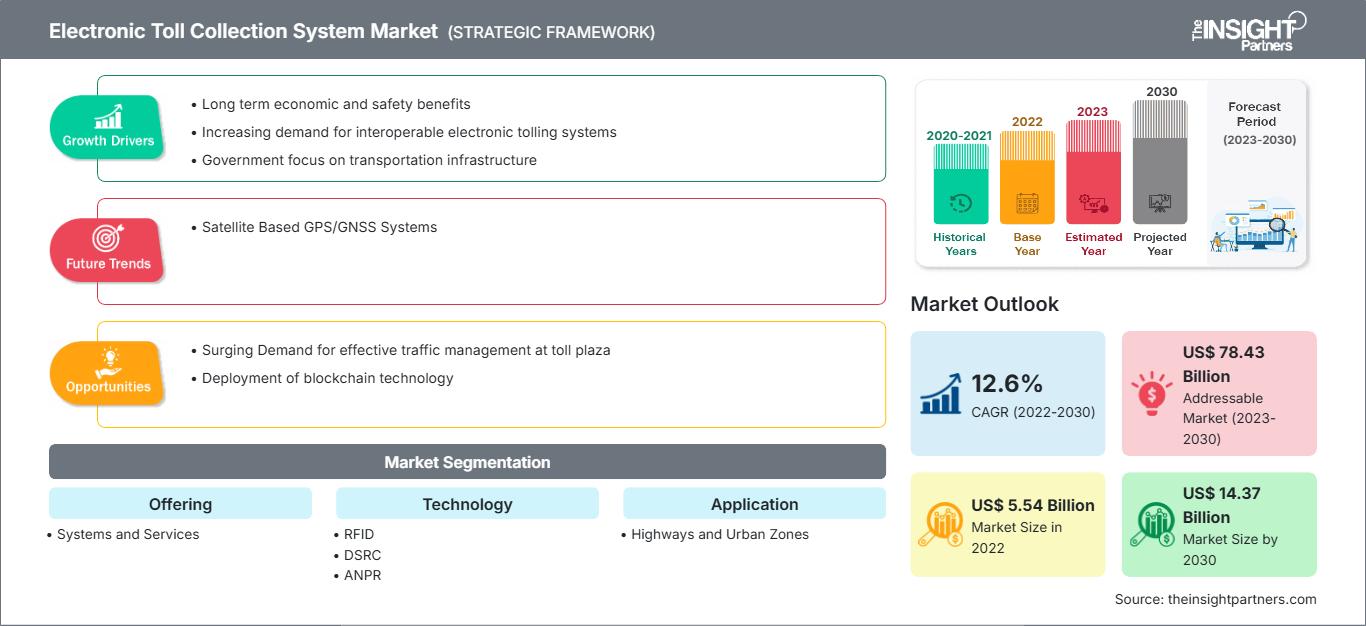
The transportation infrastructure ecosystem is rapidly evolving as governments, highway authorities, and private concessionaires prioritize seamless mobility, digital payments, and intelligent traffic management. Electronic toll collection systems have become a fundamental part of this transformation by enabling faster vehicle movement, minimizing congestion, improving operational efficiency, and supporting sustainable transportation initiatives. Growing investments in smart highways, connected infrastructure, and cashless mobility continue to reshape the future of tolling across developed and emerging economies.
The Electronic Toll Collection System Market is witnessing remarkable momentum as transportation agencies increasingly adopt automated tolling technologies to improve road efficiency and enhance the commuter experience. The growing implementation of RFID, Automatic Number Plate Recognition (ANPR), GNSS/GPS-based tolling, cloud-enabled toll management platforms, and AI-powered traffic monitoring is transforming traditional toll collection into a fully digital ecosystem. Governments worldwide are emphasizing interoperability, contactless payments, and barrier-free tolling to reduce congestion while improving operational transparency and long-term infrastructure sustainability. Recent developments indicate that intelligent transportation systems will remain a key investment area throughout the forecast period.
Get a Sample PDF of the Report: https://www.theinsightpartners.com/sample/TIPRE00002764
The increasing demand for smart transportation infrastructure is creating significant opportunities for solution providers, software developers, infrastructure operators, and mobility technology companies. Public authorities are replacing conventional toll booths with open-road tolling systems that allow uninterrupted vehicle movement while maintaining accurate toll collection through advanced digital technologies. These systems not only improve traffic flow but also reduce fuel consumption, emissions, and operational costs associated with manual toll collection.
Advancements in artificial intelligence, cloud computing, machine learning, and real-time analytics are further enhancing electronic toll collection capabilities. Modern platforms can automatically identify vehicles, process transactions, monitor violations, generate digital reports, and integrate with broader intelligent transportation networks. The adoption of interoperable payment ecosystems is also improving convenience for motorists traveling across multiple toll corridors.
Recent government initiatives are accelerating industry adoption. India has introduced Multi-Lane Free Flow (MLFF) tolling, allowing vehicles to pass through toll points without stopping by combining FASTag technology with Automatic Number Plate Recognition. The initiative is designed to improve highway efficiency, reduce congestion, lower emissions, and support seamless digital mobility. Authorities are also expanding barrier-free tolling infrastructure across additional highway corridors.
Across North America, transportation agencies continue expanding all-electronic tolling programs while integrating connected vehicle technologies and cloud-based traffic management platforms. Europe remains focused on interoperable tolling networks that support cross-border transportation, environmental sustainability, and intelligent mobility initiatives. Meanwhile, Asia-Pacific continues to witness rapid infrastructure modernization supported by smart city investments, digital payment adoption, and expanding expressway networks.
Electronic Toll Collection System Market Size, Share, Trends, Analysis & Forecast by 2031
- Growing adoption of intelligent transportation infrastructure worldwide
- Rising implementation of barrier-free toll collection systems
- Increasing deployment of RFID, GNSS, GPS, and ANPR technologies
- Expanding use of AI-driven traffic monitoring and analytics
- Higher demand for interoperable digital toll payment platforms
- Growing investments in connected highway infrastructure
- Increased focus on reducing congestion and vehicle waiting time
- Strong opportunities in cloud-based toll management solutions
- Continued innovation in automated enforcement technologies
- Positive long-term industry outlook through 2031
Global Analysis
Globally, the industry is benefiting from increasing investments in transportation modernization and digital infrastructure. Countries are focusing on intelligent road networks capable of supporting seamless mobility while improving revenue collection efficiency. Governments are implementing integrated tolling systems that enable interoperability across highways, bridges, tunnels, and urban transportation corridors.
Technology providers are continuously introducing advanced software platforms capable of integrating payment processing, traffic monitoring, predictive maintenance, cybersecurity, and real-time operational intelligence. The growing adoption of connected vehicles and vehicle-to-infrastructure communication is expected to further strengthen long-term demand for electronic toll collection solutions.
Regional Analysis
North America
North America remains one of the leading adopters of electronic toll collection technologies. Transportation agencies continue transitioning toward cashless tolling while investing in AI-enabled traffic management, cloud infrastructure, and automated enforcement systems. Modernization initiatives across highways and urban transportation networks continue supporting sustained industry expansion.
Europe
European countries continue promoting interoperable tolling frameworks that simplify cross-border transportation while supporting environmental objectives. Increasing investments in digital infrastructure and smart mobility projects are encouraging widespread implementation of advanced toll collection technologies.
Asia-Pacific
Asia-Pacific is expected to remain one of the fastest-growing regions due to expanding highway infrastructure, rapid urbanization, increasing vehicle ownership, and government-led smart transportation initiatives. Large-scale infrastructure investments continue driving adoption of automated toll collection systems throughout the region.
Middle East & Africa
Infrastructure development programs, smart city initiatives, and modernization of transportation corridors are supporting increasing demand for digital toll management systems.
South America
Growing highway development projects and digital payment adoption are encouraging gradual implementation of electronic toll collection solutions across major transportation corridors.
Updated Industry News
Recent industry developments demonstrate the accelerating transition toward fully digital toll collection. India has successfully launched its first operational Multi-Lane Free Flow tolling system, allowing vehicles to travel without stopping through barrier-less toll infrastructure powered by FASTag and ANPR technologies. Government authorities have announced plans to expand similar implementations across additional highway corridors while improving operational efficiency and reducing travel delays.
Globally, transportation agencies continue investing in AI-powered enforcement, cloud-native toll management platforms, automated payment ecosystems, and interoperable mobility networks. These innovations are expected to strengthen intelligent transportation infrastructure while improving commuter convenience and operational transparency.
Key Players
- Kapsch TrafficCom
- Conduent Transportation
- TransCore
- Q-Free ASA
- Siemens Mobility
- Thales
- Cubic Transportation Systems
- Raytheon Technologies
- Efkon GmbH
- Neology Inc.
- Mitsubishi Heavy Industries
- Toshiba Infrastructure Systems & Solutions Corporation
- Indra Sistemas
- Vinci Highways
- SKIDATA
Get the Premium Research Report @ https://www.theinsightpartners.com/buy/TIPRE00002764
Future Outlook
The future of the Electronic Toll Collection System Market will be shaped by intelligent mobility, connected transportation infrastructure, and digital payment innovation. Continued investments in AI, cloud computing, vehicle connectivity, open-road tolling, and automated traffic enforcement are expected to redefine highway operations over the coming years. As governments prioritize sustainable transportation, congestion reduction, and seamless commuter experiences, electronic toll collection systems will become an increasingly critical component of modern transportation ecosystems. Ongoing advancements in interoperability, cybersecurity, predictive analytics, and smart infrastructure integration will further strengthen long-term industry growth while enabling safer, faster, and more efficient road networks worldwide.
Related Reports –
Home Energy Management System Market Regional Share, Trend, and Growth Opportunity
Vision Transformers Market Regional Share, Trend, and Growth Opportunity
Differential-Pressure Mass Flow Controller Market Regional Share, Trend, and Growth Opportunity
About The Insight Partners
The Insight Partners is a leading market research and consulting firm delivering actionable insights through in-depth industry analysis and strategic intelligence. The firm supports clients across various industries in making informed business decisions by providing comprehensive market forecasts, competitive assessments, and growth opportunities.
Contact Us:
If you have any queries about this report or if you would like further information, please contact us:
Contact Person: Ankit Mathur
E-mail: sales@theinsightpartners.com
Phone: +1-646-491-9876
Also Available in :
Korean | German | Japanese | French | Chinese | Italian | Spanish
