The global industrial and automotive sectors are undergoing a major shift toward environmental sustainability, driven by strict government regulations, advancing technology, and a growing emphasis on reducing carbon footprints. A central element in this transition is the adoption of advanced emission control solutions designed to minimize harmful pollutants released into the atmosphere.
Market Overview and Growth Trajectory
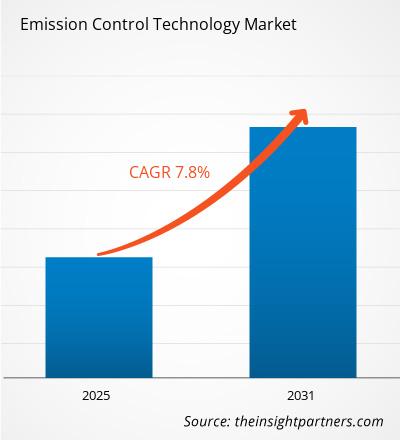
According to a comprehensive industry study by The Insight Partners, the Emission Control Technology Market size is expected to reach US$ 330.77 Billion by 2034 from US$ 177.74 Billion in 2025. The market is anticipated to register a CAGR of 7.14% during the forecast period 2026–2034.
This significant market growth highlights the rising demand across major industries—including automotive, manufacturing, marine, and energy generation—to comply with modern environmental standards. As countries worldwide enforce stricter air quality policies to combat climate change, the implementation of sophisticated emission reduction systems has moved from being a voluntary initiative to a mandatory operational requirement.
Key Drivers Shaping Market Demand
Several critical factors are accelerating the expansion of the emission control technology market globally:
Stringent Environmental Legislation: Governments and regulatory authorities worldwide are continually updating air pollution standards. Policies such as the Euro 7 standards in Europe, the EPA regulations in the United States, and similar mandates across various Asian nations require industries and vehicle manufacturers to significantly lower nitrogen oxides, particulate matter, carbon monoxide, and volatile organic compounds.
Growth in Automotive Production: Despite the rapid growth of electric vehicles, internal combustion engine (ICE) vehicles and hybrid models will continue to make up a substantial portion of the global fleet over the coming decade. To comply with tightening emissions limits, automotive manufacturers are relying heavily on advanced catalytic converters, diesel particulate filters (DPF), and selective catalytic reduction (SCR) systems.
Industrialization and Power Generation: Rapid industrialization in developing economies has spiked the demand for power generation and heavy manufacturing. Facilities such as cement plants, chemical refineries, and fossil-fuel power plants are increasingly adopting scrubbers, electrostatic precipitators, and catalytic systems to satisfy local emissions limits and meet corporate sustainability goals.
Public Awareness and Corporate Responsibility: Heightened public concern regarding urban smog and public health, alongside corporate commitments to Environmental, Social, and Governance (ESG) criteria, is prompting businesses to invest in cleaner operational technologies.
Get a PDF Sample- https://www.theinsightpartners.com/sample/TIPRE00004122
Key Market Players
The global market for emission control technology is characterized by continuous research and development, strategic partnerships, and tech innovations aimed at building more efficient, durable, and cost-effective solutions. Key players operating in the market include:
BASF
Clariant
Clean Diesel Technologies, Inc.
Cormetech
Corning Incorporated
DCL International Inc.
Johnson Matthey
Tenneco Inc.
Umicore
Walker Exhaust Systems
These key market participants focus on developing next-generation catalysts, light-weight filter substrates, and integrated exhaust treatment units to maintain a strong market position and fulfill varying customer requirements across different regions.
Sector-Wise Applications
Emission control technologies are deployed across diverse applications:
Automotive & Transportation: Incorporating systems like exhaust gas recirculation (EGR), SCR, and particulate filters into passenger cars, commercial trucks, marine vessels, and locomotives to curb road and transport emissions.
Power Generation: Utilizing large-scale scrubbers and particulate control units in power plants to lower sulfur dioxide ($SO_2$) and particulate emissions resulting from fuel combustion.
Industrial & Chemical Processing: Implementing customized catalytic oxidation systems to treat hazardous air pollutants generated during chemical manufacturing, metal processing, and oil refining.
Get Full Copy of This Report- https://www.theinsightpartners.com/buy/TIPRE00004122
Future Outlook
The future of the emission control technology market looks promising, marked by continuous technological innovations and expanding applications in both traditional and emerging sectors. Over the coming decade, manufacturers will likely focus on creating ultra-efficient, compact, and high-temperature-resistant filtration systems capable of meeting near-zero emission mandates. Furthermore, as hybrid powertrains, synthetic fuels, and hydrogen combustion engines gain broader traction, emission control solutions will evolve to address unique exhaust profiles. Supported by steady regulatory pressure and global net-zero carbon initiatives, the market is poised to maintain strong momentum, playing a key role in shaping a cleaner, more sustainable industrial landscape leading up to 2034.
Related Reports-
About Us
The Insight Partners is a one-stop industry research provider of actionable intelligence. We help our clients in getting solutions to their research requirements through our syndicated and consulting research services. We specialize in industries such as Semiconductor and Electronics, Aerospace and Defense, Automotive and Transportation, Biotechnology, Healthcare IT, Manufacturing and Construction, Medical Devices, Technology, Media, and Telecommunications, as well as chemicals and Materials.
Contact Us
If you have any queries about this report or if you would like further information, don’t hesitate to get in touch with us:
Contact Person: Ankit Mathur
E-mail: ankit.mathur@theinsightpartners.com
