The automotive industry is undergoing a profound transformation driven by electrification, lightweight engineering, and safety innovations. At the core of every vehicle’s physical architecture lies the chassis system, serving as the backbone that supports structural integrity, steering, suspension, and dynamic control. As vehicle production rebounds globally and consumer preferences shift toward electric vehicles (EVs) and advanced driver-assistance systems (ADAS), the demand for robust, lightweight, and modular chassis architectures is escalating rapidly.
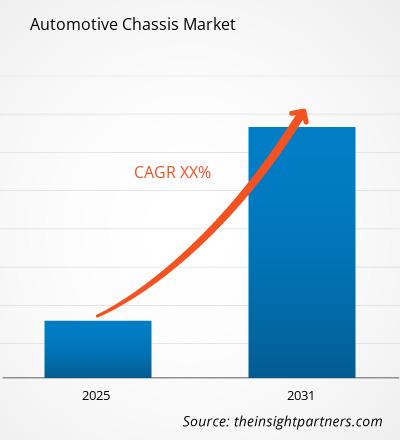
According to a comprehensive research study by The Insight Partners, the Automotive Chassis Market is expected to register a CAGR of 3.12% from 2026 to 2034, with the market size expanding from US$ 52.27 Billion in 2025 to US$ 68.94 Billion by 2034.
Market Dynamics and Growth Drivers
1. Accelerating Transition Toward Electric Vehicles (EVs)
The global push for zero-emission mobility has fundamentally redesigned chassis architecture. Electric vehicles feature specialized structural demands, notably accommodating heavy battery packs along the floorboard while maintaining structural safety and optimal weight distribution. Chassis manufacturers are increasingly developing specialized “skateboard” platforms that integrate battery enclosures, suspension mounts, and electric drives into a flat, modular chassis framework. This trend allows automakers to scale production across multiple vehicle segments while significantly reducing development costs.
2. Focus on Lightweighting and Material Innovation
Fuel efficiency mandates for internal combustion engine (ICE) vehicles and range optimization for electric vehicles have made weight reduction a critical priority. Automotive original equipment manufacturers (OEMs) and Tier-1 suppliers are increasingly transitioning from traditional steel chassis systems to advanced high-strength steel (AHSS), aluminum alloys, carbon fiber reinforced polymers (CFRP), and composite materials. Lightweight chassis systems improve overall vehicle handling, reduce energy consumption, and ensure compliance with stringent global emissions standards.
3. Integration of Active Chassis Systems and ADAS
Modern automotive chassis systems are evolving beyond passive mechanical structures into intelligent, electronically controlled platforms. The integration of active suspension, drive-by-wire, steer-by-wire, and brake-by-wire technology plays an essential role in enabling autonomous driving capabilities and enhancing passenger comfort. Electronic stability control (ESC) and dynamic chassis control systems continuously process data from onboard sensors to adjust vehicle dynamics in real time, delivering superior road handling and enhanced safety.
Get a PDF Sample- https://www.theinsightpartners.com/sample/TIPRE00005571
Market Segmentation Breakdown
The global automotive chassis market is broadly segmented across chassis type, material type, vehicle type, and geography:
By Chassis Type: Backbone, Ladder, Monocoque, and Modular / Skateboard Chassis. Monocoque chassis remain dominant in passenger cars due to superior safety and weight savings, whereas skateboard architectures are witnessing the fastest growth in the EV domain.
By Chassis System Component: Suspension Systems, Steering Systems, Braking Systems, and Axles.
By Material Type: Steel, High-Strength Steel (HSS), Aluminum Alloys, and Composite Materials.
By Vehicle Type: Passenger Cars, Light Commercial Vehicles (LCVs), Heavy Commercial Vehicles (HCVs), and Electric & Hybrid Vehicles.
By Region: North America, Europe, Asia-Pacific, Middle East & Africa, and South America. Asia-Pacific continues to lead production volume, powered by rapid automotive manufacturing growth in China, India, Japan, and South Korea.
Key Industry Players
The market landscape is characterized by strategic partnerships, technological innovation, and heavy investments in R&D aimed at lightweighting and smart chassis integration. Leading players driving innovation in the global automotive chassis market include:
Aisin Seiki Co., Ltd.
AL-KO
BENTELER International AG
CIE Automotive SA
Continental AG
Hyundai Motor Company
Magna International Inc.
Schaeffler Technologies AG and Co. KG
Tower International
ZF Friedrichshafen AG
Get Full Copy of This Report- https://www.theinsightpartners.com/buy/TIPRE00005571
Future Outlook
The future of the automotive chassis market will be defined by the convergence of software-defined vehicles, automated driving technology, and sustainable manufacturing practices. As drive-by-wire systems replace traditional mechanical linkages, chassis control will increasingly rely on integrated software architectures capable of real-time predictive adjustments. Furthermore, the adoption of mega-casting (or giga-casting) manufacturing techniques is expected to revolutionize chassis production by consolidating hundreds of individual stamped components into single large-scale castings. This manufacturing shift will lower assembly costs, reduce structural weight, and enhance platform rigidity. Over the next decade, market players that successfully merge material science innovations with digital chassis control software will be best positioned to capture high-value opportunities across both passenger and commercial vehicle markets worldwide.
Related Reports-
40-Foot Container Chassis Market
Automotive Active Body Panels Market
About Us
The Insight Partners is a one-stop industry research provider of actionable intelligence. We help our clients in getting solutions to their research requirements through our syndicated and consulting research services. We specialize in industries such as Semiconductor and Electronics, Aerospace and Defense, Automotive and Transportation, Biotechnology, Healthcare IT, Manufacturing and Construction, Medical Devices, Technology, Media, and Telecommunications, as well as chemicals and Materials.
Contact Us
If you have any queries about this report or if you would like further information, don’t hesitate to get in touch with us:
Contact Person: Ankit Mathur
E-mail: ankit.mathur@theinsightpartners.com
