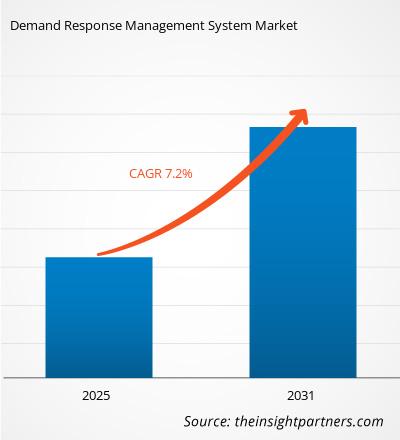
The Demand Response Management System (DRMS) is gaining significant momentum as utilities, grid operators, commercial organizations, and industrial consumers increasingly focus on improving energy efficiency, grid reliability, and demand flexibility.
According to The Insight Partners, The global Demand Response Management System (DRMS) market size is projected to reach US$ 47.36 billion by 2034 from US$ 12.73 billion in 2025. The market is anticipated to register a CAGR of 15.71% during the forecast period 2026–2034.
What Is Driving the Demand Response Management System Market?
Growing electricity consumption is one of the primary factors supporting the demand for DRMS solutions. Population growth, urbanization, industrialization, electrification, and the increasing use of digital technologies are placing additional pressure on electricity infrastructure. During peak periods, utilities need flexible approaches to manage demand without compromising reliability.
Grid modernization is another major growth driver. Traditional electricity networks are evolving into smart grids that use connected devices, advanced meters, analytics, automation, and communication technologies. DRMS platforms can integrate these technologies to provide utilities with greater visibility into electricity consumption and enable faster responses to changing grid conditions.
The growing integration of renewable energy is also creating opportunities. Solar and wind generation can fluctuate according to weather and environmental conditions. Demand response can provide flexibility by adjusting consumption to better match available electricity supply. As renewable penetration increases, DRMS can become an important component of a more responsive and resilient energy ecosystem.
Get Sample PDF of the report @ https://www.theinsightpartners.com/sample/TIPRE00009855
How Are Cloud and IoT Technologies Transforming DRMS?
Cloud-based DRMS platforms are becoming increasingly important because they can provide scalable infrastructure, centralized data management, and remote accessibility. Utilities can use cloud platforms to analyze large volumes of consumption data and coordinate demand-response programs across multiple customer groups.
IoT integration is further improving real-time monitoring and automation. Smart meters, connected appliances, industrial equipment, building management systems, EV chargers, and other connected assets can provide data that helps utilities understand consumption patterns. Automated signals can then encourage or trigger changes in electricity usage.
The Insight Partners identifies cloud-based DRMS and IoT integration for real-time monitoring as key trends in the market. These technologies are particularly relevant as electricity networks become increasingly distributed and data-driven.
Which Applications Are Increasing DRMS Adoption?
The market is broadly analyzed across residential, commercial, and industrial applications. Residential demand response can involve smart thermostats, water heaters, home energy management systems, electric vehicle chargers, and other connected appliances. Consumers may participate in programs that provide financial incentives for reducing or shifting electricity consumption during peak periods.
Commercial buildings represent another important application area. Office buildings, retail facilities, hotels, educational institutions, and other commercial properties can use DRMS to optimize HVAC systems, lighting, refrigeration, and other energy-intensive equipment. Automated demand management can help organizations reduce electricity costs while contributing to grid stability.
Industrial facilities can benefit from DRMS by managing flexible loads and scheduling energy-intensive operations according to grid conditions or electricity prices. Manufacturing plants, processing facilities, and other energy-intensive users can potentially reduce peak demand and improve overall energy management through coordinated demand-response programs.
What Opportunities Exist in Emerging Economies?
Emerging economies represent an important opportunity for DRMS providers because many developing markets are experiencing rapid growth in electricity demand. Urbanization, industrial development, and increasing electrification can put significant pressure on existing power infrastructure.
According to The Insight Partners, DRMS adoption is expected to be particularly strong in emerging economies experiencing high increases in energy demand. Instead of relying solely on large investments in new generation capacity, utilities can use demand-side flexibility to manage peak loads and improve utilization of existing infrastructure.
The transition toward smart grids in developing countries can further support market growth. Investments in advanced metering infrastructure, digital utility platforms, distributed energy resources, and renewable generation can create a stronger foundation for DRMS deployment.
What Challenges Could Restrict Market Growth?
Despite its benefits, the DRMS market faces several challenges. Regulatory differences between countries can affect the development and implementation of demand-response programs. Market structures, electricity pricing mechanisms, consumer participation rules, and utility operating models vary considerably across regions.
Interoperability is another challenge. Utilities often operate systems and equipment supplied by multiple vendors. Integrating legacy infrastructure with modern DRMS platforms can increase implementation complexity and costs.
Customer participation also remains important. Residential and commercial consumers may be reluctant to allow automated control of appliances or equipment. Concerns regarding privacy, comfort, cybersecurity, and control over energy usage can influence adoption. Providers therefore need to offer secure, transparent, and user-friendly solutions that demonstrate clear financial and operational benefits.
Which Regions Are Leading the Market?
North America has recorded a high level of DRMS implementation, followed by Europe and Asia-Pacific, according to The Insight Partners. Utilities and large commercial organizations in these regions are increasingly using demand-response technologies to reduce energy consumption and manage costs.
North America’s established smart-grid infrastructure, utility demand-response programs, advanced metering deployment, and focus on grid modernization provide favorable conditions for DRMS adoption. Europe is also benefiting from renewable-energy integration, energy-efficiency initiatives, and the transition toward more flexible electricity systems.
Asia-Pacific is expected to offer substantial growth opportunities as countries invest in smart-grid infrastructure and address rapidly increasing electricity demand. Expanding urbanization and industrialization can create additional requirements for efficient demand management.
Get the Premium Research Report @ https://www.theinsightpartners.com/buy/TIPRE00009855
What Is the Competitive Landscape?
The competitive environment includes technology providers, energy management companies, utility software vendors, and system integrators.
- ABB
- Eaton Corporation Inc.
- Enel X
- General Electric
- Honeywell International Inc.
- Johnson Controls International plc
- Mitsubishi Electric Corporation
- Oracle Corporation
- Schneider Electric SE
- Siemens AG
Companies are focusing on technological innovation, cloud deployment, automation, analytics, IoT connectivity, and integration with smart-grid infrastructure. Partnerships between technology providers and utilities can also help accelerate deployment by combining software capabilities with operational expertise.
What Is the Future Outlook for the DRMS Market?
The future of the Demand Response Management System market is closely linked to the modernization of electricity infrastructure and the transition toward more flexible energy systems. Increasing electricity demand, renewable-energy integration, distributed energy resources, electric vehicles, smart buildings, and connected appliances are creating new sources of flexible demand.
About The Insight Partners
The Insight Partners is a global leader in market research, delivering comprehensive analysis and actionable insights across diverse industries. The company empowers decision-makers with data-driven intelligence to navigate evolving markets and accelerate growth.
Contact Us:
- Contact Person: Ankit Mathur
- E-mail: ankit.mathur@theinsightpartners.com
- Phone: +1-646-491-9876
