Advances in microbiology and laboratory automation are transforming the way infectious organisms are detected and characterized across healthcare and industrial settings. The increasing need for rapid and accurate diagnostic solutions continues to strengthen demand worldwide. Growing investments in pathogen surveillance, pharmaceutical research, and food safety are encouraging the adoption of innovative microbial identification technologies.
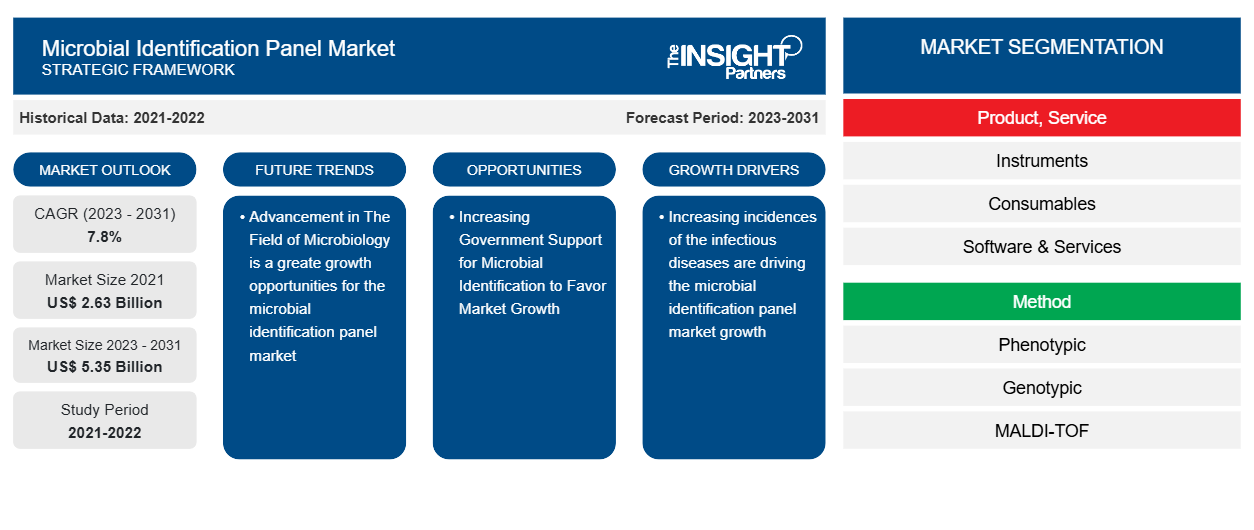
The Microbial Identification Panel Market was valued at US$ 2.63 billion in 2021 and is projected to reach US$ 5.35 billion by 2031, registering a CAGR of 7.8% during 2023 to 2031. The Microbial Identification Panel Market is witnessing consistent expansion due to the increasing prevalence of infectious diseases, rising investments in microbiology research, and growing adoption of automated laboratory technologies. Expanding environmental monitoring applications, stronger government support for pathogen surveillance, and continuous innovation in microbial testing methods are expected to shape long-term industry growth.
Get Sample PDF @ https://www.theinsightpartners.com/sample/TIPRE00006579
Rising Burden of Infectious Diseases Drives Industry Expansion
The growing incidence of infectious diseases remains one of the strongest factors supporting industry development. Healthcare-associated infections, foodborne illnesses, and viral diseases continue to increase the demand for precise microbial identification across hospitals and diagnostic laboratories.
Global health organizations continue to emphasize early diagnosis of diseases such as HIV, hepatitis, and antimicrobial resistant infections. Rapid identification of pathogens enables clinicians to initiate targeted therapies while reducing unnecessary antibiotic use. As healthcare systems strengthen infection prevention protocols, microbial identification panels are becoming an essential component of diagnostic workflows.
The pharmaceutical industry also depends heavily on microbial identification during drug manufacturing, contamination control, and quality assurance. These applications continue to create stable demand beyond clinical diagnostics.
Technological Innovations Accelerate Adoption
Continuous advancements in microbiology technologies have significantly improved the speed, sensitivity, and accuracy of microbial identification.
Modern laboratories increasingly utilize advanced techniques such as:
- MALDI-TOF mass spectrometry
- Next-Generation Sequencing (NGS)
- Polymerase Chain Reaction (PCR)
- Automated microbial identification systems
- AI-supported laboratory software
These technologies reduce turnaround time while improving identification accuracy for bacteria, fungi, and other microorganisms. The integration of automated instruments with sophisticated software platforms has further streamlined laboratory workflows and minimized manual intervention.
Growing commercialization of advanced microbiology systems is expected to create substantial opportunities across emerging healthcare markets where laboratory modernization is accelerating.
Government Support and Industrial Applications Create Growth Opportunities
Government initiatives aimed at strengthening pathogen surveillance continue to encourage investments in microbial identification infrastructure.
Funding programs supporting genomic surveillance, antimicrobial resistance research, and public health preparedness are expanding laboratory capabilities worldwide. Increased grants for microbiome research and infectious disease monitoring are also promoting innovation across academic and commercial institutions.
Beyond healthcare, microbial identification plays a critical role across several industries, including:
- Pharmaceutical manufacturing
- Food and beverage safety
- Agriculture
- Environmental monitoring
- Biotechnology research
- Water quality testing
Environmental monitoring has emerged as one of the fastest growing application areas as industries adopt stricter quality control and regulatory compliance standards.
Segment Analysis Highlights Diverse Demand
The industry demonstrates strong demand across multiple product categories, methodologies, and end users.
Based on product and service, the market includes instruments, consumables, and software & services. Instruments accounted for the largest share due to widespread adoption of automated microbial identification systems, mass spectrometers, and PCR platforms. Consumables continue to generate recurring revenue because laboratories require a continuous supply of reagents, kits, plates, and media.
By method, phenotypic identification represented the leading segment, while genotypic methods and MALDI-TOF continue to gain momentum due to their superior speed and precision.
From an end user perspective, hospitals and diagnostic laboratories remain major contributors, although pharmaceutical companies and industrial laboratories continue to expand investments in microbial quality assurance and research applications.
Regional Landscape and Competitive Environment
North America maintains the leading regional position due to advanced healthcare infrastructure, extensive microbiology research activities, and widespread adoption of innovative laboratory technologies. The United States contributes the largest regional revenue, supported by strong pharmaceutical research, government funding, and high healthcare spending.
Europe follows with significant investments in diagnostic innovation and infectious disease surveillance. Meanwhile, Asia Pacific is anticipated to witness strong growth owing to expanding healthcare infrastructure, increasing pharmaceutical production, and rising awareness regarding laboratory diagnostics in countries such as China, India, and Japan.
Leading companies continue to strengthen their portfolios through technological innovation, strategic collaborations, and product development.
Key Players
- Becton, Dickinson and Company
- Thermo Fisher Scientific Inc.
- Danaher Corporation
- bioMérieux
- Merck KGaA
- Charles River Laboratories, Inc.
- Bruker Corporation
- Shimadzu Corporation
- Avantor (VWR International LLC)
- Eurofins Scientific
Interested in Purchasing this Report? Click here @ https://www.theinsightpartners.com/buy/TIPRE00006579
Future Outlook
The Microbial Identification Panel Market is expected to maintain steady growth through 2031 as laboratories increasingly adopt automated, high throughput, and molecular identification technologies. Rising government investments in pathogen surveillance, expanding pharmaceutical research, growing environmental monitoring requirements, and continuous technological innovation will support long-term industry expansion.
Related Report:
1) Compounding Pharmacies Market Growth and Analysis by 2028
2) Colorectal Cancer Diagnostics Market Key Players and Opportunities by 2028
3) Anti-Acne Cosmetics Market Overview, Growth, Trends, Analysis, Research Report (2021-2031)
About Us –
The Insight Partners provides comprehensive syndicated and tailored market research services in the healthcare, technology, and industrial domains. Renowned for delivering strategic intelligence and practical insights, the firm empowers businesses to remain competitive in ever-evolving global markets.
Contact Us:
Ankit Mathur | The Insight Partners
E-mail: ankit.mathur@theinsightpartners.com
Phone: +1-646-491-9876
Also Available in : Korean German Japanese French Chinese Italian Spanish
