The United States Antihormonal Cancer Therapies Market represents one of the largest and most technologically advanced regional markets, supported by a strong oncology research ecosystem, extensive pharmaceutical innovation, and advanced healthcare infrastructure. The increasing prevalence of hormone-sensitive cancers, particularly breast and prostate cancer, continues to drive demand for antihormonal therapies across hospitals, cancer centers, and specialty clinics. The presence of leading pharmaceutical companies, renowned cancer research institutions, and a high volume of clinical trials has accelerated the development and commercialization of innovative hormone-targeting therapies.
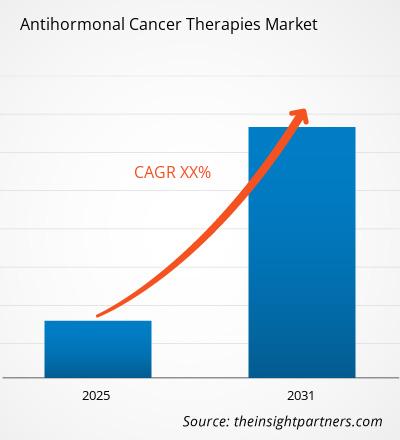
The Antihormonal Cancer Therapies Market trends indicate sustained market expansion driven by precision medicine, targeted therapeutics, and continuous innovation in oncology drug development. According to market estimates, the Antihormonal Cancer Therapies Market is projected to grow from US$12.55 billion in 2025 to US$24.92 billion by 2034, registering a CAGR of 7.92% during 2026–2034. Increasing investments in cancer research, rising adoption of combination therapies, and expanding clinical trial activity are contributing significantly to market growth. In addition, the growing use of biomarker-based diagnostics and personalized treatment strategies is enabling healthcare providers to improve therapeutic outcomes while minimizing treatment-related adverse effects.
Download Sample PDF: https://www.theinsightpartners.com/sample/TIPRE00008556
What Are the Key Antihormonal Cancer Therapies Market Trends Driving Industry Growth?
Several important Antihormonal Cancer Therapies Market Trends continue to shape the competitive landscape. One of the most significant trends is the growing adoption of precision oncology, where therapies are tailored according to tumor biology, hormone receptor status, and individual patient characteristics. This approach is improving treatment effectiveness while supporting long-term disease management.
Another notable trend is the increasing use of combination treatment strategies. Physicians are increasingly combining antihormonal therapies with targeted therapies, immunotherapies, cyclin-dependent kinase inhibitors, and chemotherapy to improve clinical outcomes and reduce disease progression. These combination approaches are expanding therapeutic possibilities across multiple hormone-sensitive cancer indications.
Furthermore, pharmaceutical companies are investing in next-generation hormone receptor modulators, selective estrogen receptor degraders, androgen receptor inhibitors, and aromatase inhibitors to address resistance mechanisms and improve patient response rates. Advances in artificial intelligence, genomic sequencing, and biomarker discovery are also accelerating oncology drug development and clinical decision-making.
How Is Growth Analysis Shaping the Future of the Antihormonal Cancer Therapies Market?
The long-term growth outlook for the Antihormonal Cancer Therapies Market remains highly favorable due to increasing cancer prevalence and expanding healthcare investments worldwide. Aging populations, lifestyle-related risk factors, and improved cancer screening programs are contributing to rising diagnosis rates, thereby increasing demand for effective hormone-based treatment options.
Pharmaceutical companies continue to expand research and development investments focused on novel therapeutic mechanisms, improved safety profiles, and enhanced patient outcomes. Ongoing clinical trials evaluating new drug combinations, extended treatment durations, and personalized treatment protocols are expected to generate significant commercial opportunities throughout the forecast period.
Healthcare providers are also adopting advanced diagnostic technologies that enable earlier detection of hormone-sensitive cancers and facilitate individualized treatment planning. These developments are expected to improve survival rates while supporting greater utilization of antihormonal therapies across global healthcare systems.
Market Drivers
Multiple factors continue to drive the expansion of the Antihormonal Cancer Therapies Market.
The increasing global incidence of breast and prostate cancers remains the primary market driver. These cancers account for a substantial proportion of new cancer diagnoses worldwide and frequently require long-term hormone-based treatment.
Growing awareness regarding early cancer diagnosis and preventive healthcare is encouraging patients to seek timely medical intervention, resulting in increased demand for effective therapeutic options.
Continuous pharmaceutical innovation is also supporting market growth. Manufacturers are introducing novel hormone-targeting agents that provide improved efficacy, reduced toxicity, and enhanced treatment durability compared to conventional therapies.
Government support for oncology research, expanding reimbursement coverage, and increasing healthcare expenditure are further strengthening market demand while improving patient access to advanced cancer treatments.
Market Opportunities
The Antihormonal Cancer Therapies Market presents substantial opportunities for pharmaceutical manufacturers, biotechnology companies, healthcare providers, and research organizations.
Precision medicine represents one of the most promising growth opportunities. The integration of molecular diagnostics, genomic testing, and biomarker identification is enabling more personalized treatment strategies that optimize therapeutic outcomes.
Emerging markets across Asia-Pacific, Latin America, and the Middle East offer significant expansion opportunities due to improving healthcare infrastructure, rising cancer awareness, and increasing access to oncology treatments.
Digital healthcare technologies, including artificial intelligence-assisted diagnostics, electronic health records, remote patient monitoring, and predictive analytics, are improving treatment planning while enhancing patient management.
Collaborative partnerships among pharmaceutical companies, academic institutions, biotechnology firms, and cancer research organizations continue to accelerate innovation while expanding global access to advanced hormone therapies.
Key Players
Major companies operating in the Antihormonal Cancer Therapies Market include:
- Novartis International AG
- AstraZeneca Plc
- Merck and Co.
- Pfizer Inc
- QuatRx Pharmaceuticals
- Eli Lilly and Company
- Seattle Genetics
- Sanofi
- Bayer Healthcare
- Boehringer-Ingelheim
These companies continue to strengthen their market positions through product innovation, clinical research, strategic collaborations, regulatory approvals, acquisitions, and investments in precision oncology.
Purchase a Copy of this report: https://www.theinsightpartners.com/buy/TIPRE00008556
Future Outlook
The future of the Antihormonal Cancer Therapies Market appears exceptionally promising as advances in precision medicine, molecular oncology, and targeted therapeutics continue to reshape cancer treatment. Ongoing research into hormone receptor biology, resistance mechanisms, and combination therapies is expected to expand available treatment options while improving long-term patient outcomes.
Increasing investments in artificial intelligence-driven drug discovery, biomarker-guided treatment selection, and personalized oncology will further accelerate innovation throughout the forecast period. Pharmaceutical companies are expected to introduce more effective hormone therapies with improved safety profiles and enhanced clinical efficacy.
Also Available in: Korean | German | Japanese | French | Chinese | Italian | Spanish
Related Reports:
Stomach Cancer Therapeutics Market Trends, Demand & Growth by 2034
Regenerative Medicine Market Growth, Trends, Revenue & Forecast 2025-2031
About Us
The Insight Partners is a one-stop provider of actionable industry research and intelligence. We help our clients in getting solutions to their research requirements through our syndicated and consulting research services. We specialize in industries such as Semiconductor and Electronics, Aerospace and Defense, Automotive and Transportation, Healthcare IT, Manufacturing and Construction, Medical Devices, Technology, Media and Telecommunications, Food and Beverages, Consumer Goods, and Chemicals and Materials.
Contact US
Contact Person: Ankit Mathur
Phone: +1-646-491-9876
E-mail : sales@theinsightpartners.com
