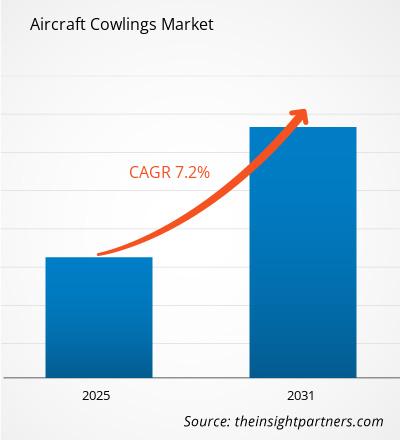
The global aerospace sector continues to experience steady structural growth, driven by an expanding commercial fleet, rising global air passenger traffic, and ongoing modernization in military aviation fleets. A critical component within this ecosystem is the aircraft cowling the removable aerodynamic housing or covering that surrounds an aircraft’s engine. Aircraft cowlings play an essential role in reducing aerodynamic drag, protecting sensitive engine components from environmental hazards, facilitating proper airflow for engine cooling, and assisting with noise attenuation.
Get a PDF Sample- https://www.theinsightpartners.com/sample/TIPRE00019911
This sustained growth trajectory reflects increasing procurement of next-generation aircraft equipped with fuel-efficient, high-bypass turbofan engines, which require advanced lightweight engine enclosures to optimize operational efficiency and lower carbon emissions.
Key Drivers and Market Dynamics
1. Rising Demand for Commercial and Defense Aircraft
With international travel rebounding strongly and new routes opening worldwide, major commercial airlines are expanding and renewing their fleets. Old, less fuel-efficient aircraft are being replaced with newer models that utilize advanced engine technologies. Because every aircraft engine requires customized, high-performance cowling systems, high production rates among major airframe manufacturers directly boost demand across the global cowling supply chain. Similarly, rising defense budgets and strategic fleet modernization programs in developing and developed nations continue to bolster demand in the military aviation segment.
2. Adoption of Lightweight Advanced Composite Materials
Weight reduction remains a primary objective in contemporary aerospace engineering. Traditional aluminum engine cowlings are increasingly being replaced by composite materials such as carbon-fiber-reinforced polymers (CFRP) and honeycomb sandwich structures. Advanced composite cowlings deliver high strength-to-weight ratios, superior thermal resistance, and exceptional resistance to fatigue and corrosion. These characteristics allow aircraft manufacturers to reduce overall vehicle weight, directly translating into improved fuel efficiency and decreased operating costs for airlines.
3. Focus on Aerodynamic Efficiency and Noise Reduction
Engine cowlings are no longer viewed merely as protective covers; they are integral components of an aircraft’s acoustic and aerodynamic design. Modern cowling structures feature acoustic liners that suppress noise generated by high-thrust engines, enabling aircraft to meet increasingly strict noise regulations at major commercial airports. Enhanced aerodynamic profiling also helps streamline airflow, minimizing drag during cruise phase operations.
Marker Forecast
According to a comprehensive study by The Insight Partners, the Aircraft Cowlings Market size is expected to reach US$ 7.35 Billion by 2034 from US$ 4.48 Billion in 2025. The market is estimated to record a CAGR of 5.65% from 2026 to 2034.
Key Market Players
The global aircraft cowlings market features a mix of well-established aerospace tier-1 suppliers, specialized composite manufacturers, and maintenance providers. Prominent companies operating in this market include:
Collins Aerospace
Composites Technology Research Malaysia
Denel Dynamics
FACC AG
Finmeccanica-Alenia Aermacchi S.p.A.
KAMAN CORPORATION
Korean Air Aerospace Division
Malibu Aerospace LLC
Royal Engineered Composites
Spirit AeroSystems Inc.
These industry participants focus on long-term supply contracts with major aircraft OEMs, ongoing investments in automated composite manufacturing technologies, and strategic partnerships to strengthen their market presence and expand global delivery networks.
Get Full Copy of This Report- https://www.theinsightpartners.com/buy/TIPRE00019911
Segment Trends and Technological Innovations
From a product design standpoint, aircraft cowlings are segmented based on aircraft type (commercial aircraft, regional jets, business jets, and military aircraft), engine type, and material composition. High-capacity commercial airliners represent the largest market segment due to the sheer volume of global deliveries and the high cost of large-engine housing structures.
Innovation in the market centers heavily on automated fiber placement (AFP) and out-of-autoclave (OOA) curing technologies. These manufacturing advances allow producers to build complex, seamless composite cowling structures faster, with fewer structural joints and reduced waste, ultimately lowering production costs while maintaining high quality standards. Additionally, the growing focus on aftermarket repair services, routine maintenance, and overhaul (MRO) activities ensures a steady revenue stream for specialized repair providers handling damaged or worn cowling structures.
Future Outlook
The future outlook for the aircraft cowlings market remains highly promising through 2034, supported by continuous advancements in aerospace engineering and sustainable aviation practices. As the industry accelerates its transition toward lower emissions and greener technologies, the demand for ultra-lightweight, high-durability composite cowlings will grow significantly. Innovations such as additive manufacturing (3D printing) for intricate internal structural components, smart sensors embedded in composite layers for structural health monitoring (SHM), and next-generation acoustic treatments will define the next phase of development. Furthermore, as hybrid-electric and alternative-fuel propulsion systems progress toward commercial viability, cowling designs will evolve to accommodate novel engine architectures, opening new growth avenues for forward-thinking manufacturers across the global supply chain.
Related Report-
About Us
The Insight Partners is a one-stop industry research provider of actionable intelligence. We help our clients in getting solutions to their research requirements through our syndicated and consulting research services. We specialize in industries such as Semiconductor and Electronics, Aerospace and Defense, Automotive and Transportation, Biotechnology, Healthcare IT, Manufacturing and Construction, Medical Devices, Technology, Media, and Telecommunications, as well as chemicals and Materials.
Contact Us
If you have any queries about this report or if you would like further information, don’t hesitate to get in touch with us:
Contact Person: Ankit Mathur
E-mail: ankit.mathur@theinsightpartners.com
