The US Critical Care Diagnostics Market represents a significant share of the global industry, driven by the country’s advanced healthcare infrastructure, high adoption of innovative diagnostic technologies, and increasing demand for rapid testing in emergency and intensive care settings. The growing prevalence of cardiovascular diseases, sepsis, respiratory disorders, and other life-threatening conditions has encouraged hospitals and healthcare providers to invest in advanced critical care diagnostic solutions.
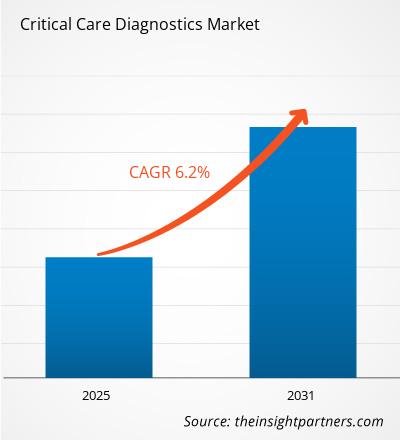
The Critical Care Diagnostics Market is valued at US$ 9.75 Billion in 2025 and is projected to reach US$ 18.01 Billion by 2034, registering a CAGR of 7.06% during 2026–2034. The market trends indicate that healthcare providers are increasingly adopting automated diagnostic platforms, molecular testing technologies, artificial intelligence-enabled laboratory solutions, and integrated point-of-care systems to improve patient outcomes and reduce diagnosis time. The growing burden of chronic diseases, aging populations, and rising demand for emergency healthcare services continue to create significant opportunities for market growth worldwide.
Download Sample PDF: https://www.theinsightpartners.com/sample/TIPRE00040786
What Are the Major Critical Care Diagnostics Market Trends Driving Growth?
One of the most influential Critical Care Diagnostics Market Trends is the increasing adoption of rapid diagnostic technologies capable of delivering accurate results within minutes. Healthcare professionals are emphasizing early diagnosis and immediate treatment for critically ill patients, particularly those suffering from sepsis, acute myocardial infarction, respiratory failure, stroke, and severe infections.
Point-of-care diagnostics have become an essential component of modern emergency medicine by enabling physicians to make faster clinical decisions without relying solely on centralized laboratory testing. Continuous advancements in biomarker testing, molecular diagnostics, immunoassays, and portable diagnostic instruments are improving diagnostic accuracy while reducing turnaround times.
Additionally, healthcare systems worldwide are investing in digital laboratory automation and artificial intelligence-powered diagnostic platforms that streamline clinical workflows and improve operational efficiency. These technological innovations are expected to remain major growth drivers throughout the forecast period.
How Is Growth Analysis Shaping the Critical Care Diagnostics Market?
Growth analysis of the Critical Care Diagnostics Market demonstrates increasing demand across hospitals, emergency departments, intensive care units, and specialized diagnostic laboratories. Rising incidences of cardiovascular diseases, respiratory disorders, infectious diseases, trauma cases, and multi-organ failure are driving the need for reliable diagnostic technologies capable of supporting immediate medical intervention.
Healthcare providers are increasingly integrating advanced diagnostic instruments with hospital information systems and electronic health records to facilitate real-time patient monitoring and clinical decision-making. This digital transformation is improving workflow efficiency while enhancing patient safety and treatment outcomes.
Emerging economies are also creating substantial growth opportunities through expanding healthcare infrastructure, increasing healthcare expenditure, and greater access to advanced diagnostic technologies. Government initiatives aimed at strengthening emergency healthcare systems and improving diagnostic capabilities continue supporting market expansion across developing regions.
Market Overview
The Critical Care Diagnostics Market continues to evolve through continuous innovation in diagnostic technologies, automation, and digital healthcare integration. Manufacturers are introducing next-generation analyzers, multiplex molecular testing platforms, advanced biomarker assays, and portable point-of-care diagnostic devices that improve speed, accuracy, and clinical efficiency.
Growing emphasis on personalized medicine and precision diagnostics is encouraging healthcare providers to adopt advanced laboratory solutions capable of supporting individualized treatment strategies. Furthermore, increasing awareness regarding early disease detection and rapid intervention is expanding the adoption of critical care diagnostic systems across hospitals and specialty healthcare facilities.
Despite strong market prospects, challenges including high equipment costs, regulatory compliance requirements, reimbursement limitations, and shortages of skilled laboratory professionals continue to influence market dynamics. Nevertheless, ongoing technological advancements and increasing healthcare investments are expected to support sustained market growth over the coming years.
Competitive Landscape
The competitive landscape of the Critical Care Diagnostics Market is characterized by continuous product innovation, strategic acquisitions, partnerships, and investments in research and development. Leading manufacturers are focusing on expanding their diagnostic portfolios, improving automation capabilities, and integrating artificial intelligence to enhance clinical performance and laboratory productivity.
Collaborations between diagnostic companies, healthcare providers, academic institutions, and research organizations continue accelerating technological innovation while expanding access to advanced diagnostic solutions across global healthcare systems.
Key Players
Abbott Laboratories, Siemens Healthineers AG, Philips Healthcare, Roche Diagnostics International Ltd., GE HealthCare Technologies Inc., Medtronic plc, bioMérieux SA, Beckman Coulter Inc., Thermo Fisher Scientific Inc., Edwards Lifesciences Corporation.
Purchase a Copy of this report: https://www.theinsightpartners.com/buy/TIPRE00040786
Future Outlook
The future of the Critical Care Diagnostics Market remains highly promising as healthcare systems continue prioritizing rapid diagnosis, early disease detection, and improved emergency care. Continuous advancements in molecular diagnostics, artificial intelligence, digital pathology, biomarker research, and point-of-care testing are expected to reshape the diagnostic landscape over the forecast period.
Increasing investments in healthcare infrastructure, expanding intensive care capacity, and rising demand for personalized medicine will continue creating attractive growth opportunities worldwide. As hospitals and diagnostic laboratories adopt increasingly sophisticated technologies, the market is expected to maintain steady growth through 2034 while supporting improved clinical outcomes and operational efficiency.
Related Reports:
Mononucleosis Diagnostic Market Segments and Growth by 2031
Direct-To-Consumer Genetic Testing Market Growth and Recent Trends by 2030
About Us
The Insight Partners is a one-stop provider of actionable industry research and intelligence. We help our clients in getting solutions to their research requirements through our syndicated and consulting research services. We specialize in industries such as Semiconductor and Electronics, Aerospace and Defense, Automotive and Transportation, Healthcare IT, Manufacturing and Construction, Medical Devices, Technology, Media and Telecommunications, Food and Beverages, Consumer Goods, and Chemicals and Materials.
Contact US
Contact Person: Ankit Mathur
Phone: +1-646-491-9876
E-mail : sales@theinsightpartners.com
