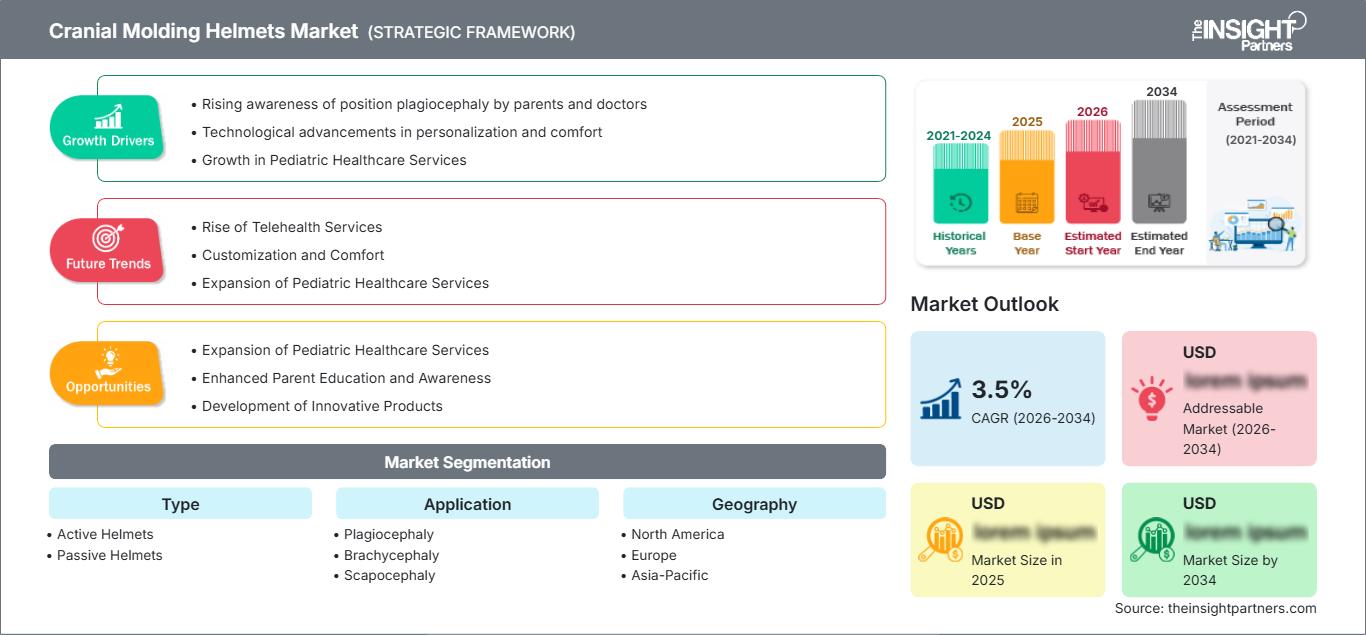
The Cranial Molding Helmets Market size was valued at US$ 215.76 Million in 2025 and is projected to reach US$ 382.43 Million by 2034, growing at a CAGR of 6.57% during 2026–2034.
The increasing focus on early diagnosis and intervention for cranial abnormalities is encouraging healthcare providers to recommend cranial molding helmets as an effective non-surgical treatment option. Growing awareness among parents about infant head shape disorders and the importance of timely treatment is further supporting market expansion.
Market Drivers Supporting Growth
Several factors are contributing to the growth of the cranial molding helmets market. One of the major drivers is the increasing prevalence of positional cranial deformities among infants. Factors such as increased use of infant sleep positioning recommendations, limited movement during early development, and premature birth rates have contributed to greater awareness and diagnosis of these conditions.
Get Sample PDF – https://www.theinsightpartners.com/sample/TIPRE00014225
The growing emphasis on pediatric healthcare and early intervention is also accelerating demand for cranial molding solutions. Pediatricians, orthopedic specialists, and craniofacial experts are increasingly promoting early screening programs to identify skull abnormalities and provide appropriate treatment.
Advancements in healthcare access and increasing availability of specialized pediatric orthotic centers are improving treatment adoption. Additionally, rising healthcare expenditure and greater parental willingness to invest in infant health solutions are creating favorable opportunities for market growth.
Technological Advancements in Cranial Orthotic Solutions
Innovation in design, manufacturing, and customization technologies is transforming the cranial molding helmets market. Manufacturers are increasingly using digital scanning, computer-aided design (CAD), and three-dimensional printing technologies to develop customized helmets that provide improved fit, comfort, and treatment effectiveness.
Modern cranial molding helmets are lightweight, breathable, and designed to enhance infant comfort during prolonged wear. Advanced materials improve durability while reducing pressure points and irritation, helping infants adapt more easily to helmet therapy.
Digital imaging technologies allow healthcare professionals to create precise measurements and monitor skull growth throughout the treatment process. These advancements support personalized treatment plans and improve clinical outcomes.
The integration of advanced manufacturing techniques is also reducing production time and enabling greater customization based on individual patient requirements.
Expanding Applications in Pediatric Healthcare
Cranial molding helmets are widely used in pediatric hospitals, orthopedic clinics, rehabilitation centers, craniofacial centers, and specialized orthotic facilities. These devices are primarily recommended for infants with moderate to severe positional skull deformities that do not improve sufficiently through repositioning techniques.
Healthcare providers often combine helmet therapy with regular monitoring to evaluate progress and adjust treatment plans according to infant growth patterns. The increasing availability of specialized pediatric care services is supporting broader adoption of these solutions.
Growing investments in pediatric rehabilitation and increasing collaboration between pediatricians, orthotists, and craniofacial specialists are further strengthening the role of cranial molding helmets in early childhood healthcare.
Regional Market Insights
North America holds a significant share of the cranial molding helmets market due to advanced pediatric healthcare infrastructure, high awareness of infant cranial disorders, and widespread availability of specialized orthotic services. The presence of established manufacturers and increasing adoption of customized treatment solutions continue supporting regional market growth.
Europe represents another important market, driven by growing emphasis on pediatric healthcare, increasing diagnosis of cranial deformities, and advancements in orthotic technologies. Improved access to specialized healthcare services and rising awareness among parents contribute to regional expansion.
The Asia Pacific region is expected to witness considerable growth during the forecast period owing to improving healthcare infrastructure, increasing pediatric care investments, and growing awareness regarding early treatment of cranial abnormalities. Expanding healthcare facilities and rising adoption of advanced medical devices are creating new opportunities in emerging markets.
Latin America and the Middle East & Africa are gradually developing as awareness of pediatric orthotic treatments improves and healthcare systems continue to expand.
Competitive Landscape
The cranial molding helmets market is characterized by increasing competition among manufacturers focusing on product customization, advanced materials, digital technologies, and improved patient comfort. Companies are investing in innovative manufacturing processes and expanding their distribution networks to meet growing demand for pediatric orthotic solutions.
Get Full Copy of This Report @ https://www.theinsightpartners.com/buy/TIPRE00014225
Key Players
- Orthomerica
- Ballert Orthopedic
- Cranial Technologies
- Becker Orthopedic
- Hanger Clinic
- BioSculptor
- Boston Brace
- EastPoint Prosthetics & Orthotics, Inc.
- Invent Medical (Talee)
- Printit Custom Wraps
These companies continue strengthening their market positions through customized product development, advanced manufacturing technologies, strategic collaborations, and expanded access to pediatric cranial care solutions.
Future Outlook
The future of the cranial molding helmets market remains positive through 2034 as awareness of early diagnosis and treatment of infant cranial deformities continues to increase. Advancements in digital scanning, three-dimensional printing, lightweight materials, and personalized orthotic designs are expected to further improve treatment outcomes and patient comfort. Growing investments in pediatric healthcare, expanding access to specialized orthotic services, and increasing parental awareness will continue driving market growth. As healthcare systems place greater emphasis on early intervention and non-surgical treatment approaches, cranial molding helmets are expected to remain an important solution for managing infant skull shape abnormalities worldwide.
Related Reports @
Cranial Fixation and Stabilization devices Market Overview, Growth, Trends, Analysis, Research Report (2025-2031)
Surgical Snare Market Size, Growth & Demand by 2034
About Us –
The Insight Partners provides comprehensive syndicated and tailored market research services in the healthcare, technology, and industrial domains. Renowned for delivering strategic intelligence and practical insights, the firm empowers businesses to remain competitive in ever-evolving global markets.
Contact Us:
Contact Person: Ankit Mathur
E-mail: ankit.mathur@theinsightpartners.com
Phone: +1-646-491-9876
Also Available in : Korean German Japanese French Chinese Italian Spanish
