The Emergency Response Systems (ERS) has emerged as a critical component of modern healthcare, public safety, and disaster management infrastructure. Emergency response systems are designed to provide immediate assistance during medical emergencies, accidents, natural disasters, and security threats.These systems combine communication technologies, monitoring devices, sensors, software platforms, and emergency services networks to ensure rapid response and improved outcomes.
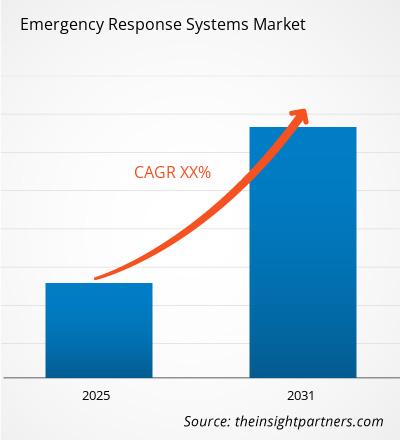
The Emergency Response Systems Market size is expected to reach US$ 57.28 Billion by 2031. The market is anticipated to register a CAGR of 7.1% during 2025-2031.
Get Sample PDF @ https://www.theinsightpartners.com/sample/TIPHE100001211
Market Overview
The global Emergency Response Systems market is expected to experience steady growth over the coming years. Increasing awareness about personal safety, growing adoption of personal emergency response systems (PERS), and the expansion of telehealth services are contributing to market expansion. The market includes various solutions such as standalone emergency response systems, mobile emergency response systems, mass notification systems, emergency management software, and integrated public safety platforms.
Healthcare providers, emergency medical services, government agencies, law enforcement departments, and disaster management organizations represent key end users of these systems. As emergency management becomes increasingly data-driven, organizations are prioritizing technologies that improve response times and enhance situational awareness.
Key Market Drivers
- Rising Aging Population:-One of the most significant drivers of the emergency response systems market is the growing elderly population worldwide. Older adults are more vulnerable to falls, cardiac events, and medical emergencies that require immediate intervention. Personal emergency response systems allow seniors to request assistance quickly, enabling independent living while ensuring safety.
- Increasing Incidence of Chronic Diseases:-The prevalence of chronic illnesses such as cardiovascular diseases, diabetes, respiratory disorders, and neurological conditions continues to rise globally. Patients suffering from these conditions often require continuous monitoring and rapid medical assistance during emergencies.
- Growing Frequency of Natural Disasters:-Climate change has led to an increase in the frequency and severity of natural disasters, including floods, hurricanes, wildfires, and earthquakes. Governments and disaster management agencies are investing in advanced emergency response technologies to strengthen preparedness and improve disaster response efficiency.
- Technological Advancements:-The integration of AI, machine learning, IoT, cloud computing, and predictive analytics is revolutionizing emergency response operations. Intelligent systems can analyze large volumes of data, predict potential incidents, optimize resource allocation, and support decision-making processes.
Emerging Market Trends
- Adoption of Mobile Emergency Response Systems:-Mobile Personal Emergency Response Systems (mPERS) are gaining popularity due to their portability and advanced capabilities. Unlike traditional home-based systems, mobile solutions provide protection both indoors and outdoors through GPS-enabled devices and cellular connectivity.
- Integration of Artificial Intelligence:-Artificial intelligence is becoming a key component of modern emergency response systems. AI-powered solutions can analyze incoming emergency calls, prioritize incidents, recommend response strategies, and automate dispatch operations.
- Next-Generation Emergency Communication Networks:-The deployment of Next Generation 911 (NG911) systems is transforming emergency communications. These advanced platforms support text messaging, video sharing, image transmission, and precise location tracking, enabling more comprehensive incident assessment and response.
Market Segmentation Analysis
By Type
- Standalone Personal Emergency Response Systems (PERS)
- Mobile Personal Emergency Response Systems (mPERS)
Standalone systems continue to maintain a strong presence among elderly users residing at home. However, mobile systems are witnessing faster growth due to increased mobility requirements and advanced connectivity features.
By End User
- Assisted Living Facilities
- Senior Living Facilities
- Homecare Settings
- Healthcare Institutions
- Government and Public Safety Agencies
Homecare settings represent a major segment as more patients prefer receiving healthcare services at home. Meanwhile, government agencies are increasingly investing in large-scale emergency response infrastructure to improve public safety.
By Component
- Hardware
- Software
- Services
Software solutions are gaining momentum due to their ability to facilitate incident management, communication, resource coordination, and predictive analytics. Cloud-based deployment models are further supporting software adoption.
Regional Analysis
North America
North America dominates the emergency response systems market due to its advanced healthcare infrastructure, high healthcare expenditure, and widespread adoption of emergency management technologies. The United States remains a major contributor owing to substantial investments in public safety modernization and emergency communication networks.
Europe
Europe holds a significant market share driven by aging demographics, supportive healthcare policies, and increased adoption of remote patient monitoring solutions. Countries such as Germany, the United Kingdom, and France are investing in digital healthcare transformation initiatives.
Asia Pacific
Asia Pacific is expected to witness the fastest growth during the forecast period. Rapid urbanization, rising healthcare investments, increasing smartphone penetration, and growing awareness regarding emergency preparedness are contributing to market expansion.
Countries including China, India, Japan, and South Korea are actively deploying advanced emergency response technologies to strengthen disaster management and public safety systems.
Middle East & Africa and South America
These regions are gradually adopting emergency response solutions as governments prioritize healthcare modernization and emergency preparedness initiatives. Infrastructure development and increasing investments in public safety technologies are expected to support future growth.
Competitive Landscape
The emergency response systems market is highly competitive, with major players focusing on innovation, strategic partnerships, acquisitions, and product development. Companies are investing in AI-powered analytics, cloud-based emergency management platforms, wearable technologies, and integrated communication systems.
Prominent market participants include:
- MobileHelp
- Medical Guardian, LLP.
- ADT Corporation
- Connect America
- Alertone Services LLC.
- Guardian Alarm
- VRI
- Koninklijke Philips N.V.
- Honeywell International
- Nortek Security and Control LLC.
- Tunstall Americas
- Numera Inc.
- Bay Alarm Medical
These organizations continue to expand their product portfolios to meet evolving customer requirements and regulatory standards.
Get the Premium Research Report @ https://www.theinsightpartners.com/buy/TIPHE100001211
Future Outlook
The future of the Emergency Response Systems market appears highly promising as digital transformation reshapes emergency management and public safety operations. Advancements in artificial intelligence, predictive analytics, IoT-enabled monitoring devices, and next-generation communication technologies will continue to improve emergency preparedness and response capabilities.
About The Insight Partners
The Insight Partners is a global leader in market research, delivering comprehensive analysis and actionable insights across diverse industries. The company empowers decision-makers with data-driven intelligence to navigate evolving markets and accelerate growth.
Contact Us:
- Contact Person: Ankit Mathur
- E-mail: ankit.mathur@theinsightpartners.com
- Phone: +1-646-491-9876
Also Available in :
Korean German Japanese French Chinese Italian Spanish
