The global Health IT Security is witnessing remarkable growth as healthcare organizations continue to digitize their operations and adopt advanced technologies. Electronic Health Records (EHRs), telemedicine platforms, connected medical devices, cloud computing, and artificial intelligence have transformed healthcare delivery, but they have also increased cybersecurity risks.
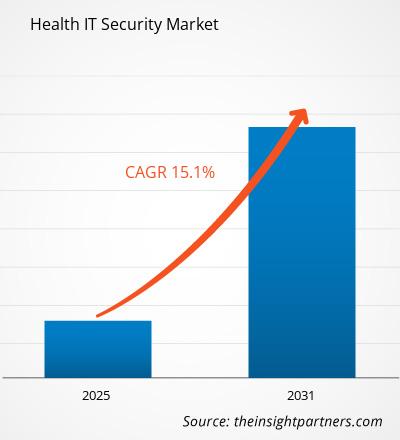
According to The Insight Partners, The Health IT Security market size is expected to reach US$ 68.65 Billion by 2034 from US$ 18.61 Billion in 2025. The market is anticipated to register a CAGR of 15.61% during the forecast period 2026–2034.
Get Sample PDF @ https://www.theinsightpartners.com/sample/TIPHE100001230
Market Overview
The Healthcare organizations store vast amounts of confidential patient information, including medical histories, financial records, insurance details, and diagnostic reports. This valuable data has become a prime target for cybercriminals. As hospitals increasingly rely on digital systems and cloud-based infrastructure, cybersecurity has become an essential component of healthcare operations.
Health IT security includes technologies and services designed to protect healthcare information systems from unauthorized access, malware, ransomware, phishing attacks, and data breaches. Modern security platforms combine identity management, endpoint protection, network security, cloud security, encryption, threat intelligence, and continuous monitoring to create a comprehensive defense strategy.
Market Drivers
- Rising Cybersecurity Threats:-Healthcare continues to be one of the most targeted industries for cyberattacks. Ransomware attacks, phishing campaigns, and malware infections can disrupt hospital operations, delay patient care, and expose confidential medical records. These incidents are encouraging healthcare organizations to strengthen their cybersecurity infrastructure.
- Increasing Adoption of Electronic Health Records:-The widespread implementation of Electronic Health Records has significantly improved patient care and operational efficiency. However, centralized digital records require robust security measures to prevent unauthorized access and data theft.
- Growth of Telemedicine:-Telemedicine services have expanded rapidly in recent years. Virtual consultations, remote diagnostics, and online patient monitoring require secure communication channels, authentication systems, and encrypted data transmission, creating strong demand for Health IT security solutions.
- Regulatory Compliance:-Healthcare organizations must comply with strict data privacy regulations and cybersecurity standards designed to protect patient information. Compliance requirements are encouraging healthcare providers to invest in advanced cybersecurity technologies and security management solutions.
- Cloud Migration:-Many hospitals and healthcare providers are moving applications and patient data to cloud environments. Cloud adoption offers flexibility and scalability but also requires enhanced cloud security, identity management, and continuous monitoring solutions.
Market Opportunities
Emerging technologies are creating new opportunities for Health IT security vendors.
Artificial intelligence is being increasingly integrated into cybersecurity platforms to detect abnormal behavior, identify cyber threats in real time, and automate incident response. AI-powered security systems help reduce response times while improving threat detection accuracy.
Zero Trust Security architecture is also becoming a preferred cybersecurity framework. Instead of automatically trusting users within a network, Zero Trust continuously verifies every user, device, and application before granting access.
The rapid expansion of Internet of Medical Things (IoMT) devices, wearable healthcare technologies, and connected diagnostic equipment also presents significant opportunities for endpoint security providers.
Market Challenges
Despite strong growth prospects, the market faces several challenges.
Healthcare organizations often operate with legacy IT systems that lack modern security capabilities. Upgrading these systems requires substantial investment and technical expertise.
Budget limitations remain another challenge, particularly for small hospitals and clinics that struggle to deploy enterprise-grade cybersecurity solutions.
Healthcare organizations also face a shortage of skilled cybersecurity professionals capable of managing increasingly sophisticated security environments.
Balancing strong cybersecurity with convenient access to patient information remains a critical operational challenge for healthcare providers.
Market Segmentation
By Component
- Solutions
- Services
Security solutions account for a significant share of the market as healthcare organizations prioritize proactive protection against cyber threats. Meanwhile, managed security services continue to experience strong demand due to the growing complexity of cybersecurity management.
By Application
- Network Security
- Endpoint Security
- Application Security
- Content Security
- Others
Network security remains one of the largest application segments because hospitals depend on secure communication between multiple systems, medical devices, and cloud platforms.
Endpoint security is also witnessing rapid growth due to the increasing number of connected medical devices, laptops, tablets, and mobile healthcare applications.
By Delivery Mode
- On-Premise
- Cloud-Based
Cloud-based deployment is expected to register faster growth as healthcare organizations continue migrating workloads to cloud infrastructure while adopting Software-as-a-Service (SaaS) healthcare applications.
By End User
- Healthcare Payers
- Healthcare Providers
- Physician Practices
- Others
Healthcare providers represent the largest end-user segment because hospitals manage extensive patient information and operate complex IT infrastructures requiring advanced cybersecurity protection.
Regional Analysis
North America
North America dominates the global Health IT Security Market due to widespread digital healthcare adoption, advanced healthcare infrastructure, stringent regulatory standards, and significant cybersecurity investments. The United States remains the largest contributor to regional growth.
Europe
Europe continues to witness steady market expansion driven by increasing healthcare digitization, government initiatives supporting cybersecurity, and strict patient data protection regulations.
Asia Pacific
Asia Pacific is expected to record the fastest growth during the forecast period. Countries such as China, India, Japan, South Korea, and Australia are investing heavily in healthcare modernization, digital hospitals, and cybersecurity infrastructure.
Middle East & Africa
Healthcare digital transformation initiatives and smart hospital projects are driving cybersecurity investments across several Middle Eastern countries.
South & Central America
Growing healthcare IT adoption and increased awareness regarding cyber risks are supporting market development across the region.
Competitive Landscape
The Health IT Security Market is highly competitive, with leading companies continuously investing in innovation, artificial intelligence, cloud security, and threat intelligence capabilities.
Some of the major companies operating in the market include:
- IBM Corporation
- Intel Corporation
- Symantec Corporation
- Trend Micro Incorporated
- Oracle
- CA Technologies
- Dell Inc.
- SailPoint Technologies Holdings, Inc.
- Hewlett Packard Enterprise Development LP
- McAfee, LLC
- Northrop Grumman Corporation
- Medigate Ltd.
- Lockheed Martin Corporation
These companies are strengthening their market positions through strategic partnerships, product innovation, acquisitions, and expansion of managed security services.
Emerging Trends
Several technological trends are reshaping the Health IT Security Market:
- AI-powered threat detection and automated response
- Zero Trust security frameworks
- Multi-factor authentication adoption
- Secure cloud migration strategies
- Increased investment in identity and access management
- Expansion of managed detection and response (MDR) services
- Protection for connected medical devices and IoMT ecosystems
- Advanced encryption and data loss prevention technologies
These innovations are enabling healthcare organizations to build resilient cybersecurity infrastructures capable of defending against increasingly sophisticated cyber threats.
Get the Premium Research Report @ https://www.theinsightpartners.com/buy/TIPHE100001230
Related Report
Healthcare IT Integration Market Size and Forecasts (2021 – 2034)
Healthcare Virtual Assistants Market Size and Forecast (2021 – 2034)
Future Outlook
The future of the Health IT Security Market appears highly promising. Continued healthcare digitization, expanding telehealth services, increasing adoption of cloud computing, and growing cybersecurity awareness will continue driving market growth.
About The Insight Partners
The Insight Partners is a global leader in market research, delivering comprehensive analysis and actionable insights across diverse industries. The company empowers decision-makers with data-driven intelligence to navigate evolving markets and accelerate growth.
Contact Us:
- Contact Person: Ankit Mathur
- E-mail: ankit.mathur@theinsightpartners.com
- Phone: +1-646-491-9876
