The Zero Trust Architecture (ZTA) has emerged as one of the fastest-growing segments within the global cybersecurity industry. As organizations continue to embrace cloud computing, hybrid work environments, digital transformation, and connected devices, traditional perimeter-based security models are no longer sufficient.
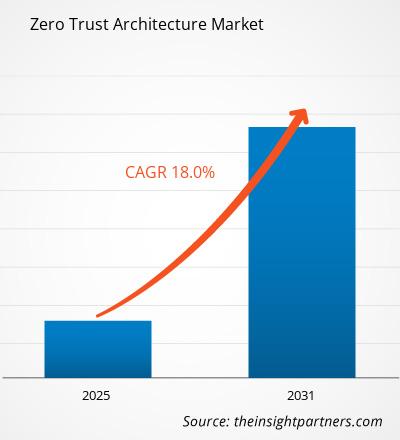
According to The Insight Partners, The zero trust architecture market was valued at US$ 40.62 Billion in 2025 and is projected to reach US$ 133.88 Billion by 2034, expanding at a CAGR of 16.08% during 2026–2034.
Get Sample PDF @ https://www.theinsightpartners.com/sample/TIPRE00039684
Market Overview
The Zero Trust Architecture represents a modern cybersecurity framework that eliminates implicit trust across enterprise networks. Instead of assuming users inside a corporate network are trustworthy, every access request is verified based on identity, device health, location, application, and user behavior.
The increasing complexity of IT infrastructures has accelerated the adoption of Zero Trust solutions among enterprises of all sizes. Businesses are investing in advanced identity and access management (IAM), multi-factor authentication (MFA), endpoint security, network segmentation, privileged access management, and continuous monitoring technologies to strengthen their security posture.
Digital transformation initiatives across banking, healthcare, manufacturing, retail, government, education, and telecommunications sectors continue to generate strong demand for Zero Trust solutions.
Key Market Drivers
- Rising Cybersecurity Threats:-Organizations worldwide are experiencing an unprecedented rise in ransomware attacks, phishing campaigns, insider threats, and sophisticated cyber intrusions. Traditional security models often fail to prevent lateral movement after attackers breach the network perimeter.
- Growth of Remote and Hybrid Work:-The rapid expansion of remote work has fundamentally changed enterprise security requirements. Employees now access corporate applications from multiple locations using various devices, making conventional VPN-based security less effective.
- Increasing Cloud Adoption:-Businesses are migrating workloads to public, private, and hybrid cloud environments at an accelerated pace. Cloud-native applications require flexible security models capable of protecting distributed infrastructures.
- Regulatory Compliance:-Governments and regulatory bodies continue introducing stricter cybersecurity and data protection regulations. Organizations are implementing Zero Trust frameworks to improve compliance with industry standards while protecting sensitive customer and enterprise information.
Emerging Market Trends
Several technological trends are reshaping the Zero Trust Architecture market.
Artificial Intelligence and Machine Learning are increasingly being integrated into Zero Trust platforms to automate threat detection, behavioral analytics, and policy enforcement.
Identity-first security continues to gain momentum as organizations focus on protecting users rather than network boundaries.
Micro-segmentation is becoming a standard practice, allowing enterprises to isolate workloads and reduce the impact of potential security breaches.
Cloud-native Zero Trust platforms are replacing legacy on-premises security solutions due to their scalability, automation capabilities, and simplified deployment.
Security Service Edge (SSE) and Secure Access Service Edge (SASE) solutions are also expanding rapidly as organizations seek unified cloud-based security platforms.
These innovations are expected to strengthen the market over the coming years.
Market Segmentation
The Zero Trust Architecture market can be segmented across several categories.
By Component
- Solutions
- Services
By Deployment Mode
- Cloud
- On-Premises
By Organization Size
- Large Enterprises
- Small and Medium Enterprises (SMEs)
By Authentication
- Multi-Factor Authentication
- Single Sign-On
- Biometric Authentication
- Others
By End User
- BFSI
- Healthcare
- Government
- IT & Telecommunications
- Manufacturing
- Retail
- Education
- Energy and Utilities
- Others
Among these segments, cloud deployment continues to witness significant growth as enterprises modernize their IT infrastructures and prioritize scalable cybersecurity solutions.
Regional Analysis
North America
North America remains the largest regional market for Zero Trust Architecture due to high cybersecurity spending, widespread cloud adoption, mature IT infrastructure, and strict regulatory requirements. Government initiatives and increasing investments from enterprises further support market growth.
Europe
European countries continue strengthening cybersecurity regulations, encouraging businesses to adopt Zero Trust frameworks. Financial institutions, healthcare organizations, and government agencies remain key adopters.
Asia-Pacific
Asia-Pacific is expected to experience substantial growth during the forecast period. Rapid digitalization, increasing internet penetration, cloud migration, and rising cyber threats are encouraging organizations across China, India, Japan, South Korea, and Southeast Asia to invest in Zero Trust technologies.
Middle East & Africa
Governments and enterprises across the Middle East are increasing investments in cybersecurity infrastructure to protect critical assets, financial institutions, and smart city projects.
South & Central America
Growing awareness of cybersecurity risks and increasing digital transformation initiatives are driving gradual adoption across emerging economies.
Get the Premium Research Report @ https://www.theinsightpartners.com/buy/TIPRE00039684
Competitive Landscape
The Zero Trust Architecture market is highly competitive, with leading cybersecurity companies continuously introducing innovative security solutions and expanding their product portfolios.
- Palo Alto Networks, Inc.
- VMware LLC
- Zscaler, Inc.
- Akamai Technologies, Inc.
- Microsoft Corporation
- Cisco Systems, Inc.
- International Business Machines Corporation
- Cloud Software Group, Inc. (Citrix)
- Trellix
- Forcepoint LLC.
Competition is expected to intensify as organizations increasingly demand integrated cybersecurity platforms capable of protecting hybrid and multi-cloud environments.
Future Outlook
The future of the Zero Trust Architecture market remains highly promising. As organizations continue embracing digital transformation, remote work, cloud computing, IoT devices, and AI-driven business processes, cybersecurity requirements will become increasingly sophisticated.
About The Insight Partners
The Insight Partners is a global leader in market research, delivering comprehensive analysis and actionable insights across diverse industries. The company empowers decision-makers with data-driven intelligence to navigate evolving markets and accelerate growth.
Contact Us:
- Contact Person: Ankit Mathur
- E-mail: ankit.mathur@theinsightpartners.com
- Phone: +1-646-491-9876
Also Available in :
Korean German Japanese French Chinese Italian Spanish
