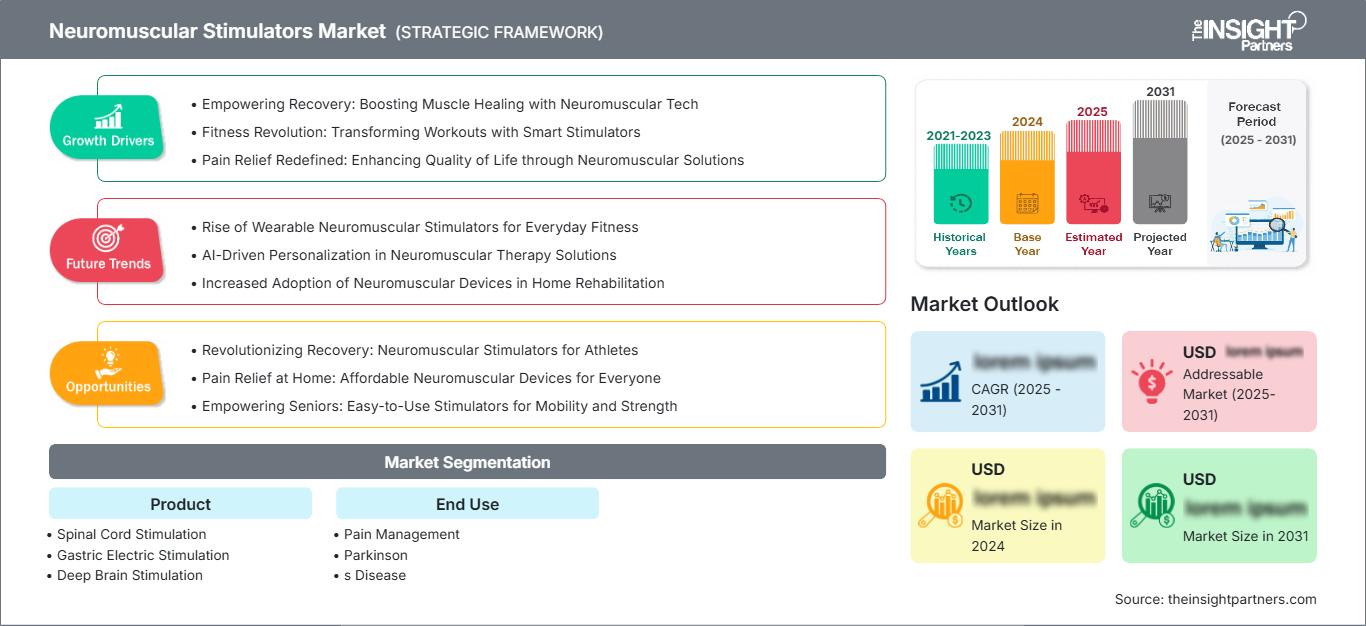
Neuromuscular stimulators are transforming the treatment landscape for chronic pain, neurological disorders, and rehabilitation by delivering targeted electrical stimulation to nerves and muscles. Their growing adoption reflects continuous innovation in implantable and wearable medical technologies.
The Neuromuscular Stimulators Market was valued at US$ 12.3 billion in 2025 and is projected to reach US$ 22.45 billion by 2034, registering a CAGR of 7.81% during 2026 to 2034. The Neuromuscular Stimulators Market is witnessing steady expansion as healthcare providers increasingly adopt advanced neurostimulation solutions to improve patient outcomes. Rising prevalence of chronic neurological conditions, expanding applications in pain management, and technological advancements are among the primary factors supporting long-term growth.
Get Sample PDF @ https://www.theinsightpartners.com/sample/TIPRE00022309
Rising Burden of Neurological Disorders Drives Industry Expansion
The increasing incidence of chronic pain, Parkinson’s disease, epilepsy, gastroparesis, and urinary or fecal incontinence is creating substantial demand for neuromuscular stimulation technologies. As healthcare systems focus on improving quality of life through minimally invasive therapies, neurostimulation devices have emerged as effective treatment alternatives for patients who do not respond adequately to conventional medication.
Growing awareness regarding non-opioid pain management solutions is further strengthening demand. Physicians are increasingly recommending spinal cord stimulation and vagus nerve stimulation therapies for long-term symptom management while reducing dependence on pharmaceutical treatments.
An aging global population also contributes significantly to industry growth, as elderly individuals are more susceptible to neurological disorders requiring advanced therapeutic interventions.
Technological Advancements Accelerate Product Innovation
Continuous innovation remains one of the strongest growth drivers for the Neuromuscular Stimulators Market. Manufacturers are investing heavily in miniaturized implants, rechargeable batteries, wireless programming systems, and AI-assisted therapy optimization to improve patient convenience and treatment efficiency.
Wearable neuromuscular stimulators are gaining traction among athletes, rehabilitation centers, and home healthcare providers. These portable devices support muscle recovery, improve mobility, and enhance rehabilitation following orthopedic injuries or surgeries.
Artificial intelligence and remote patient monitoring capabilities are expected to redefine future neuromuscular therapies. Personalized stimulation programs, cloud-based monitoring, and smartphone integration are enabling clinicians to optimize treatment protocols while improving patient compliance.
Product and End Use Segmentation Highlights
The industry is segmented by product into:
- Spinal Cord Stimulation
- Gastric Electric Stimulation
- Deep Brain Stimulation
- Sacral Nerve Stimulation
- Vagus Nerve Stimulation
Among these, spinal cord stimulation continues to account for a significant share due to its established effectiveness in treating chronic pain conditions. Deep brain stimulation is also witnessing strong demand because of its expanding application in Parkinson’s disease and movement disorder management.
Based on end use, the market is categorized into:
- Pain Management
- Parkinson’s Disease
- Urinary and Fecal Incontinence
- Epilepsy
- Gastroparesis
- Others
Pain management remains the dominant application segment owing to the growing prevalence of chronic back pain, neuropathic pain, and failed back surgery syndrome. Meanwhile, neurological disorder management continues to create new opportunities as clinical evidence supporting neurostimulation therapies expands.
Regional Analysis Reveals Strong Global Growth Opportunities
North America continues to lead the global industry due to advanced healthcare infrastructure, favorable reimbursement policies, high adoption of implantable medical devices, and the presence of major neurostimulation manufacturers. The United States remains the largest contributor, supported by continuous technological innovation and increasing patient awareness.
Europe maintains a significant position owing to rising healthcare expenditure, supportive regulatory frameworks, and expanding treatment accessibility for neurological disorders.
Asia Pacific is projected to record the fastest growth throughout the forecast period. Countries such as China, Japan, and India are witnessing increased healthcare investments, growing elderly populations, and expanding access to advanced medical technologies. Improved healthcare infrastructure and rising awareness regarding minimally invasive therapies continue to create attractive business opportunities across the region.
South and Central America, along with the Middle East and Africa, are also expected to demonstrate gradual expansion as healthcare modernization initiatives improve access to specialized neurological care.
Competitive Landscape
Leading companies continue to strengthen their positions through product innovation, clinical research, strategic partnerships, acquisitions, and geographic expansion.
Key players operating in the Neuromuscular Stimulators Market include:
- Medtronic
- Boston Scientific
- Abbott
- LivaNova (Cyberonics)
- Nevro
- Inspire Medical Systems
- NeuroPace
- Autonomic Technologies
- Zimmer MedizinSysteme GmbH
- Zynex Medical
- Beurer GmbH
- DJO Global
- EMS Physio Ltd.
- MeyerDC
These organizations are focused on enhancing device performance, improving patient comfort, and expanding indications for neurostimulation therapies through ongoing research and development investments.
Interested in Purchasing this Report? Click here @ https://www.theinsightpartners.com/buy/TIPRE00022309
Future Outlook
The Neuromuscular Stimulators Market is expected to maintain healthy growth through 2034, supported by increasing neurological disease prevalence, greater acceptance of minimally invasive therapies, and continuous technological advancements. The growing adoption of wearable devices, AI-driven therapy personalization, remote monitoring capabilities, and home rehabilitation solutions will further expand commercial opportunities.
Related Report:
1) Oral Anticoagulants Market Growth, Trends & Forecast by 2034
2) Thrombosis Drugs Market Dynamics, Analysis, Trends, and Opportunities 2031
3) Cancer Monoclonal Antibodies Market Growth, Size, Share, Trends, and Forecast by 2031
About Us –
The Insight Partners provides comprehensive syndicated and tailored market research services in the healthcare, technology, and industrial domains. Renowned for delivering strategic intelligence and practical insights, the firm empowers businesses to remain competitive in ever-evolving global markets.
Contact Us:
Ankit Mathur | The Insight Partners
E-mail: ankit.mathur@theinsightpartners.com
Phone: +1-646-491-9876
Also Available in : Korean German Japanese French Chinese Italian Spanish
