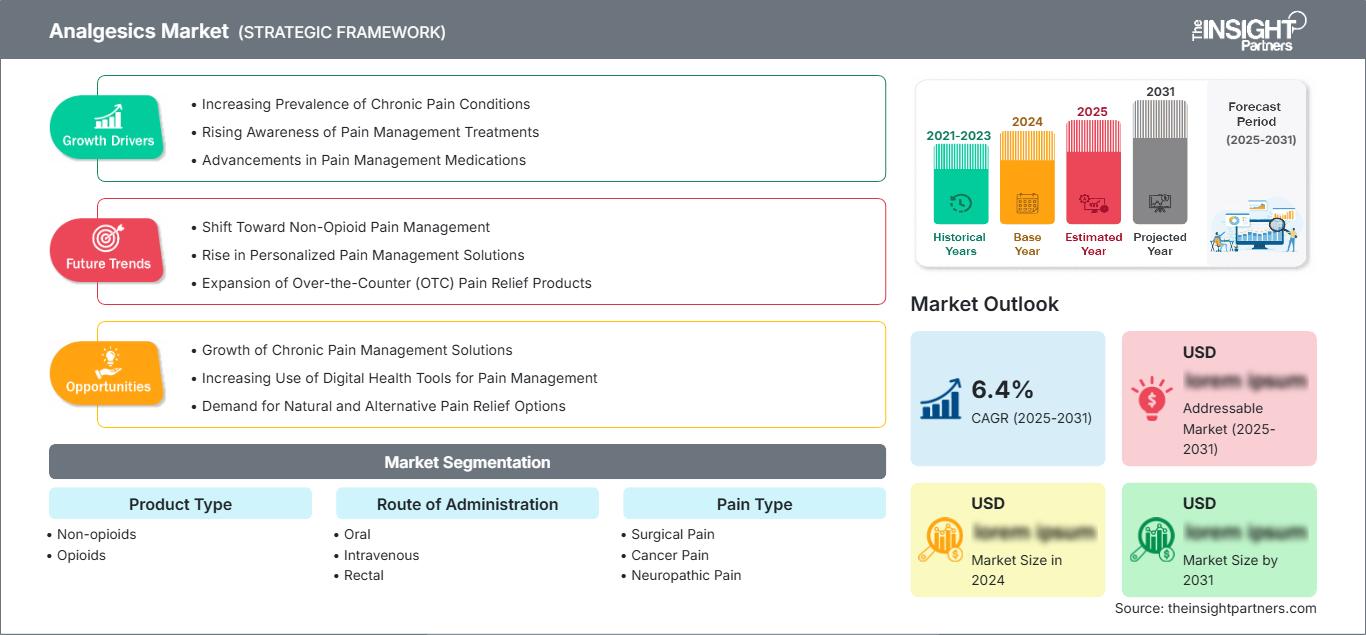
Pain management remains a critical component of healthcare across surgical recovery, chronic conditions, cancer care, and everyday acute discomfort. Rising procedure volumes, aging populations, and persistent pain conditions are sustaining demand for effective and accessible therapies.
The Analgesics Market is projected to grow from US$60.34 billion in 2025 to US$83.17 billion by 2034, registering a CAGR of 4.09% from 2026 to 2034. Growth is supported by expanding access to pharmaceuticals, increasing preference for non-opioid treatments, and wider adoption of topical and combination formulations.
Get Sample PDF @ https://www.theinsightpartners.com/sample/TIPRE00007240
Analgesics Market Growth Drivers
A major factor supporting the Analgesics Market is the growing emphasis on safer pain management. Healthcare providers are increasingly adopting multimodal approaches that combine non-opioid therapies with other interventions to reduce unnecessary opioid exposure. Acetaminophen, NSAIDs, topical analgesics, and other non-opioid products continue to see broad utilization across hospitals, retail pharmacies, and home-care settings.
The rising prevalence of chronic and recurrent pain conditions is another important growth driver. Arthritis, cancer-related pain, neuropathic disorders, sports injuries, headaches, and musculoskeletal conditions generate recurring demand. Aging populations further increase the need for pain management, particularly in developed economies where chronic disease and surgical procedure volumes remain substantial.
Expanding pharmacy networks in emerging economies are also improving access. Growth in retail pharmacies, generic drug manufacturing, online pharmaceutical channels, and healthcare infrastructure is strengthening product availability across Asia Pacific and other developing regions.
Product and Route Trends Shape Competitive Dynamics
Non-opioids represented the largest product category, accounting for approximately 68% to 72% share in 2025. Their widespread use in headaches, fever, arthritis, musculoskeletal pain, and post-procedure recovery supports continued dominance. Opioids remain clinically important for severe surgical pain, cancer pain, and selected trauma cases, although stricter prescribing controls and monitoring requirements influence their adoption.
By route of administration, oral products continue to dominate because of convenience, affordability, broad availability, and consumer familiarity. However, topical formulations are gaining momentum, with an estimated 5.7% to 6.3% CAGR during 2026 to 2034. Topical products offer localized relief and can provide an attractive option where reduced systemic exposure is preferred.
Transdermal formulations are also relevant for selected chronic and severe pain conditions because controlled drug release can support sustained therapy. Intravenous administration remains important in hospitals and emergency settings where rapid and supervised pain control is required.
Regional Outlook and Emerging Growth Opportunities
North America held approximately 34% to 37% share in 2025 and is expected to grow at a CAGR of 3.6% to 4.1% through 2034. Mature pharmacy networks, established hospital formularies, strong consumer awareness, and widespread adoption of non-opioid products support regional demand. The US accounted for approximately 83% to 86% of North America’s share.
Europe represented approximately 27% to 30% share in 2025. Germany, the UK, and France remain important contributors, supported by regulated pharmaceutical distribution, established healthcare systems, and pharmacist-led product selection.
Asia Pacific is expected to demonstrate comparatively faster growth, with a projected CAGR of 5.0% to 5.6%. China, India, Japan, and South Korea are benefiting from expanding healthcare access, growing pharmacy networks, increasing surgical volumes, and rising demand for affordable generic medicines.
Competitive Landscape and Strategic Developments
Competition includes diversified pharmaceutical companies, consumer healthcare businesses, and manufacturers with prescription and generic portfolios. Key players include:
- Bayer AG
- Novartis AG
- GSK plc
- Pfizer Inc.
- Johnson & Johnson Services, Inc.
- Reckitt Benckiser Group plc
- Endo Pharmaceuticals LLC
- Sanofi
- Eli Lilly and Company
- Teva Pharmaceutical Industries Ltd.
Companies are increasingly focusing on non-opioid innovation, localized delivery systems, combination products, and lifecycle management. Competitive positioning also depends on regulatory compliance, pharmacovigilance, manufacturing reliability, pharmacy relationships, and brand credibility.
Interested in Purchasing this Report? Click here @ https://www.theinsightpartners.com/buy/TIPRE00007240
Future Outlook
The Analgesics Market is expected to maintain steady expansion through 2034 as healthcare systems balance effective pain control with safety considerations. Companies that combine clinical evidence, responsible product positioning, accessible distribution, and innovative formulations are likely to strengthen their competitive position over the forecast period.
Related Report:
1) Pulp and Root Repair Market Size, Share, and Analysis by 2027
2) Medical Audiometer Devices Market Dynamics and Trends by 2028
3) Radiation Protection Apron Market Analysis, Size, and Share by 2030
About Us –
The Insight Partners provides comprehensive syndicated and tailored market research services in the healthcare, technology, and industrial domains. Renowned for delivering strategic intelligence and practical insights, the firm empowers businesses to remain competitive in ever-evolving global markets.
Contact Us:
Ankit Mathur | The Insight Partners
E-mail: ankit.mathur@theinsightpartners.com
Phone: +1-646-491-9876
Also Available in : Korean German Japanese French Chinese Italian Spanish
