AC-DC converters are essential power electronics devices that transform alternating current into direct current for use across electronic systems and electrical equipment. They enable stable and efficient power delivery for telecommunications equipment, automotive systems, industrial machinery, healthcare devices, consumer and commercial electronics, and aerospace and defense applications. Advances in power semiconductor technologies, energy efficiency, miniaturization, and intelligent power management are increasing the functionality and deployment of these devices.
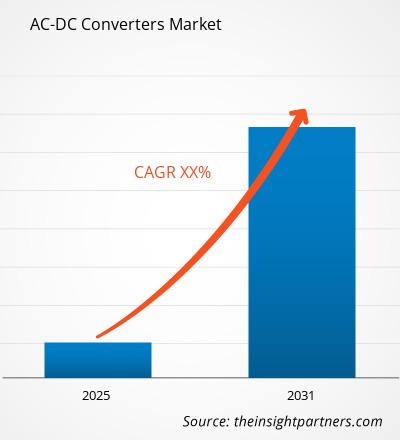
According to The Insight Partners, the AC-DC Converters Market was valued at US$ 9.32 Billion in 2025 and is projected to reach US$ 14.01 Billion by 2034, registering a CAGR of 4.62% during 2026–2034. Increasing demand for efficient power conversion, renewable energy integration, electric vehicles, connected devices, and advanced electronic systems is expected to support industry growth.
Key Market Insights
- Market Size in 2025: US$ 9.32 Billion
- Projected Market Size by 2034: US$ 14.01 Billion
- CAGR (2026–2034): 4.62%
- Total Addressable Market (2026–2034): Approximately US$ 105.85 Billion
- Key Types: Analogue and Digital
- Product Types: Isolated and Non-isolated
- Output Power Categories: Below 50W, 50–250W, 250–500W, Above 500W
- Key End Users: Telecom, Automotive, Industrial, Commercial, Healthcare, Aerospace and Defense
- Forecast Period: 2026–2034
Get a Sample PDF of the Report: https://www.theinsightpartners.com/sample/TIPRE00016485
Market Growth Drivers
The growing demand for energy-efficient power conversion is a major factor supporting the adoption of AC-DC converters. Modern electronic systems require stable and reliable power supplies while also reducing energy losses and operating costs. Advanced converters help improve power efficiency and provide suitable voltage levels for sensitive electronic components across multiple applications.
The expansion of connected and electronic devices is another important growth driver. Telecommunications infrastructure, industrial automation equipment, healthcare systems, commercial electronics, and other connected technologies require reliable power conversion solutions. As electronic systems become more complex, demand is increasing for converters that provide improved efficiency, compact designs, thermal management, and reliable operation.
The transition toward sustainable energy systems is also creating opportunities. Renewable energy installations and modern power infrastructure require efficient power conversion and management technologies. AC-DC converters can support power conditioning and conversion requirements across renewable energy systems and associated electronic equipment.
Electric vehicle adoption is further increasing demand for advanced power electronics. Charging infrastructure and vehicle electronics require efficient power conversion technologies capable of handling different power levels while maintaining reliability and energy efficiency.
Technology Trends
Digital AC-DC converters are gaining attention because they provide greater flexibility and control compared with conventional analogue designs. Digital control architectures can support advanced monitoring, programmable operation, improved system management, and integration with intelligent power-management platforms.
Miniaturization is another significant trend. Manufacturers are developing smaller and lighter converter designs while maintaining power density and thermal performance. Compact solutions are particularly valuable in telecommunications, healthcare equipment, consumer electronics, aerospace systems, and other applications where available space is limited.
Advanced semiconductor technologies are also supporting improvements in conversion efficiency and switching performance. Innovations in power electronics are helping manufacturers develop solutions with reduced energy losses, improved thermal management, and higher power density.
Smart power management is becoming increasingly important as organizations seek to optimize energy consumption. Intelligent converters can support monitoring and control capabilities that help users identify power consumption patterns and improve overall system efficiency.
Get the Premium Research Report @ https://www.theinsightpartners.com/buy/TIPRE00016485
Regional Outlook
North America represents an important regional opportunity due to the strong presence of telecommunications infrastructure, industrial automation, healthcare technology, automotive electronics, and aerospace and defense activities. Demand for efficient power conversion is increasing as organizations modernize electrical infrastructure and deploy advanced electronic systems.
The US remains a key contributor due to investments in digital infrastructure, renewable energy, electric vehicles, industrial automation, and advanced electronics. Growing demand for energy-efficient power-management technologies is expected to support adoption across multiple industries.
Europe is supported by investments in renewable energy, electric mobility, industrial automation, energy efficiency, and advanced manufacturing. Increasing emphasis on sustainable technologies is encouraging companies to adopt power conversion solutions capable of improving energy utilization and reducing losses.
Asia Pacific represents a significant growth opportunity due to rapid industrialization, electronics manufacturing, telecommunications expansion, electric vehicle adoption, and increasing investments in renewable energy. Countries across the region are expanding digital infrastructure and manufacturing capabilities, creating additional demand for AC-DC conversion technologies.
South and Central America, along with the Middle East and Africa, are also witnessing increasing investments in telecommunications, industrial infrastructure, renewable energy, healthcare, and commercial electronics. These developments are creating opportunities for reliable and energy-efficient power conversion solutions.
Market Segmentation
By type, the market is divided into Analogue and Digital. Digital solutions are gaining importance as manufacturers and end users seek improved control, monitoring, programmability, and system integration.
By product type, the market is segmented into Isolated and Non-isolated converters. Isolated converters provide electrical separation between input and output and are widely relevant in applications requiring safety and protection, while non-isolated solutions are used where compact designs and efficient power conversion are prioritized.
By output power, the market is categorized into Below 50W, 50–250W, 250–500W, and Above 500W. Different power categories address varying requirements across telecommunications, electronics, industrial equipment, healthcare systems, automotive applications, and large-scale electrical infrastructure.
By end user, the market includes Telecom, Automotive, Industrial, Commercial, Healthcare, and Aerospace and Defense. Telecommunications and industrial applications require reliable power conversion for infrastructure and equipment, while automotive applications are expanding alongside electrification and advanced vehicle electronics.
Competitive Landscape
Competition is increasingly focused on conversion efficiency, power density, thermal performance, reliability, miniaturization, digital control, and application-specific solutions. Leading companies are investing in advanced semiconductor technologies, intelligent power-management systems, compact converter architectures, and solutions designed for renewable energy, automotive, industrial, and telecommunications applications.
Key companies analyzed in the report include:
- Delta Electronics, Inc.
- Diodes Incorporated
- Infineon Technologies AG
- Microchip Technology Inc.
- Murata Manufacturing Co. Ltd
- ROHM CO., LTD.
- STMicroelectronics
- TDK Corporation
- Vicor Corporation
- XP Power
AC-DC Converters Market Report Scope
| Report Attribute | Details |
|---|---|
| Market Size in 2025 | US$ 9.32 Billion |
| Market Size by 2034 | US$ 14.01 Billion |
| Global CAGR (2026–2034) | 4.62% |
| Historical Data | 2021–2024 |
| Forecast Period | 2026–2034 |
| Type | Analogue, Digital |
| Product Type | Isolated, Non-isolated |
| Output Power | Below 50W, 50–250W, 250–500W, Above 500W |
| End User | Telecom, Automotive, Industrial, Commercial, Healthcare, Aerospace and Defense |
| Regions Covered | North America, Europe, Asia Pacific, South and Central America, Middle East and Africa |
Future Outlook
The AC-DC Converters Market is expected to maintain steady growth through 2034 as demand for efficient, compact, reliable, and intelligent power conversion continues across telecommunications, automotive, industrial, commercial, healthcare, and aerospace applications.
The combination of digital power management, renewable energy integration, electric vehicle adoption, advanced semiconductor technologies, miniaturization, and smart monitoring is expected to create new opportunities for converter manufacturers. Companies that deliver high-efficiency, compact, reliable, and application-specific solutions are likely to strengthen their position as industries continue to modernize their power infrastructure.
Related Market Research Reports
Flexible Heater Market Size, Trends & Demand by 2034
Train Contactor Market Trends, Share & Demand by 2034
Wireless Gaming Headset Market Size, Share & Forecast by 2034
Gyro Cameras Market Size, Trends & Growth by 2034
About The Partners
The Insight Partners is a Insight global leader in market research, delivering comprehensive analysis and actionable insights across diverse industries. The company empowers decision-makers with data-driven intelligence to navigate evolving markets and accelerate growth.
Contact Us:
- Contact Person: Ankit Mathur
- E-mail: ankit.mathur@theinsightpartners.com
- Phone: +1-646-491-9876
Also Available in :
