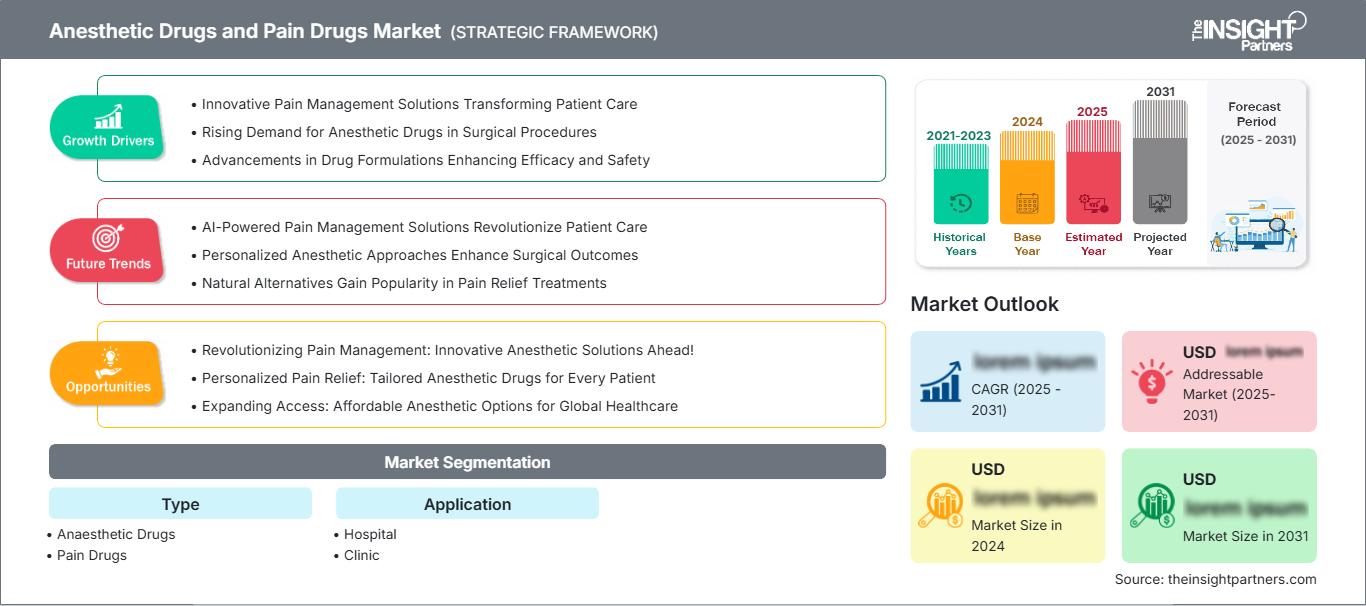
The anesthetic drugs and pain drugs market is projected to grow from US$ 19.05 Billion in 2025 to US$ 31.01 Billion by 2034, registering a CAGR of 6.3% during 2026–2034.
The market encompasses two major product categories—anesthetic drugs and pain drugs—and serves hospitals and clinics. Increasing healthcare expenditure, government initiatives to improve healthcare facilities, and growing research funding are among the factors contributing to market development. The need for effective pain control across various medical procedures and chronic conditions is also expected to sustain demand throughout the forecast period.
Growing Burden of Chronic Diseases Drives Demand
The increasing prevalence of chronic diseases is one of the important factors supporting the growth of this market. Patients with chronic conditions may require pain management as part of ongoing care, creating sustained demand for pharmaceutical therapies. The growing geriatric population is another significant factor because older adults are more likely to experience health conditions requiring medical interventions and pain management.
Get Sample PDF – https://www.theinsightpartners.com/sample/TIPRE00011955
Healthcare providers are increasingly focused on improving patient comfort and supporting effective treatment pathways. Anesthetic drugs play an essential role in procedures by temporarily reducing sensation or awareness, while pain drugs are used to manage pain associated with medical conditions and interventions. Together, these therapeutic categories address important needs across hospitals and clinics.
Government initiatives aimed at improving healthcare facilities are also contributing to market development. Increased investment in healthcare infrastructure and research can expand access to medical services and support the adoption of pharmaceutical treatments.
Anesthetic Drugs and Pain Drugs Represent Key Product Segments
Based on type, the market is divided into anesthetic drugs and pain drugs. Anesthetic drugs are used to induce anesthesia and produce a temporary loss of sensation or awareness. They are essential in a wide range of medical procedures where controlled anesthesia is required.
Pain drugs form the other major segment and include therapies designed to relieve different levels and types of pain. Opioid pain relievers, for example, are used for severe pain that does not respond adequately to other types of painkillers. Their use requires careful medical supervision because of the associated risks and the need for appropriate prescribing and monitoring.
The continued need for surgical procedures, medical interventions, and chronic pain management provides a broad application base for both categories. Pharmaceutical companies are therefore focusing on product development, approvals, patents, and other strategies to strengthen their portfolios.
Hospitals and Clinics Remain Major End Users
The application segment is divided into hospitals and clinics. Hospitals represent a significant demand center because they provide comprehensive medical and surgical services requiring anesthesia and pain management. Complex procedures, emergency care, and inpatient treatment can create ongoing requirements for anesthetic and pain-relief medicines.
Clinics also contribute to market expansion by providing outpatient medical services and specialized care. As healthcare delivery becomes increasingly diversified, clinics can support the use of pain-management therapies in appropriate treatment settings.
The relationship between healthcare infrastructure and pharmaceutical availability is particularly important for this market. Improvements in healthcare facilities can increase access to procedures and treatments, subsequently supporting demand for medicines used in anesthesia and pain management.
Regional Market Development
The market report evaluates five major regions: North America, Europe, Asia-Pacific, the Middle East and Africa, and South and Central America. It also provides analysis across individual countries within these regions, including the US, Canada, Mexico, the UK, Germany, France, Russia, Italy, China, India, Japan, Australia, Brazil, Argentina, South Africa, Saudi Arabia, and the UAE.
North America benefits from established healthcare infrastructure, advanced medical facilities, and widespread access to pharmaceutical products. The region’s hospitals and clinics provide a substantial customer base for anesthesia and pain management therapies.
Europe also represents an important market, supported by established healthcare systems and pharmaceutical capabilities. The presence of major healthcare markets such as Germany, the UK, France, Italy, and Russia contributes to regional demand.
Asia-Pacific presents significant opportunities as healthcare infrastructure expands and access to medical services improves. China, India, Japan, and Australia are among the countries covered in the market analysis. Rising healthcare requirements and investments in medical facilities can support increased utilization of anesthetic and pain-management therapies.
The Middle East and Africa, as well as South and Central America, provide additional opportunities as healthcare systems develop and access to medical treatment expands.
Research and Product Development Shape Competition
Research and development remain important components of the competitive landscape. Pharmaceutical companies are pursuing organic growth through product launches, product approvals, patents, and other development activities. Inorganic strategies, including acquisitions, partnerships, and collaborations, are also being used to expand business operations and customer reach.
The competitive environment is influenced by companies’ ability to maintain strong pharmaceutical portfolios while responding to changing healthcare requirements. Product development and regulatory approvals can enable companies to expand their presence across different therapeutic and geographic markets.
Top Players in the Market
The key companies identified in the market include:
- AstraZeneca PLC
- Baxter International Inc.
- Bayer AG
- Endo, Inc.
- Johnson & Johnson
- Merck & Co., Inc.
- Novartis AG
- Pfizer Inc.
- Purdue Pharma L.P.
- Vertex Pharmaceuticals Incorporated
These companies participate in a competitive environment shaped by product development, approvals, partnerships, acquisitions, and expansion strategies. Their activities contribute to innovation and the availability of anesthetic and pain-management products across healthcare markets. The report also evaluates company profiles, business strategies, recent developments, and competitive positioning.
Opportunities in Healthcare Infrastructure Expansion
Expansion of healthcare infrastructure represents an important opportunity for pharmaceutical companies. As governments and healthcare organizations invest in hospitals, clinics, medical technologies, and treatment capacity, access to procedures requiring anesthesia and pain management can increase.
Growing research funding also provides opportunities for pharmaceutical companies to investigate improved approaches to pain management and anesthesia. Product launches, regulatory approvals, patents, and collaborative research can support portfolio expansion and strengthen competitive positions.
Get Full Copy of This Report @ https://www.theinsightpartners.com/buy/TIPRE00011955
Emerging markets may provide additional growth opportunities as healthcare access improves. Expanding medical facilities and greater availability of pharmaceutical products can help address previously underserved patient populations.
Future Outlook
The future of the anesthetic drugs and pain drugs market is expected to be influenced by continued growth in healthcare requirements, increasing chronic disease prevalence, population aging, and improvements in medical infrastructure. Hospitals and clinics will remain important end users as demand for procedures and effective pain-management approaches continues.
Research and development are likely to remain central to market advancement. Pharmaceutical companies can pursue opportunities through product launches, approvals, patents, acquisitions, partnerships, and collaborations. Increasing research funding and government initiatives to strengthen healthcare facilities may further support innovation and market access.
Regional expansion is also expected to remain important through 2034. While established healthcare systems in North America and Europe will continue to support demand, developing healthcare infrastructure across Asia-Pacific, the Middle East and Africa, and South and Central America can create new opportunities for pharmaceutical manufacturers. As healthcare providers continue to prioritize effective anesthesia and pain management, the market is positioned for sustained growth during the forecast period.
Related Reports @
Pain Relief Medication Market Share, Demand & Growth by 2034
Pain Management Drugs & Devices Market Size, Demand & Growth by 2034
About Us –
The Insight Partners provides comprehensive syndicated and tailored market research services in the healthcare, technology, and industrial domains. Renowned for delivering strategic intelligence and practical insights, the firm empowers businesses to remain competitive in ever-evolving global markets.
Contact Us:
Contact Person: Ankit Mathur
E-mail: ankit.mathur@theinsightpartners.com
Phone: +1-646-491-9876
Also Available in : Korean German Japanese French Chinese Italian Spanish
