Subsea control systems enable operators to monitor, manage, and control equipment deployed in underwater environments. These systems support critical offshore operations by connecting topside and underwater equipment, sensors, control modules, and monitoring technologies. Increasing deployment in deepwater and ultra-deepwater environments is creating demand for reliable control technologies capable of operating under challenging subsea conditions.
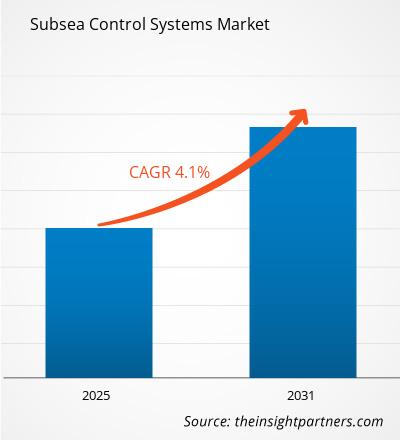
According to The Insight Partners, the Subsea Control Systems Market was valued at US$ 11.95 billion in 2025 and is projected to reach US$ 23.38 billion by 2034, registering a CAGR of 7.74% during 2026–2034. Expansion of offshore oil and gas exploration, technological advancements in subsea systems, and increasing interest in offshore renewable energy are expected to support industry growth.
Key Market Insights
- Market Size in 2025: US$ 11.95 Billion
- Projected Market Size by 2034: US$ 23.38 Billion
- CAGR (2026–2034): 7.74%
- Total Addressable Market (2026–2034): Approximately US$ 159.04 Billion
- Key Types: Topside Control Equipment, Underwater Control Equipment
- Key Components: Subsea Control Module, Master Control System, Sensors
- Key Applications: Production, Processing
- Forecast Period: 2026–2034
Get a Sample PDF of the Report: https://www.theinsightpartners.com/sample/TIPRE00014710
Expansion of Offshore Oil and Gas Exploration Supports Growth
The continued expansion of offshore oil and gas exploration is a major factor supporting demand for subsea control systems. Operators are increasingly exploring deepwater and ultra-deepwater resources where reliable control technologies are essential for managing subsea equipment.
Subsea control systems support the operation and monitoring of equipment such as valves, wellheads, and blowout preventers. Their ability to provide control and monitoring capabilities in remote underwater environments makes them an important part of offshore production infrastructure.
Technological Advancements Strengthen Adoption
Advancements in subsea control technologies are contributing to improved operational reliability, monitoring, and automation. Modern systems increasingly incorporate advanced communication technologies, real-time data acquisition, remote monitoring, and automated control capabilities.
The growing use of remotely operated vehicles and advanced subsea technologies is also supporting operational efficiency. These developments can help operators monitor equipment performance, identify potential issues, and improve decision-making in challenging offshore environments.
Digitalization and Automation Transform Subsea Operations
The integration of IoT, artificial intelligence, and machine learning is creating new opportunities for subsea control technologies. Digital solutions can support real-time monitoring, predictive maintenance, automated operations, and improved asset management.
As subsea projects move into deeper and more complex environments, operators are increasingly prioritizing technologies that can provide reliable information and control while reducing operational risks. Digitalization is therefore expected to remain an important technology trend through 2034.
Reliability and Redundancy Remain Critical
Reliability and redundancy are becoming increasingly important as subsea equipment operates in remote and demanding environments. Control systems must support critical functions while minimizing the risk of operational failures.
Redundant system architectures can provide additional protection by enabling backup systems to assume control when a primary component encounters an issue. This focus on fault tolerance is particularly important for applications involving critical safety equipment and deepwater production infrastructure.
Subsea Control Systems Market Segmentation
Based on type, the Subsea Control Systems Market is divided into Topside Control Equipment and Underwater Control Equipment. Both categories play important roles in managing communication, monitoring, and operational control between surface infrastructure and subsea equipment.
By components, the market includes Subsea Control Module, Master Control System, Sensors, and other components. These technologies work together to monitor subsea conditions, transmit information, and control underwater equipment.
By application, the market is categorized into Production and Processing. Production applications involve controlling and monitoring subsea production equipment, while processing applications support efficient management of offshore processing operations.
Get the Premium Research Report @ https://www.theinsightpartners.com/buy/TIPRE00014710
Regional Outlook
North America represents an important regional market, supported by offshore oil and gas exploration, technological development, and investment in subsea infrastructure. The US remains a key contributor as operators continue to deploy advanced technologies for offshore exploration and production activities.
Europe is supported by established offshore energy infrastructure and continued investments in advanced subsea technologies. The region also presents opportunities associated with offshore renewable energy, including emerging applications for subsea control systems in offshore wind projects.
Asia Pacific is expected to provide additional growth opportunities due to increasing energy demand, offshore exploration activities, and investments in subsea infrastructure. Countries with expanding offshore energy operations are likely to contribute to regional adoption.
The Middle East and Africa and South and Central America are also expected to contribute to industry development as offshore exploration and field development activities increase.
Competitive Landscape
Competition is focused on system reliability, automation, advanced control technologies, real-time monitoring, subsea communication, and operational efficiency. Leading companies are developing solutions designed to support increasingly complex offshore projects and improve control over remote subsea assets.
Key companies analyzed include:
- FMC Technologies Inc.
- Halliburton
- GE Oil & Gas Spa
- Aker Solutions ASA
- OneSubsea
- Baker Hughes
- Kongsberg Gruppen
- Proserve Group Inc.
- Oceaneering International, Inc.
- Siemens AG
Future Outlook
The Subsea Control Systems Market is expected to maintain steady growth through 2034 as offshore operators invest in advanced control, monitoring, automation, and digital technologies. The combination of subsea sensors, control modules, real-time communication, AI-enabled analytics, and remotely operated systems is expected to expand the capabilities of subsea infrastructure.
Future opportunities are also emerging beyond conventional oil and gas applications. Growing interest in offshore renewable energy, including floating wind farms and underwater energy systems, could create new applications for subsea control technologies. At the same time, increasing subsea tiebacks and field development activities are expected to support demand for reliable systems capable of controlling and monitoring remote underwater assets.
Related Market Research Reports
Optical Time Domain Reflectometer Market Size, Trends & Growth by 2034
Emergency Spill Response Market Size, Growth & Demand by 2034
Lighting Market Share, Growth & Forecast by 2034
FRAM Market Size, Trends & Growth by 2034
About The Partners
The Insight Partners is a Insight global leader in market research, delivering comprehensive analysis and actionable insights across diverse industries. The company empowers decision-makers with data-driven intelligence to navigate evolving markets and accelerate growth.
Contact Us:
- Contact Person: Ankit Mathur
- E-mail: ankit.mathur@theinsightpartners.com
- Phone: +1-646-491-9876
Also Available in :
