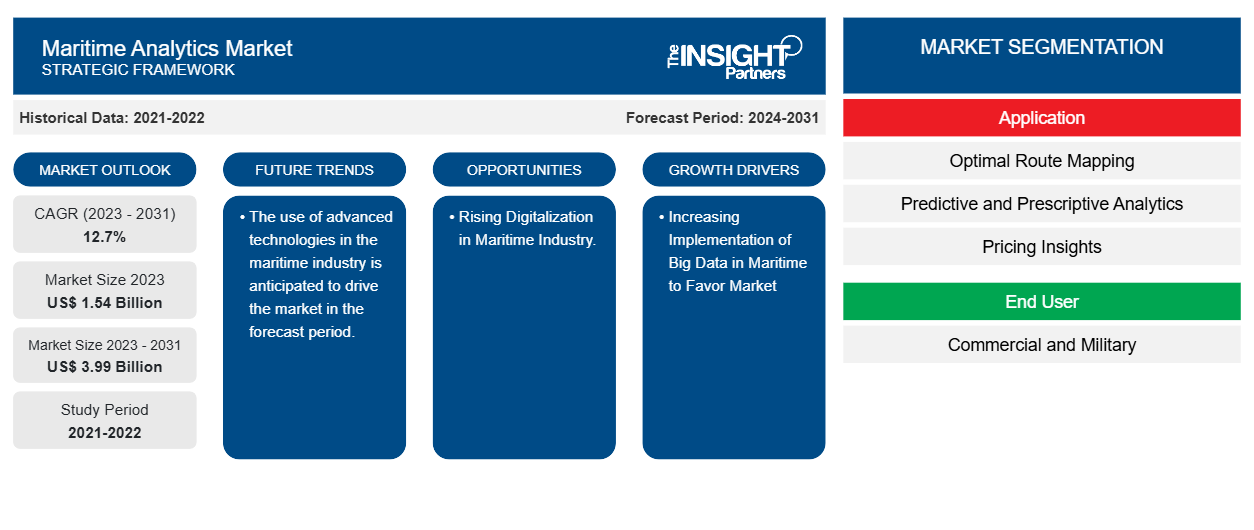
Maritime analytics refers to the application of advanced data processing, artificial intelligence (AI), machine learning (ML), and Internet of Things (IoT) technologies across maritime operations. These tools enable fleet managers and port administrators to collect and analyze real-time data from vessel sensors, satellite navigation, and global trade networks. By transforming raw operational data into actionable insights, maritime analytics helps companies reduce fuel consumption, mitigate operational risks, map optimal sailing routes, and maintain equipment reliability through predictive maintenance.
The maritime analytics market size was valued at US$ 1.27 billion in 2024 and is expected to reach US$ 2.56 billion by 2031; it is estimated to record a CAGR of 10.6% from 2025 to 2031.
Key Market Drivers
- Rapid Digitization in Global Trade and Shipping: Global seaborne trade continues its steady expansion. According to UNCTAD data, global maritime trade expanded by 2.4% in 2023, reaching 12.3 billion tons, with sustained growth projected through 2029. To manage high trade volumes efficiently, shipping companies are turning to integrated digital platforms to enhance fleet visibility, reduce turnaround times, and lower total operational expenditures.
- Strict Environmental Regulations and Decarbonization Mandates: Environmental compliance is a major growth driver. The International Maritime Organization (IMO) introduced regulatory metrics such as the Energy Efficiency Existing Ship Index (EEXI) and the Carbon Intensity Indicator (CII) to enforce greenhouse gas (GHG) emission reductions from international shipping. Furthermore, regional frameworks like the European Union’s “Fit for 55” program demand a 55% reduction in emissions by 2030 compared to 1990 levels. Maritime analytics software enables shipowners to monitor fuel efficiency, calculate voyage carbon footprints, and maintain compliance with global standards.
- Operational Optimization and Cost Control: High fuel expenses and maintenance costs prompt fleet managers to leverage predictive and prescriptive analytics. Automated analytics tools monitor engine performance, recommend speed adjustments, and prevent unscheduled machinery breakdowns, delivering substantial long-term cost savings.
Download Sample Report@ https://www.theinsightpartners.com/sample/TIPRE00003041
Emerging Opportunities
The ongoing convergence of maritime operational technology with cloud computing, artificial intelligence, and edge processing presents major commercial opportunities:
- Integration of Generative AI and Autonomous Vessel Tracking: Advanced AI models can analyze historical voyage data, meteorological patterns, and port congestion metrics simultaneously. This enables autonomous route optimization and real-time navigation assistance.
- Expansion of Green Shipping Corridors: Bilateral and regional green maritime corridor agreements create strong demand for specialized emissions tracking software and green logistics analytics tools.
- Enhanced Cyber Risk and Security Management: As maritime infrastructure becomes digitized, security analytics platforms offer significant market potential by safeguarding vessel navigation systems and port operational network infrastructures against digital threats.
Market Segmentation Analysis
The global maritime analytics market is categorized into distinct segments based on component, deployment mode, application, end user, and geography.
By Component
- Software: Accounted for the largest market share of 70.4% in 2024. High demand for specialized route mapping, fuel tracking, and predictive maintenance software drives this segment.
- Services: Includes professional consulting, system integration, software maintenance, and managed analytical services.
By Deployment Mode
- Cloud-based: Anticipated to record the fastest growth with a CAGR of 11.4% through 2031. Cloud deployment offers scalable infrastructure, seamless over-the-air software updates, and remote access across offshore vessels and onshore headquarters.
- On-Premises: Preferred by organizations requiring localized data security and strict control over proprietary operational data.
By Application
- Predictive and Prescriptive Analytics: Held the largest market share of 39% in 2024. These solutions assist operators in anticipating operational bottlenecks and selecting optimized actions.
- Optimal Route Mapping: Uses real-time weather and traffic intelligence to determine optimal sea paths.
- Pricing Insights, Vessel Safety and Security, and Others: Additional analytical software solutions supporting trade finance, risk assessment, and crew safety management.
By End User
- Commercial: Encompasses cargo carriers, container shipping lines, tanker operators, and port logistics providers. The segment is projected to grow at a CAGR of 10.8% from 2025 to 2031.
- Military: Utilized by naval forces and coast guards for maritime domain awareness, fleet readiness, and tactical intelligence.
Geographic Performance
- Asia Pacific: Dominates the global market, accounting for a 41.4% share in 2024. Driven by dense maritime trade routes, large port operations in China, Singapore, and Japan, and ongoing infrastructure modernization, Asia Pacific is projected to expand at the highest regional CAGR of 12.1%.
- North America & Europe: Driven by strict environmental regulations and advanced port digital infrastructure. The United States maritime analytics market is expected to expand at an 8.6% CAGR.
Market News and Recent Developments
- Major Infrastructure Capital Investments: Global shipping line CMA CGM Group announced plans in March 2025 to invest US$ 20 billion over four years into United States maritime infrastructure, logistics hubs, and domestic supply chain digitization.
- Cross-Border Green Shipping Initiatives: In March 2025, India and Singapore executed a Letter of Intent to establish the Singapore-India Green and Digital Shipping Corridor (GDSC). This partnership focuses on digital standardization, decarbonization technologies, and analytics integration across regional sea routes.
Competitive Landscape and Top Players
The maritime analytics market is competitive, characterized by strategic partnerships, acquisitions, and technology innovation. Leading technology providers focus on offering end-to-end fleet analytics platforms that combine satellite tracking, engine telematics, and predictive algorithms.
Top Industry Players
- ABB Ltd
- Hexagon AB
- ShipNet
- Windward Ltd
- Maritech Holdings Limited
- Kpler
- OrbitMI, Inc.
- ZeroNorth A/S
- Viasat Inc
- SOLITWORK A/S
These key market participants continuously enhance their product software suites through AI integration, API interoperability, and strategic alliances with vessel hardware manufacturers.
Get Full Copy of This Report @ https://www.theinsightpartners.com/buy/TIPRE00003041
Future Outlook
The maritime analytics market stands at the forefront of the global shipping industry’s technological evolution. Between 2025 and 2031, demand for data analytics solutions will intensify as maritime stakeholders strive to balance operational profitability with regulatory compliance. Organizations that integrate predictive analytics, cloud software platforms, and real-time emission tracking will achieve superior operational resilience, cost efficiency, and commercial growth in an increasingly competitive global trade ecosystem.
About The Insight Partners
The Insight Partners provides comprehensive syndicated and tailored market research services in the healthcare, technology, and industrial domains. Renowned for delivering strategic intelligence and practical insights, the firm empowers businesses to remain competitive in ever-evolving global markets.
Contact Information
- Email: sales@theinsightpartners.com
- Website: theinsightpartners.com
- Phone: +1-646-491-9876
