The Cryogenic Oxygen Stations Market is gaining momentum as healthcare systems, industrial facilities, and energy-intensive operations increasingly require reliable supplies of high-purity oxygen. Cryogenic oxygen stations use low-temperature separation and storage technologies to produce, process, and distribute oxygen in liquid and gaseous forms. Growing demand for medical oxygen, industrial gases, metal processing, chemical manufacturing, and other applications is encouraging investment in oxygen production and storage infrastructure.
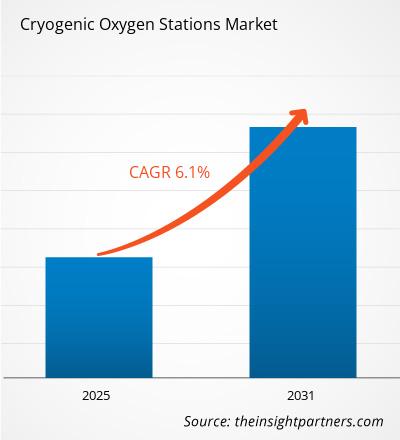
The Cryogenic Oxygen Stations Market drivers include rising healthcare oxygen consumption, increasing industrialization, expanding metal fabrication activities, growing demand for high-purity industrial gases, and investments in centralized gas infrastructure. The market is valued at US$ 2.7 Billion in 2025 and is anticipated to reach US$ 4.6 Billion by 2034, registering a CAGR of 6.08% between 2026 and 2034. The transition toward dependable on-site and centralized oxygen generation is creating additional opportunities for equipment manufacturers and gas infrastructure providers.
Download Sample PDF: https://www.theinsightpartners.com/sample/TIPRE00020480
What Are the Key Cryogenic Oxygen Stations Market Drivers?
One of the strongest Cryogenic Oxygen Stations Market Drivers is increasing demand for medical oxygen. Hospitals, specialty healthcare centers, and emergency care facilities require dependable oxygen supplies for respiratory therapy, surgery, intensive care, and other clinical applications. The experience of global healthcare systems during periods of high respiratory disease burden has further emphasized the importance of reliable oxygen infrastructure.
Industrial demand is another major growth factor. Oxygen is widely used in steel production, metal cutting, chemical processing, glass manufacturing, wastewater treatment, and other industrial processes. As manufacturing capacity expands, demand for consistent supplies of high-purity oxygen increases, encouraging investments in cryogenic production systems.
The expansion of infrastructure-intensive industries is also contributing to market development. Large industrial facilities often require substantial volumes of gases and benefit from centralized oxygen production and storage systems. Cryogenic technologies can support large-scale oxygen supply requirements and provide operational continuity for demanding industrial applications.
How Is Healthcare Infrastructure Creating Market Opportunities?
The expansion of healthcare infrastructure is creating significant opportunities for the Cryogenic Oxygen Stations Market. New hospitals and healthcare facilities increasingly require dependable medical gas systems, particularly in regions where healthcare capacity is expanding.
Cryogenic oxygen systems can provide large-scale oxygen supplies to hospitals and healthcare networks. Their ability to support high-volume oxygen requirements makes them attractive for centralized healthcare facilities and medical gas distribution networks.
Another opportunity lies in upgrading aging oxygen infrastructure. Hospitals and industrial facilities with older systems may invest in modern cryogenic equipment to improve efficiency, reliability, storage capabilities, and operational safety. Equipment manufacturers can benefit by offering modernization, replacement, maintenance, and technical support services.
Cryogenic Oxygen Stations Market Growth Drivers
The expansion of steel and metal manufacturing represents an important market driver. Oxygen is used to improve combustion efficiency and support various metallurgical processes. Growing steel production and investments in manufacturing facilities can therefore stimulate demand for oxygen-generation infrastructure.
The chemical industry also relies on oxygen for oxidation processes, synthesis, combustion, and other applications. As chemical production capacity increases, the requirement for reliable high-purity oxygen can rise correspondingly.
Energy and environmental applications are another area of opportunity. Oxygen can be used in wastewater treatment and other processes where enhanced oxidation is required. Increasing environmental regulations and investments in water-treatment infrastructure may therefore contribute to demand.
Cryogenic oxygen stations can also provide benefits through large-scale production and storage. Facilities with substantial oxygen requirements may prefer centralized systems that offer consistent supply and reduce dependence on external deliveries.
Cryogenic Oxygen Stations Market Opportunities
A major opportunity is the development of energy-efficient cryogenic oxygen systems. Oxygen production through cryogenic air separation can require substantial energy, creating demand for technologies designed to improve efficiency and reduce operating costs.
Manufacturers can differentiate their systems through improved heat-exchanger designs, advanced controls, optimized compressors, efficient storage systems, and automated monitoring technologies.
Another opportunity is the integration of digital monitoring and automation. Connected systems can enable operators to track oxygen production, storage levels, pressure, temperature, equipment performance, and maintenance requirements. Predictive maintenance technologies may help reduce unexpected downtime and improve operational reliability.
On-site oxygen generation also represents an important opportunity. Healthcare facilities and industrial users increasingly seek greater control over oxygen supply and reduced exposure to external logistics disruptions. Cryogenic systems can support large-scale on-site production where demand justifies the required infrastructure.
Cryogenic Oxygen Stations Market Trends
One of the key trends is the increasing emphasis on oxygen supply resilience. Healthcare providers and industrial operators are looking for systems that can maintain continuous oxygen availability and reduce vulnerabilities associated with external supply chains.
Automation is another important trend. Advanced cryogenic oxygen stations increasingly incorporate automated controls, alarms, monitoring systems, and remote diagnostics. These technologies can improve safety and simplify operational management.
Environmental sustainability is also influencing equipment development. Manufacturers are exploring ways to reduce energy consumption and optimize oxygen production efficiency. Improved equipment performance can lower operating costs while supporting sustainability objectives.
Modular system design is another emerging trend. Modular oxygen stations can provide greater flexibility for facilities with changing capacity requirements. They can also simplify installation and allow operators to expand systems as demand increases.
Cryogenic Oxygen Stations Market Competitive Landscape
The competitive landscape includes global industrial gas companies, cryogenic equipment manufacturers, and engineering solution providers. Companies compete based on system capacity, energy efficiency, reliability, technology, customization capabilities, service networks, and total operating costs.
Key players include:
Chart Industries, Inc., Cryofab, Inc., INOXCVA, Linde plc, Air Products and Chemicals, Inc., Cryolor, Air Water Inc., Wessington Cryogenics Ltd., Super Cryogenic Systems Pvt Ltd., FIBA Technologies, Inc., ISISAN, Suretank Group Ltd., Eden Cryogenics LLC, Gardner Cryogenic, and Auguste Cryogenics.
Leading companies are focusing on technology development, infrastructure expansion, equipment modernization, strategic partnerships, and long-term gas supply solutions. Investments in digital monitoring and energy-efficient equipment are expected to remain important competitive strategies.
Purchase a Copy of this report: https://www.theinsightpartners.com/buy/TIPRE00020480
Future Outlook
The future of the Cryogenic Oxygen Stations Market is expected to be shaped by continued industrialization, healthcare infrastructure expansion, oxygen supply resilience initiatives, and advances in cryogenic technology.
Manufacturers are likely to focus on improving energy efficiency, automation, system reliability, and remote monitoring capabilities. Digital technologies can support predictive maintenance and provide operators with real-time information regarding equipment performance and oxygen availability.
The healthcare sector is expected to remain an important source of demand as hospitals expand respiratory care capacity and strengthen medical gas infrastructure. Industrial sectors such as steel, chemicals, metal processing, and environmental services will also contribute to long-term demand.
Also Available in: Korean | German | Japanese | French | Chinese | Italian | Spanish
Related Reports:
Sterilization Technologies Market: Size, Growth Trends, and Outlook to 2031
Spinal Cord Stimulation Devices Market Trends, Size & Growth by 2034
About Us
The Insight Partners is a one-stop provider of actionable industry research and intelligence. We help our clients in getting solutions to their research requirements through our syndicated and consulting research services. We specialize in industries such as Semiconductor and Electronics, Aerospace and Defense, Automotive and Transportation, Healthcare IT, Manufacturing and Construction, Medical Devices, Technology, Media and Telecommunications, Food and Beverages, Consumer Goods, and Chemicals and Materials.
Contact Us
Contact Person: Ankit Mathur
Phone: +1-646-491-9876
E-mail : sales@theinsightpartners.com
