The Medical Device Security is becoming increasingly important as healthcare organizations, medical device manufacturers, and technology providers adopt connected and digitally enabled medical equipment. The integration of Internet of Things (IoT), cloud platforms, wireless connectivity, remote monitoring, and advanced software into medical devices has improved healthcare delivery while also expanding the cybersecurity attack surface.
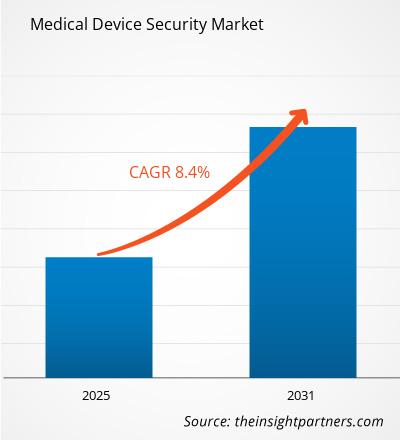
According to The Insight Partners, The Medical Device Security Market size is expected to reach US$ 15.54 Billion by 2031. The market is anticipated to register a CAGR of 11.4% during 2025-2031.
Get Sample PDF of the report @ https://www.theinsightpartners.com/sample/TIPHE100001399
Growing Connectivity of Medical Devices
The increasing connectivity of medical equipment is one of the major factors supporting the growth of the medical device security market. Hospitals are increasingly deploying connected imaging systems, patient monitoring equipment, infusion systems, diagnostic devices, wearable technologies, and other smart medical equipment. These devices generate and transmit valuable clinical information, making them attractive targets for cybercriminals.
Connected healthcare environments require security at multiple levels. Endpoint protection can help secure individual devices, while network security protects communication pathways between devices and healthcare infrastructure. Application security addresses vulnerabilities in software, and cloud security helps protect information and services hosted in cloud environments. The growing complexity of these ecosystems is encouraging healthcare organizations to invest in integrated cybersecurity strategies.
Increasing Healthcare Cybersecurity Threats
The rising frequency and sophistication of cyberattacks is another significant market driver. Medical devices can potentially become entry points into hospital networks, while compromised equipment may expose sensitive patient information or disrupt clinical operations. Security incidents involving connected medical technologies can therefore create both financial and operational consequences.
The increasing focus on medical device cybersecurity is also linked to patient safety. Unlike conventional enterprise IT systems, medical devices can directly support diagnosis, monitoring, and treatment. A security vulnerability that affects the availability or integrity of a medical device may therefore have consequences beyond data loss. Research into modern implantable devices has similarly highlighted how connectivity can introduce security risks that need to be addressed through appropriate safeguards.
Regulatory Compliance Strengthens Market Demand
Regulatory requirements are encouraging medical device manufacturers and healthcare organizations to strengthen cybersecurity practices. Regulators increasingly expect cybersecurity considerations to be incorporated into the development and lifecycle management of connected medical products.
In the United States, cybersecurity requirements for medical devices have received greater attention as connected technologies become more widespread. Manufacturers are increasingly expected to consider cybersecurity risks during device design, development, deployment, and post-market management. These regulatory developments are creating additional demand for security assessment, monitoring, vulnerability management, and compliance-related services.
Medical Device Security Market Segmentation
The market is segmented by component, type of security, device type, and end user. By component, the market includes solutions and services. Security types include application, endpoint, network, cloud, and other security categories. By device type, the market covers hospital medical devices, internally embedded medical devices, and wearable and external medical devices. End users include healthcare providers, healthcare payers, and medical device manufacturers.
The growing deployment of wearable and externally connected devices is creating additional opportunities for security providers. Wearables can continuously collect health information and communicate with smartphones, applications, and cloud platforms. Protecting these connections requires authentication, encryption, access management, secure software, and continuous monitoring.
Role of Cloud and IoT Technologies
Cloud computing and IoT are transforming healthcare infrastructure and contributing to demand for medical device security. Cloud-connected medical systems can support remote monitoring, centralized data management, analytics, and collaboration between healthcare professionals. At the same time, cloud connectivity introduces additional endpoints and communication channels that need to be protected.
IoT-enabled medical devices can also increase the number of connected assets within hospitals. Security teams therefore need greater visibility into device inventories, vulnerabilities, network behavior, and access permissions. Automated monitoring and threat detection technologies can help organizations identify unusual activity and respond more quickly to potential security incidents.
Regional Market Outlook
The Medical Device Security Market is analyzed across North America, Europe, Asia Pacific, and South and Central America, with additional assessment of major countries. North America represents an important market because of its advanced healthcare infrastructure, high adoption of connected medical technologies, increasing cybersecurity awareness, and regulatory focus. The United States is identified as a key market supported by increasing cyber threats, IoT integration in medical devices, and stricter regulatory compliance.
Asia Pacific is also expected to present significant opportunities as healthcare infrastructure becomes increasingly digitalized and hospitals expand their use of connected medical equipment. Growing investments in healthcare IT, telemedicine, digital health platforms, and smart medical technologies can contribute to demand for device security solutions.
Emerging Opportunities in Medical Device Cybersecurity
The expansion of artificial intelligence and machine learning in medical devices is creating new opportunities while introducing additional security considerations. AI-enabled devices can involve complex software, extensive connectivity, and interactions with third-party systems. Researchers have highlighted the need to incorporate cybersecurity into the design and pre-market assessment of AI and machine-learning-enabled medical devices because vulnerabilities can potentially affect both device performance and patient safety.
Security providers can capitalize on these developments by offering risk assessment, vulnerability management, endpoint protection, network monitoring, identity and access management, encryption, and managed security services specifically designed for healthcare environments.
Get the Premium Research Report @ https://www.theinsightpartners.com/buy/TIPHE100001399
Future Outlook
The medical device security industry is positioned for sustained growth as healthcare organizations continue transitioning toward connected, remote, and data-driven care. The combination of increasing cyber threats, expanding IoT adoption, regulatory requirements, cloud integration, and growing awareness of patient safety is expected to maintain demand for advanced cybersecurity solutions.
About The Insight Partners
The Insight Partners is a global leader in market research, delivering comprehensive analysis and actionable insights across diverse industries. The company empowers decision-makers with data-driven intelligence to navigate evolving markets and accelerate growth.
Contact Us:
- Contact Person: Ankit Mathur
- E-mail: ankit.mathur@theinsightpartners.com
- Phone: +1-646-491-9876
