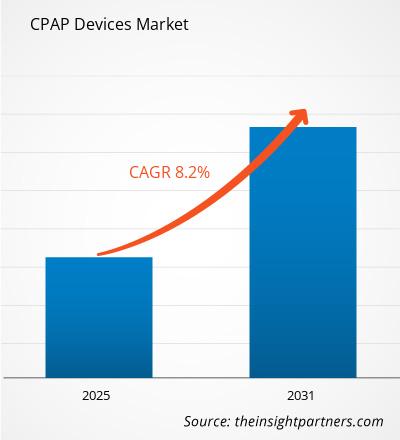
The global CPAP Devices Market is experiencing strong momentum as healthcare providers, patients, and medical device manufacturers increasingly focus on effective management of sleep apnea and related breathing disorders. Continuous positive airway pressure therapy remains an important noninvasive approach for maintaining airway patency during sleep. Rising awareness of sleep apnea, an aging global population, advances in device technology, and increasing adoption of home-based respiratory care are supporting market expansion.
Recent CPAP Devices Market news reflects a rapidly changing competitive and technological environment. The market was valued at US$ 5.04 billion in 2025 and is projected to reach US$ 10.37 billion by 2034, registering a CAGR of 8.35% from 2026 to 2034. Recent developments are increasingly centered on connected devices, digital health integration, portability, patient adherence, and personalized respiratory therapy. At the same time, manufacturers are responding to competitive pressures, regulatory developments, and the emergence of alternative sleep apnea treatments.
Download Sample PDF: https://www.theinsightpartners.com/sample/TIPRE00040840
What Recent Developments Are Shaping the CPAP Devices Market?
One of the most important developments is the increasing integration of CPAP therapy with digital health technologies. Connected devices can collect therapy information and transmit relevant data to healthcare professionals, allowing clinicians to monitor adherence and treatment performance remotely. Integration with healthcare software and digital platforms is becoming increasingly important as healthcare systems move toward remote patient monitoring and data-driven care. The Insight Partners identifies digitalizing solutions as one of the opportunities influencing the market.
Portability is another prominent development. Manufacturers are increasingly focusing on compact and lightweight devices that can support therapy outside traditional home environments. Portable CPAP devices can improve convenience for patients who travel frequently or require flexible treatment options. The market’s segmentation into standalone and portable modalities demonstrates the growing importance of mobility in respiratory care.
How Are Companies Responding to Competitive and Regulatory Changes?
Competition among established respiratory device manufacturers continues to influence product development and market positioning. Companies are investing in connected platforms, improved algorithms, quieter operation, compact designs, and patient-focused interfaces to differentiate their products. ResMed, Koninklijke Philips N.V., and Fisher & Paykel Healthcare Limited are among the major companies profiled in the current market assessment.
Regulatory and product-safety developments are also influencing the competitive environment. Recent United States Food and Drug Administration reporting shows continued monitoring of respiratory devices and includes reports involving Philips and ResMed devices. Such regulatory surveillance highlights the importance of product quality, safety, post-market monitoring, and compliance for manufacturers competing in the respiratory device sector.
In August 2026, ResMed’s financial outlook also illustrated some of the changing dynamics affecting respiratory device companies. Reuters reported that the company issued fiscal 2027 revenue guidance below analysts’ expectations, while also facing the impact of an FDA-related recall involving its Astral ventilator line and increasing electronic component and freight costs. The company also faces changing competitive conditions as new treatments for obstructive sleep apnea emerge.
What Technology Trends Are Creating New Opportunities?
Technology innovation is creating opportunities beyond conventional CPAP functionality. Connected therapy platforms can support remote monitoring, while software-based analytics can help healthcare professionals assess treatment patterns and adherence. Data-driven approaches may enable more individualized therapy and improve communication between patients and clinicians.
Artificial intelligence and advanced analytics also have potential to influence the broader sleep healthcare ecosystem. Although CPAP devices remain focused on treatment, developments in sleep monitoring and automated analysis can improve the identification and management of sleep-related breathing disorders. Research into non-contact sleep monitoring and artificial intelligence-based sleep-stage analysis further illustrates the direction of digital sleep medicine.
Another important opportunity is market expansion in emerging economies. Increasing healthcare expenditure, improving diagnostic infrastructure, growing awareness of sleep apnea, and expansion of home healthcare services can support greater adoption. According to The Insight Partners, market expansion to emerging economies represents an important opportunity during the forecast period.
Key Players in the CPAP Devices Market
The competitive landscape includes established respiratory device manufacturers and specialized healthcare companies. Key players profiled in the market report include:
- ResMed
- Koninklijke Philips N.V.
- Fisher & Paykel Healthcare Limited.
- Drive DeVilbiss International
- Baird Respiratory
- Transcend Inc.
- Armstrong Medical Ltd
- Nidek Medical India
- Narang Medical Limited
- Morpheus Healthcare
- Löwenstein Medical SE & Co. KG
These companies are competing through product innovation, portable solutions, digital connectivity, distribution expansion, and improvements in patient convenience and therapy management.
Future Outlook
Future developments are expected to emphasize connected CPAP systems, remote monitoring, compact portable devices, improved comfort, data analytics, and personalized therapy. At the same time, manufacturers will need to address product safety, affordability, patient adherence, and competition from alternative approaches to sleep apnea management. Recent reporting on emerging treatments, including hypoglossal nerve stimulation, demonstrates that the sleep apnea treatment landscape is becoming more diverse, although such alternatives currently apply to selected patient populations.
As healthcare continues moving toward home-based and digitally enabled treatment, companies that successfully combine reliable respiratory therapy with connected technologies and patient-centric solutions may capture significant opportunities in the expanding market.
Purchase a Copy of this report: https://www.theinsightpartners.com/buy/TIPRE00040840
Related Reports:
Respiratory Inhalers Market Size and Competitive Analysis by 2028
Impulse Oscillometry Market Share, Growth & Forecast by 2034
About Us
The Insight Partners is a one-stop provider of actionable industry research and intelligence. We help our clients in getting solutions to their research requirements through our syndicated and consulting research services. We specialize in industries such as Semiconductor and Electronics, Aerospace and Defense, Automotive and Transportation, Healthcare IT, Manufacturing and Construction, Medical Devices, Technology, Media and Telecommunications, Food and Beverages, Consumer Goods, and Chemicals and Materials.
Contact US
Contact Person: Ankit Mathur
Phone: +1-646-491-9876
E-mail : sales@theinsightpartners.com
