USB cables have become essential connectivity components for charging, data transfer, device synchronization, and peripheral connectivity across consumer and industrial applications. The growing use of smartphones, computers, automotive electronics, healthcare devices, and connected equipment continues to support demand for reliable and high-performance cable solutions.
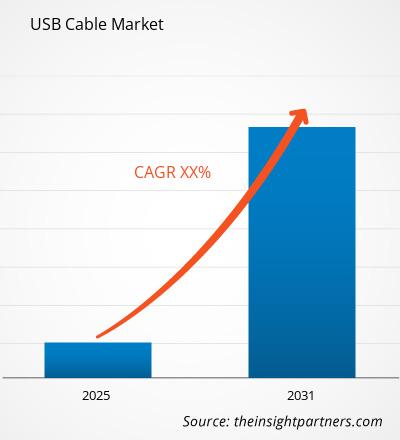
According to The Insight Partners, the USB Cable Market was valued at US$ 24.24 Billion in 2025 and is projected to reach US$ 35.23 Billion by 2034, registering a CAGR of 4.24% during 2026–2034. Increasing adoption of USB Type-C, growing demand for fast charging, expansion of connected devices, and advancements in multifunctional cable technologies are expected to support market growth.
Key Market Insights
- Market Size in 2025: US$ 24.24 Billion
- Projected Market Size by 2034: US$ 35.23 Billion
- CAGR (2026–2034): 4.24%
- Total Addressable Market (2026–2034): Approximately US$ 270.05 Billion
- Key Types: USB Type A, USB Type B, USB Type C
- Key Product Types: USB Data Cable, USB Charger, Multifunctional USB Cable
- Key Industry Verticals: Commercial, IT and Telecommunication Industrial, Automotive, Healthcare
- Forecast Period: 2026–2034
Get a Sample PDF of the Report: https://www.theinsightpartners.com/sample/TIPRE00023908
USB Type-C Adoption Supports Market Growth
The increasing adoption of USB Type-C connectors is reshaping the USB cable landscape. USB Type-C supports charging, data transfer, and connectivity across a broad range of devices, making it increasingly relevant for smartphones, laptops, tablets, monitors, gaming devices, and other electronics.
The growing need for standardized and multifunctional connectivity is encouraging manufacturers to develop cables that can support higher power delivery, faster data transfer, and compatibility across multiple devices. This trend is expected to support continued demand for advanced USB cable solutions.
Fast Charging Drives Demand for Advanced Cables
The increasing adoption of fast-charging technologies is creating opportunities for high-performance USB cables. Consumers increasingly expect shorter charging times for smartphones, laptops, tablets, wearable devices, and other battery-powered electronics.
USB cables capable of supporting higher power levels and efficient power delivery are becoming increasingly important. Manufacturers are focusing on cable construction, connector durability, thermal performance, and compatibility with fast-charging standards to address evolving device requirements.
Connected Devices Expand Application Opportunities
The continued expansion of connected electronics is supporting demand across consumer and commercial applications. USB cables are widely used for data synchronization, peripheral connectivity, charging, and device integration.
In commercial and IT environments, USB cables connect computers, monitors, storage devices, networking equipment, printers, and other peripherals. Automotive manufacturers are also integrating increasingly sophisticated electronic systems, creating opportunities for USB connectivity within vehicles.
Multifunctional USB Cables Gain Importance
Multifunctional USB cables are gaining attention as consumers and businesses seek flexible connectivity solutions. These cables can support multiple functions, including charging, data transfer, audio and video connectivity, and connections between different device types.
The development of cables with integrated features and improved compatibility can help users reduce the number of separate cables required. This trend is expected to create opportunities for manufacturers offering versatile and high-performance connectivity products.
USB Cable Market Segmentation
By type, the USB Cable Market is segmented into USB Type A, USB Type B, and USB Type C. USB Type-C is gaining increasing relevance due to its reversible design, broad device compatibility, and support for advanced charging and data transfer capabilities.
By product type, the market is divided into USB Data Cable, USB Charger, and Multifunctional USB Cable. These products serve a wide range of charging, connectivity, synchronization, and data transfer requirements.
By industry vertical, the market is categorized into Commercial, IT and Telecommunication Industrial, Automotive, and Healthcare. The expansion of digital infrastructure and connected electronic devices across these sectors continues to create demand for USB connectivity solutions.
Get the Premium Research Report: https://www.theinsightpartners.com/buy/TIPRE00023908
Regional Outlook
North America represents an important region for USB cable adoption, supported by high penetration of consumer electronics, advanced IT infrastructure, enterprise connectivity requirements, and demand for fast-charging technologies. The US remains a significant contributor due to widespread adoption of smartphones, laptops, connected devices, and automotive electronics.
Europe is supported by strong demand for electronic devices, digital infrastructure, automotive technologies, and sustainable connectivity solutions. Growing emphasis on standardized charging and device interoperability is also creating opportunities for advanced USB cable products.
Asia Pacific represents a significant growth opportunity due to its large electronics manufacturing base, expanding consumer electronics industry, growing smartphone adoption, and increasing digitalization. China, Japan, South Korea, India, and other economies are contributing to demand across consumer, commercial, automotive, and industrial applications.
South and Central America are experiencing opportunities through increasing smartphone penetration, digital connectivity, consumer electronics adoption, and modernization of commercial infrastructure. Demand for charging and data transfer solutions is expected to support regional growth.
The Middle East and Africa region is also expected to present opportunities through increasing digitalization, smartphone adoption, IT infrastructure development, commercial connectivity, and growing use of electronic devices.
Competitive Landscape
Competition in the USB Cable Market is increasingly focused on charging performance, data transfer speeds, durability, compatibility, connector design, product reliability, and multifunctional capabilities. Manufacturers are developing solutions to meet changing requirements across consumer electronics, IT, automotive, and healthcare applications.
Key companies analyzed in the report include:
- Tripp Lite
- Nikon Corp.
- Digilent Inc.
- Adafruit Industries
- Amphenol PCD
- Delphi Connection Systems
- Cinch Connectivity Solutions
- Omron Automation and Safety
- Assmann WSW Components
- Belkin
Future Outlook
The USB Cable Market is expected to maintain steady growth through 2034 as connected devices, digital infrastructure, fast charging, and multifunctional connectivity continue to expand. USB Type-C adoption is expected to remain an important technology trend as manufacturers and consumers seek standardized and versatile connectivity solutions.
Future opportunities are likely to emerge from faster charging capabilities, higher-speed data transfer, smart cable technologies, durable materials, and environmentally conscious product development. Companies that deliver reliable, high-performance, compatible, and multifunctional USB cable solutions are expected to strengthen their competitive position as connectivity requirements continue to evolve.
Related Market Research Reports
GaN-on-Silicon Technology Market Demand, Size & Forecast by 2034
Security Cameras Market Size, Share & Trends by 2034
Ultrasonic NDT Equipment Market Size, Share & Growth by 2034
Webcam Market Growth, Share & Trends by 2034
About The Partners
The Insight Partners is a Insight global leader in market research, delivering comprehensive analysis and actionable insights across diverse industries. The company empowers decision-makers with data-driven intelligence to navigate evolving markets and accelerate growth.
Contact Us:
