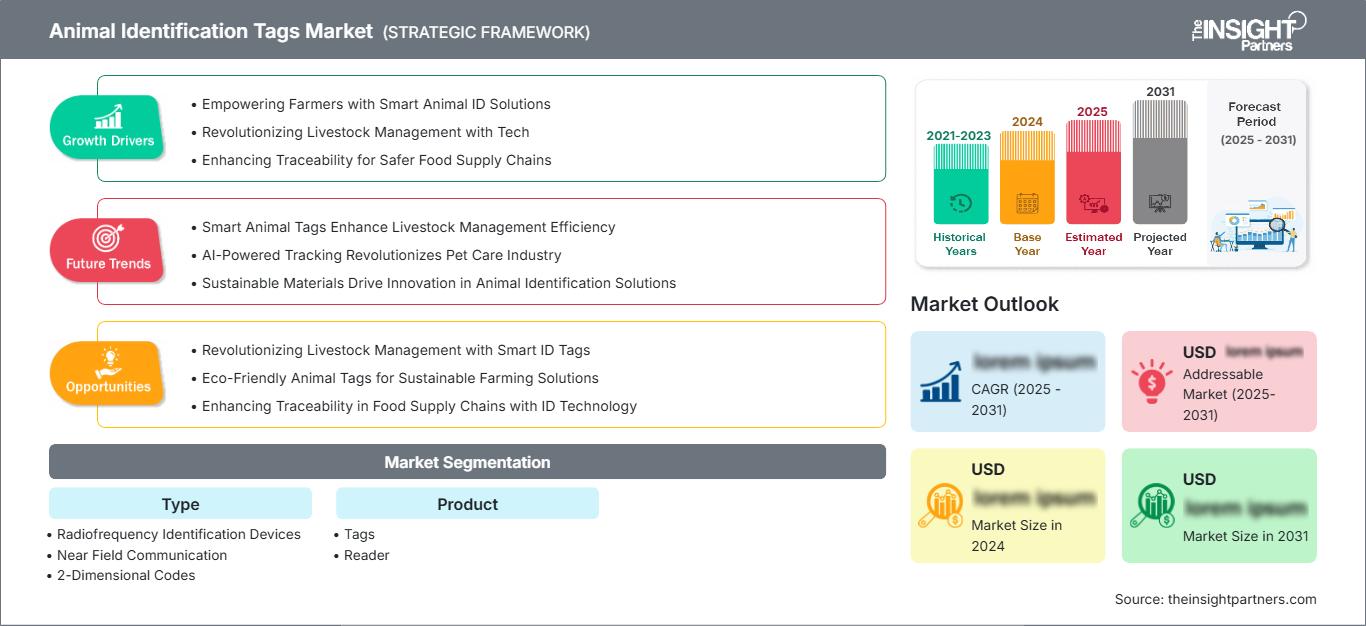
The animal identification tags market is projected to grow from US$ 1.72 Billion in 2025 to US$ 3.54 Billion by 2034, registering a CAGR of 8.37% during 2026–2034.
Animal identification tags provide a practical means of assigning unique identification to livestock and other animals. Depending on the technology, these solutions can support identification, tracking, record management, and traceability throughout the animal’s lifecycle. Increasing adoption of technology-driven livestock management is expected to support market expansion through the forecast period.
Growing Need for Livestock Traceability
Traceability has become increasingly important for modern livestock management. Farmers, producers, and other stakeholders require accurate information about individual animals to support herd management and maintain records. Identification tags allow animals to be distinguished efficiently, helping facilitate the organization of information related to livestock.
Get Sample PDF – https://www.theinsightpartners.com/sample/TIPRE00008609
The increasing focus on traceability is also associated with the need to monitor animals throughout production and distribution processes. Identification technologies can support more systematic management of animal records and improve the ability of stakeholders to track individual animals.
Increasing Adoption of Electronic Identification
Technological advancements are transforming conventional animal identification practices. Electronic identification solutions can provide unique digital identities and enable information to be captured and managed more efficiently than traditional identification methods.
Radio-frequency identification (RFID) technologies are particularly important in the development of modern animal identification systems. RFID-enabled tags can be scanned using compatible readers, allowing identification information to be accessed without requiring direct visual confirmation of an animal’s identification number. This capability can improve efficiency in livestock operations where large numbers of animals need to be monitored.
Importance of Animal Health Management
Animal identification plays an important role in maintaining organized health and management records. Linking an animal’s unique identification with relevant information can support monitoring throughout its lifecycle. This can be particularly valuable for livestock operations managing vaccination, treatment, breeding, and other animal-health activities.
Accurate identification can also help reduce errors when handling multiple animals. As producers increasingly seek efficient approaches to animal health management, identification technologies can become an important part of integrated livestock management systems.
Rising Demand for Efficient Livestock Management
The growing scale and complexity of livestock operations are increasing the need for efficient identification and record-keeping systems. Large herds can be difficult to manage using manual identification and documentation methods alone. Digital identification technologies can help automate parts of the identification process and make animal information more accessible.
Modern tags can also be integrated into broader livestock-management workflows. When combined with compatible reading and data-management systems, identification information can contribute to more organized operations and improved monitoring of individual animals.
Technological Advancements Create New Opportunities
Innovation in RFID, sensors, wireless communication, and digital data management is creating new opportunities in the animal identification tags market. Manufacturers are developing solutions that can improve identification efficiency and support integration with livestock-management technologies.
The use of electronic identification can enable faster data collection and reduce the need for manual record entry. As livestock producers increasingly adopt digital technologies, demand for identification tags capable of working with automated systems is expected to increase.
Applications Across Different Animal Categories
Animal identification technologies are used across livestock and other animal-management applications. Identification can support the management of cattle, sheep, goats, pigs, and other animals by providing a unique means of distinguishing individual animals.
The ability to identify animals consistently is particularly important in operations where health, breeding, production, and movement records need to be maintained. As animal-management practices become more data-driven, identification tags can serve as an important link between physical animals and digital records.
Competitive Landscape and Top Players
The animal identification tags market includes companies involved in RFID, semiconductor, wireless identification, and tracking technologies. Key players include:
- ams-OSRAM AG
- Microchip Technology Incorporated
- Impinj, Inc.
- Alien Technology, LLC
- Confidex Ltd.
- HID Global Corporation
- Invengo Technology Pte. Ltd.
- Omni-ID Ltd.
- NXP Semiconductors N.V.
- RF Code, Inc.
These companies compete through technological innovation, RFID solutions, identification capabilities, product development, and the integration of tags with broader tracking and data-management systems.
Role of RFID in Animal Identification
RFID technology is an important component of modern identification systems because it enables information to be captured electronically. RFID tags can be associated with individual animals, while compatible readers can retrieve identification data when the animal is scanned.
This approach can support faster identification in livestock operations and reduce dependence on manual data collection. As digital transformation continues across agriculture and animal management, RFID-based solutions are expected to remain an important area of opportunity.
Growing Focus on Data-Driven Animal Management
The integration of animal identification with digital management systems is creating opportunities for more data-driven livestock operations. Identification information can serve as a foundation for maintaining organized animal records and connecting individual animals with relevant management information.
Get Full Copy of This Report @ https://www.theinsightpartners.com/buy/TIPRE00008609
The increasing use of digital technologies in agriculture is encouraging producers to seek solutions that can improve operational efficiency and data accessibility. Animal identification tags can therefore play an important role within broader digital livestock-management ecosystems.
Future Outlook
The future of the animal identification tags market is expected to be shaped by increasing livestock traceability requirements, adoption of electronic identification, and the continued digitalization of animal management. RFID-based identification is likely to remain an important technology as producers seek faster and more efficient approaches to tracking individual animals.
Integration with digital record-keeping and livestock-management platforms can create additional opportunities for manufacturers. Advances in identification technologies, wireless connectivity, and data-management capabilities may further improve the usefulness of these solutions. With the market projected to reach US$ 3.54 billion by 2034, continued adoption of technology-driven animal management is expected to support sustained market development through the forecast period.
Related Reports @
Animal Identification Tags Market Growth, Size & Forecast by 2034
Animal Genetics Market Growth and Recent Trends by 2028
About Us –
The Insight Partners provides comprehensive syndicated and tailored market research services in the healthcare, technology, and industrial domains. Renowned for delivering strategic intelligence and practical insights, the firm empowers businesses to remain competitive in ever-evolving global markets.
Contact Us:
Contact Person: Ankit Mathur
E-mail: ankit.mathur@theinsightpartners.com
Phone: +1-646-491-9876
Also Available in : Korean German Japanese French Chinese Italian Spanish
