The maritime industry is undergoing a major transformation as shipowners, operators, and shipbuilders increasingly prioritize energy efficiency, operational reliability, automation, and lower emissions. Variable frequency drives are becoming an important part of this transition because they enable precise control of electric motors used across propulsion, thrusters, pumps, fans, compressors, cranes, HVAC systems, and other onboard equipment. Growing interest in electric and hybrid propulsion, together with the modernization of aging fleets, is creating a stronger technology environment for advanced motor-control systems.
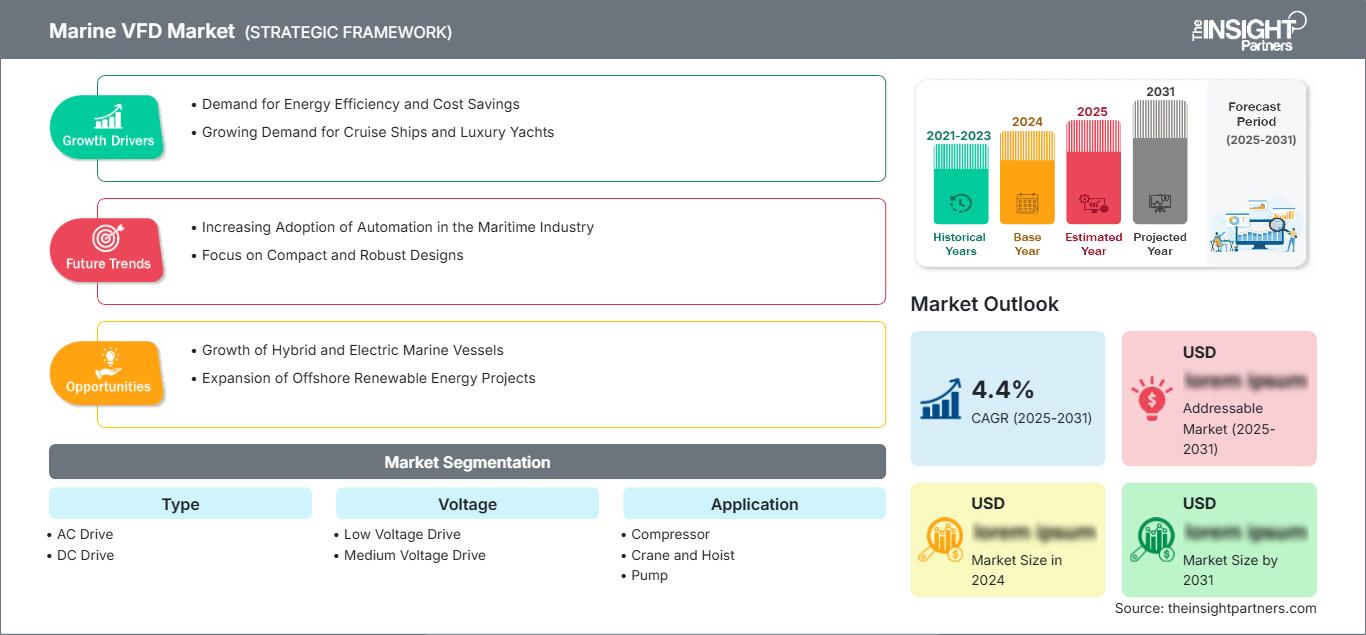
The Marine VFD Market is gaining momentum as maritime stakeholders look for practical technologies that can improve vessel efficiency without compromising reliability. According to The Insight Partners, the industry is expected to register a CAGR of 4.4% from 2025 to 2031, supported by demand for energy-efficient marine equipment, vessel electrification, automation, and retrofit activities. The report covers AC and DC drives, low- and medium-voltage systems, and applications including compressors, cranes and hoists, pumps, fans, and propulsion.
Get a Sample PDF: https://www.theinsightpartners.com/sample/TIPRE00007571
Growing Focus on Energy Efficiency Supports Industry Development
Energy efficiency has become a strategic priority for the shipping sector. International regulations are encouraging operators to reduce carbon intensity and improve vessel performance, increasing attention toward technologies capable of optimizing energy consumption during variable operating conditions. The International Maritime Organization has established measures around ship energy efficiency and carbon intensity, while its broader greenhouse-gas strategy continues to encourage cleaner technologies and more efficient operations.
VFDs support these objectives by allowing motors to operate according to actual load requirements rather than continuously running at fixed speeds. This can improve system control and reduce unnecessary energy use. Marine-certified drives are particularly valuable because onboard equipment must withstand demanding conditions involving vibration, humidity, temperature variations, and salt exposure. ABB, for example, highlights marine VFD applications across propulsion systems, thrusters, deck machinery, pumps, HVAC systems, and cranes.
Market Size, Share, Trends, Analysis, and Forecast by 2031
- Market Size: The industry is expanding steadily as new vessel construction and fleet modernization increase demand for advanced motor-control technologies.
- Market Share: Asia Pacific represents a leading regional opportunity, supported by shipbuilding activity across major maritime economies and increasing investment in vessel electrification.
- Market Trends: Major trends include hybrid propulsion, electric vessel technologies, digital monitoring, energy optimization, marine automation, and VFD retrofits.
- Market Analysis: Demand is being supported by the need to improve vessel operating efficiency while complying with increasingly stringent environmental and performance requirements.
- Market Forecast: The industry is projected to maintain consistent growth through 2031, with modernization of existing fleets and electrification of new vessels providing important opportunities. The Insight Partners forecasts a 4.4% CAGR during the forecast period.
Vessel Electrification Creates New Opportunities
One of the most significant developments influencing the Marine VFD Market is the transition toward electric and hybrid-electric vessels. Modern propulsion architectures increasingly integrate sophisticated electrical systems, requiring precise management of motor speed, torque, and power distribution.
VFD technology can support this transition by enabling motors to respond dynamically to operational requirements. This is particularly relevant for passenger vessels, offshore support vessels, ferries, cargo ships, naval platforms, and specialized marine craft. Retrofitting is another important opportunity because operators can upgrade existing vessels with modern drive systems without replacing entire propulsion or auxiliary infrastructures.
The increasing emphasis on Energy Efficiency Existing Ship Index and Carbon Intensity Indicator requirements is also encouraging shipowners to examine technologies that can contribute to improved operational performance.
Regional Analysis
Asia Pacific
Asia Pacific is expected to remain a major center of demand through 2031. The region benefits from its strong shipbuilding ecosystem, extensive commercial shipping activity, and expanding maritime infrastructure. China, Japan, South Korea, India, and Southeast Asian economies are investing in modern vessels and marine technologies, creating opportunities for VFD suppliers.
The region’s shipbuilding strength also supports the integration of electrical propulsion, automated auxiliary systems, and energy-efficient motor-control solutions into new vessels. Industry research identifies Asia Pacific as a leading regional market, supported by shipbuilding and vessel modernization.
Europe
Europe remains an important innovation hub because of its strong focus on maritime decarbonization, electrification, and advanced vessel technologies. Shipowners and shipbuilders are increasingly evaluating solutions that can improve operational efficiency while supporting environmental objectives. Demand is also likely to benefit from modernization programs for ferries, passenger vessels, offshore equipment, and specialized commercial fleets.
North America
North America presents significant opportunities due to fleet modernization, offshore activities, commercial shipping, naval applications, and growing interest in efficient electric systems. The United States and Canada are expected to see continued demand for advanced motor-control solutions as operators seek to improve vessel performance and reduce operating costs.
Middle East & Africa and South America
These regions offer emerging opportunities linked to offshore energy projects, port infrastructure development, commercial shipping, and vessel modernization. Offshore platforms and support vessels require dependable pumps, compressors, cranes, and other motor-driven systems, creating applications for marine-grade VFD technology.
Updated Industry Developments and Technology Trends
The maritime technology landscape continues to move toward lower-emission operations and greater electrification. The IMO’s decarbonization agenda remains an important influence, with its strategy calling for reductions in shipping carbon intensity and increased adoption of zero- and near-zero-emission technologies.
At the technology level, manufacturers are focusing on compact drive systems, improved thermal management, enhanced protection against harsh marine conditions, digital diagnostics, connectivity, and integration with vessel energy-management platforms. These developments are helping operators obtain greater visibility into motor performance and maintenance requirements.
The increasing availability of marine-certified VFD solutions is also making the technology more practical for both newbuild and retrofit projects. As vessels become increasingly software-driven and electrically integrated, VFDs are expected to become an important component within broader marine automation architectures.
Key Players
Leading companies participating in the competitive landscape include:
- ABB
- Siemens
- Danfoss
- Rockwell Automation
- Mitsubishi Electric
- WEG
- Eaton
- Yaskawa Electric
- Parker Hannifin
- GE Power Conversion
- CG Power and Industrial Solutions
- Invertek Drives
These companies are competing through product development, marine certifications, digital capabilities, system integration, service networks, and partnerships with shipbuilders and marine equipment providers. Industry reports identify many of these companies among the principal participants in the global competitive landscape.
Get the Premium Research Report @ https://www.theinsightpartners.com/buy/TIPRE00007571
Future Outlook
The outlook through 2031 remains positive as maritime operators balance efficiency, regulatory compliance, reliability, and operating-cost management. New vessel construction will continue to create demand for integrated electrical propulsion and auxiliary systems, while retrofit programs will provide opportunities across aging fleets. The growing adoption of hybrid and electric propulsion, digital vessel-management systems, and energy-efficient onboard equipment is expected to strengthen the role of marine VFD technology. As environmental requirements become more demanding, shipowners are likely to prioritize solutions that deliver measurable efficiency improvements without requiring disruptive changes to vessel operations. Consequently, the Marine VFD Market is positioned for sustained development, with technology innovation and fleet electrification remaining central to its long-term growth trajectory.
Related Reports –
Home Energy Management System Market Regional Share, Trend, and Growth Opportunity
Vision Transformers Market Regional Share, Trend, and Growth Opportunity
Differential-Pressure Mass Flow Controller Market Regional Share, Trend, and Growth Opportunity
About The Insight Partners
The Insight Partners is a leading market research and consulting firm delivering actionable insights through in-depth industry analysis and strategic intelligence. The firm supports clients across various industries in making informed business decisions by providing comprehensive market forecasts, competitive assessments, and growth opportunities.
Contact Us:
If you have any queries about this report or if you would like further information, please contact us:
Contact Person: Ankit Mathur
E-mail: sales@theinsightpartners.com
Phone: +1-646-491-9876
Also Available in :
Korean | German | Japanese | French | Chinese | Italian | Spanish
