The Zero Trust Architecture is experiencing strong growth as organizations move away from traditional perimeter-based cybersecurity models toward identity-centric and continuous security frameworks.
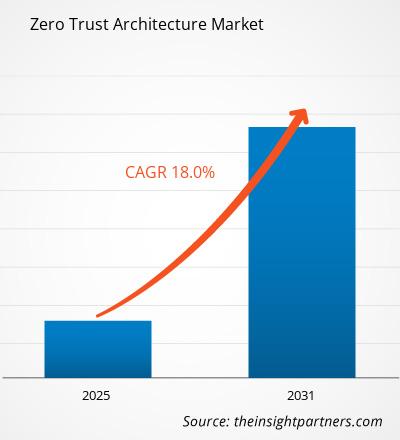
According to The Insight Partners, The zero trust architecture market was valued at US$ 40.62 Billion in 2025 and is projected to reach US$ 133.88 Billion by 2034, expanding at a CAGR of 16.08% during 2026–2034.
Get Sample PDF of the report @ https://www.theinsightpartners.com/sample/TIPRE00039684
Key Drivers of the Zero Trust Architecture Market
- Rising Cybersecurity Threats:-The growing sophistication of ransomware, phishing, identity-based attacks, and data breaches is encouraging enterprises to strengthen cybersecurity infrastructure. Conventional security approaches that rely heavily on network boundaries are becoming less effective as applications and employees operate across distributed environments. Zero Trust Architecture provides continuous authentication, access control, network segmentation, and monitoring capabilities that can help organizations respond to evolving threats.
- Expansion of Cloud and Hybrid Work Environments:-The migration of enterprise applications and workloads to cloud and multi-cloud environments has increased the need for security solutions that can operate beyond traditional corporate networks. Remote and hybrid workforces also require employees to securely access applications from different locations and devices. As a result, organizations are increasingly adopting cloud-based Zero Trust frameworks that provide scalable security and centralized policy management.
- Growing Regulatory and Compliance Requirements:-Organizations in healthcare, financial services, government, telecommunications, and other regulated sectors face growing requirements for protecting sensitive information. Zero Trust technologies can support these objectives through stronger identity verification, access governance, monitoring, and data protection. Regulatory pressure is therefore becoming an important factor influencing investment in Zero Trust security architectures.
Key Trends in the Zero Trust Architecture Market
- AI-Driven Security:-Artificial intelligence and machine learning are increasingly being incorporated into cybersecurity platforms to identify unusual behavior and potential threats. AI-enabled Zero Trust solutions can analyze user and device activity, support real-time risk assessment, and automate security responses. The integration of AI is expected to improve the ability of organizations to detect threats and dynamically adjust access policies.
- Integration with Identity and Access Management:-Identity and Access Management is becoming a central component of Zero Trust strategies. Organizations are combining authentication, privileged access management, identity governance, and continuous verification to establish more granular control over users and resources. This integration enables enterprises to apply access policies based on real-time risk rather than relying solely on static credentials.
- Growth of Cloud-Native Zero Trust:-Cloud deployment is emerging as a major growth area because enterprises are rapidly adopting hybrid and multi-cloud infrastructures. According to the market analysis, cloud deployment accounted for approximately 54%–58% of market share in 2025 and is forecast to grow at around 0%–20.0% CAGR during 2026–2034.
Segmentation Analysis
The Zero Trust Architecture Market is segmented by offering, organization size, deployment, and vertical. The offering segment includes solutions and services. Solutions represent the largest portion of spending because organizations require identity management, authentication, access control, network segmentation, and security visibility technologies. Services include consulting, integration, deployment, training, and managed security services.
By organization size, the Zero Trust Architecture Market covers SMEs and large enterprises. Large enterprises remain significant adopters because of their complex IT environments and extensive security requirements. At the same time, SMEs are increasingly adopting cloud-based and managed Zero Trust solutions because these models can reduce the need for substantial internal cybersecurity infrastructure.
By deployment, the Zero Trust Architecture Market is divided into cloud and on-premises. Cloud deployment is gaining momentum because it provides scalability, faster implementation, and compatibility with distributed workforces and multi-cloud applications. On-premises solutions continue to serve organizations that require greater control over sensitive data and existing infrastructure.
By vertical, the Zero Trust Architecture Market includes consumer electronics, IT and telecom, automotive, manufacturing, construction and building, healthcare and medical devices, and others. IT and telecommunications, healthcare, manufacturing, and other highly connected industries are expected to remain important areas of adoption.
Regional Outlook
North America remains the leading regional market, supported by advanced cybersecurity infrastructure, high cloud adoption, strong enterprise technology spending, and regulatory initiatives. The region represented approximately 38%–42% of global revenue in 2025. The US accounts for the majority of North American revenue, with demand coming from government, financial services, healthcare, technology, and defense organizations.
Europe is also witnessing substantial adoption as organizations strengthen data protection and cyber resilience strategies. The UK, Germany, France, Italy, and Spain are among the important markets in the region.
Asia Pacific is expected to demonstrate particularly strong growth during the forecast period. Digital transformation, cloud expansion, rising cybersecurity awareness, and government-led technology initiatives are supporting adoption across China, Japan, India, South Korea, and Australia. The region is projected to grow at approximately 17.5%–19.5% CAGR during 2026–2034.
Competitive Landscape
- Palo Alto Networks, Inc.
- VMware LLC
- Zscaler, Inc.
- Akamai Technologies, Inc.
- Microsoft Corporation
- Cisco Systems, Inc.
- International Business Machines Corporation
- Cloud Software Group, Inc. (Citrix)
- Trellix
- Forcepoint LLC.
Strategic partnerships, product development, acquisitions, and AI integration are expected to remain important competitive strategies. Vendors capable of delivering scalable cloud and multi-cloud Zero Trust solutions with simplified deployment are positioned to capture growing enterprise demand.
Get the Premium Research Report @ https://www.theinsightpartners.com/buy/TIPRE00039684
Future Outlook
The Zero Trust Architecture Market is positioned for sustained expansion as cybersecurity strategies increasingly prioritize continuous verification and identity-based access control. The combination of growing cyber risks, cloud transformation, remote work, regulatory requirements, and AI-powered security is expected to create significant opportunities for technology providers.
About The Insight Partners
The Insight Partners is a global leader in market research, delivering comprehensive analysis and actionable insights across diverse industries. The company empowers decision-makers with data-driven intelligence to navigate evolving markets and accelerate growth.
Contact Us:
- Contact Person: Ankit Mathur
- E-mail: ankit.mathur@theinsightpartners.com
- Phone: +1-646-491-9876
Also Available in :
Korean German Japanese French Chinese Italian Spanish
