The Functional Dyspepsia Drug Market is experiencing steady growth as awareness of functional gastrointestinal disorders increases and healthcare providers focus on improving symptom management and patient quality of life. Functional dyspepsia is characterized by persistent or recurring upper gastrointestinal symptoms, including post-meal fullness, early satiety, and epigastric discomfort, without an identifiable structural cause. Rising diagnosis rates, expanding access to gastroenterology services, and the development of innovative therapeutic approaches are supporting demand for medications used to manage these symptoms. The market includes therapeutic categories such as prokinetic drugs and gastric antisecretory drugs, with hospitals and drugstores serving as important distribution and treatment channels.
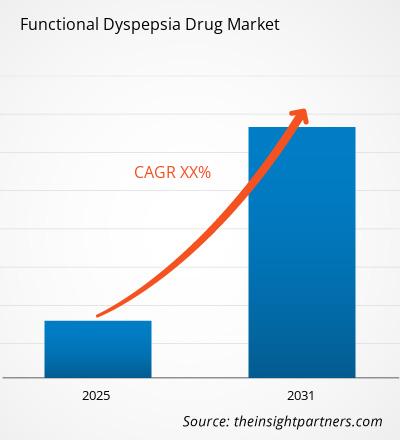
The Functional Dyspepsia Drug Market share is expanding across North America, Europe, Asia Pacific, South and Central America, and the Middle East and Africa as healthcare infrastructure and access to gastrointestinal care improve. Based on the market figures provided, the Functional Dyspepsia Drug Market size is expected to reach US$ 16.7 billion by 2034, from US$ 10.91 billion in 2025, registering an estimated CAGR of 4.85% from 2026 to 2034. Regional differences in disease awareness, healthcare expenditure, treatment availability, and pharmaceutical access are expected to influence market share throughout the forecast period.
Download Sample PDF: https://www.theinsightpartners.com/sample/TIPRE00015278
Which Regions Hold the Largest Functional Dyspepsia Drug Market Share?
North America represents an important regional market, supported by developed healthcare infrastructure, established gastroenterology services, and greater awareness of functional gastrointestinal disorders. The United States and Canada have broad access to prescription and over-the-counter gastrointestinal therapies, while increasing consultation with gastroenterologists supports diagnosis and treatment. The region is also benefiting from pharmaceutical research and the adoption of patient-centered approaches to managing chronic digestive symptoms.
Europe maintains a substantial share of the Functional Dyspepsia Drug Market, supported by established healthcare systems and growing attention to gastrointestinal health. Countries including the United Kingdom, Germany, France, Italy, and Spain contribute significantly to regional demand. The availability of specialized healthcare professionals and increasing interest in personalized treatment approaches are supporting market development.
How Is the Functional Dyspepsia Drug Market Evolving Across Product Segments?
The market is segmented primarily into prokinetic drugs, gastric antisecretory drugs, and other therapies, while applications include hospitals and drugstores. Prokinetic drugs are used to support gastrointestinal motility, whereas gastric antisecretory drugs target acid-related symptoms. The availability of multiple therapeutic approaches allows physicians to select treatments based on symptom profiles and individual patient needs.
Hospitals remain an important channel for diagnosis and treatment, particularly for patients requiring specialist evaluation. Drugstores are also significant because many gastrointestinal treatments are accessible through retail and community pharmacy channels. The combination of prescription therapies and widely available gastrointestinal products is expected to support continued demand across different healthcare settings.
What Trends Are Creating New Opportunities Across Geographic Markets?
Personalized treatment is emerging as an important trend in the Functional Dyspepsia Drug Market. Differences in symptoms, underlying mechanisms, treatment response, and patient characteristics are encouraging healthcare professionals to adopt more individualized approaches. Pharmaceutical companies and researchers are consequently exploring therapies that address specific symptom profiles and patient needs.
Digital health technologies also represent an emerging opportunity. Digital symptom tracking, remote consultations, medication reminders, and patient-support platforms can improve communication between patients and healthcare providers while supporting long-term disease management. The Insight Partners also identifies artificial intelligence-powered diagnostics and personalized treatments as future trends with potential to transform functional dyspepsia care.
Natural and complementary remedies are another area attracting consumer interest. However, treatment decisions should be guided by qualified healthcare professionals because the suitability and evidence supporting individual approaches can vary considerably.
Competitive Landscape
The Functional Dyspepsia Drug Market includes established pharmaceutical companies with portfolios spanning gastrointestinal medicines and broader therapeutic categories. Companies are focusing on research and development, product expansion, geographic penetration, and patient-centric treatment strategies to strengthen their positions.
Key Players
- Bayer
- AstraZeneca
- Teva
- Sumitomo
- Sanofi
- Cadila Pharmaceuticals
- Eisai
- Pfizer
- Johnson and Johnson
- Jiangsu Aosaikang Pharma
These companies are identified among the market leaders and key company profiles covered by The Insight Partners.
Purchase a Copy of this report: https://www.theinsightpartners.com/buy/TIPRE00015278
Future Outlook
The future of the Functional Dyspepsia Drug Market is expected to be influenced by advances in personalized medicine, innovative therapeutic development, digital health technologies, and improved diagnosis. Pharmaceutical companies are likely to focus on treatments that provide better symptom control while addressing the diverse needs of patients.
As healthcare providers increasingly adopt patient-centered care models, demand for therapies supported by improved clinical evidence and individualized treatment strategies is expected to increase. Expansion into emerging markets, development of digital patient-support tools, and continued pharmaceutical innovation could create additional commercial opportunities through 2034. The Insight Partners identifies innovative therapies, personalized medicine, and digital health tools as key opportunities shaping the future market landscape.
Also Available in: Korean | German | Japanese | French | Chinese | Italian | Spanish
Related Reports:
Regenerative Medicine Market Growth, Trends, Revenue & Forecast 2025-2031
Eye Allergy Treatment Market Outlook 2021-2031 | Size, Share and Forecast
About Us
The Insight Partners is a one-stop provider of actionable industry research and intelligence. We help our clients in getting solutions to their research requirements through our syndicated and consulting research services. We specialize in industries such as Semiconductor and Electronics, Aerospace and Defense, Automotive and Transportation, Healthcare IT, Manufacturing and Construction, Medical Devices, Technology, Media and Telecommunications, Food and Beverages, Consumer Goods, and Chemicals and Materials.
Contact US
Contact Person: Ankit Mathur
Phone: +1-646-491-9876
E-mail : sales@theinsightpartners.com
