The growing adoption of connected monitoring technologies is increasing demand for temperature sensing solutions that can operate without extensive wired infrastructure. Wireless temperature sensors enable organizations to collect temperature data across industrial facilities, buildings, vehicles, medical environments, and security applications while improving monitoring flexibility.
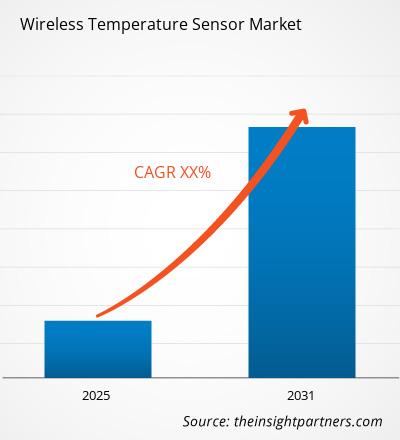
According to The Insight Partners, the Wireless Temperature Sensor Market was valued at US$ 3.08 Billion in 2025 and is projected to reach US$ 5.39 Billion by 2034, registering a CAGR of 6.42% during 2026–2034. Growing industrial monitoring requirements, building automation, connected healthcare, automotive applications, and demand for flexible sensing infrastructure are expected to support market expansion.
Key Market Insights
- Market Size in 2025: US$ 3.08 Billion
- Projected Market Size by 2034: US$ 5.39 Billion
- CAGR (2026–2034): 6.42%
- Key Technologies: ZigBee, Wi-Fi, IPv6, Bluetooth
- Major Applications: Military and Security, Medical, Automotive, Industrial Monitoring, Building Automation
- Key Growth Factors: Industrial monitoring, automation, connected buildings, medical applications, and wireless connectivity
Get a Sample PDF Report: https://www.theinsightpartners.com/sample/TIPRE00016462
Industrial Monitoring Drives Demand for Wireless Sensors
Industrial facilities increasingly require continuous temperature monitoring across machinery, production processes, storage environments, and critical infrastructure. Wireless temperature sensors can be deployed in locations where installing conventional wired systems may be difficult or costly.
The ability to collect temperature information remotely can support equipment monitoring and help operators identify abnormal conditions. Manufacturing facilities, energy infrastructure, warehouses, and processing plants can use wireless sensing networks to improve visibility across distributed operating environments.
The growing adoption of connected industrial systems is therefore expected to create sustained demand for wireless temperature monitoring solutions.
Building Automation Creates New Applications
Smart building initiatives are increasing the use of connected sensors for environmental monitoring and energy management. Wireless temperature sensors can provide data needed to optimize heating, ventilation, and air conditioning systems across offices, commercial buildings, industrial facilities, and other properties.
Wireless deployment can also provide flexibility when building layouts change or when sensors need to be installed in locations where new wiring would be impractical. By combining temperature data with building automation systems, facility operators can improve environmental control while supporting energy efficiency objectives.
Get the Premium Research Report: https://www.theinsightpartners.com/buy/TIPRE00016462
ZigBee, Wi-Fi, IPv6, and Bluetooth Enable Flexible Connectivity
The market is categorized by ZigBee, Wi-Fi, IPv6, and Bluetooth technologies. Each connectivity approach offers different characteristics related to range, power consumption, network architecture, compatibility, and deployment requirements.
ZigBee can support low-power sensor networks with multiple connected devices, while Wi-Fi provides integration with widely deployed network infrastructure. Bluetooth is particularly relevant to applications requiring short-range connectivity and low-power operation. IPv6-based solutions can support scalable addressing across connected environments.
The selection of connectivity technology depends on the application environment, required transmission range, power constraints, network infrastructure, and data requirements.
Healthcare and Automotive Applications Expand Opportunities
Medical applications represent an important opportunity as healthcare organizations increasingly adopt connected monitoring technologies. Wireless temperature sensors can support temperature monitoring in healthcare environments and other applications where continuous environmental or equipment monitoring is required.
In automotive applications, temperature sensing can support monitoring across vehicles and components. As vehicle electronics become more sophisticated, wireless sensing technologies can complement connected vehicle architectures in selected applications.
Military and security applications also require reliable environmental monitoring in demanding environments. Wireless sensing can provide flexibility where conventional wired infrastructure is difficult to deploy.
Industrial Monitoring Remains a Strategic Growth Area
The use of wireless temperature sensors is expanding alongside industrial digitalization. Connected monitoring systems can provide operators with data from equipment and locations that were previously difficult to monitor continuously.
Wireless sensors can also support predictive maintenance initiatives by helping organizations track changes in operating conditions. When combined with analytics platforms and other industrial sensors, temperature information can contribute to a broader view of equipment health.
This integration with industrial IoT infrastructure is expected to strengthen the long-term role of wireless temperature sensing.
Regional Outlook
North America remains an important regional market due to the adoption of industrial automation, smart buildings, connected healthcare, and advanced monitoring systems. The United States represents a key market supported by demand for flexible sensing solutions across industrial and commercial environments.
Europe benefits from investments in energy efficiency, industrial modernization, building automation, and connected infrastructure. Regulatory attention to energy performance and operational efficiency is encouraging organizations to adopt more sophisticated monitoring systems.
Asia Pacific represents a significant growth opportunity as industrialization, smart city development, electronics manufacturing, and automation expand. China, Japan, South Korea, and India are important markets for connected sensing technologies.
South and Central America and the Middle East and Africa are also expected to generate opportunities as industrial infrastructure, smart buildings, security systems, and digitalization initiatives expand.
Competitive Landscape
Key companies profiled in the Wireless Temperature Sensor Market include:
- ABB Ltd
- Analog Devices Inc.
- General Electric Company
- Honeywell International Inc.
- Microchip Technology Inc.
- NXP Semiconductors NV
- Schneider Electric SE
- Siemens AG
- Texas Instruments Incorporated
- Yokogawa Electric Corporation
Companies are focusing on connectivity, sensor accuracy, low-power operation, network integration, reliability, and application-specific solutions to address evolving customer requirements.
Wireless Deployment Improves Monitoring Flexibility
One of the key advantages of wireless temperature sensing is deployment flexibility. Organizations can install sensors across distributed areas without requiring extensive cabling, making wireless solutions attractive for facilities where infrastructure modifications are difficult or expensive.
Wireless networks can also be expanded as monitoring requirements evolve. This scalability is particularly valuable in industrial facilities, warehouses, commercial buildings, and other environments where equipment layouts and operational requirements can change over time.
Future Outlook
The Wireless Temperature Sensor Market is projected to grow from US$ 3.08 Billion in 2025 to US$ 5.39 Billion by 2034, registering a CAGR of 6.42% during 2026–2034.
Industrial monitoring, building automation, connected medical environments, automotive electronics, and military and security applications are expected to remain important growth areas. The continued integration of wireless sensors with IoT platforms, automation systems, and data analytics is likely to expand the role of temperature monitoring in connected infrastructure and intelligent operational environments.
Related Market Research Reports
Combi Boiler Market Trends, Size & Forecast by 2034
Network Slicing Market Demand, Size & Forecast by 2034
Inertial Measurement Unit Market Trends, Demand & Growth by 2034
Smart Thermostat Market Growth, Trends & Demand by 2034
About The Partners
The Insight Partners is a Insight global leader in market research, delivering comprehensive analysis and actionable insights across diverse industries. The company empowers decision-makers with data-driven intelligence to navigate evolving markets and accelerate growth.
Contact Us:
