Reliable electrical connectivity is becoming increasingly important as boats adopt more sophisticated propulsion, navigation, communication, safety, and onboard electronic systems. Wiring harnesses provide an organized and dependable method for connecting electrical and electronic components, supporting efficient power distribution and communication across different marine platforms.
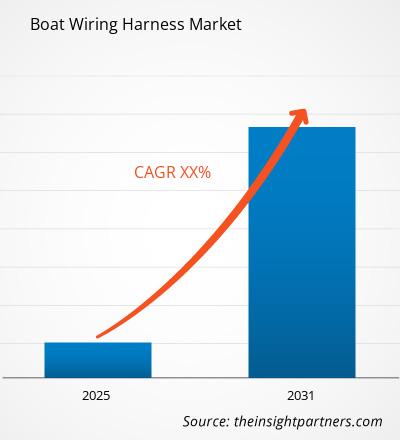
According to The Insight Partners, the Boat Wiring Harness Market was valued at US$ 2.56 Billion in 2025 and is projected to reach US$ 4.52 Billion by 2034, registering a CAGR of 6.51% from 2026 to 2034. The expansion of electric and hybrid boats, increasing integration of marine electronics, and demand for reliable onboard connectivity are expected to support market growth.
Key Market Insights
- Market Size in 2025: US$ 2.56 Billion
- Projected Market Size by 2034: US$ 4.52 Billion
- CAGR (2026–2034): 6.51%
- Boat Types: Electric Boats, Hybrid Boats, Gasoline Boats
- Length Categories: Less Than 5.0 Feet, 5.1–10.0 Feet, 10.1–15.0 Feet, 15.1–20.0 Feet, More Than 20.1 Feet
- Key Growth Areas: Marine electrification, smart boat technologies, advanced electronics, and integrated wiring systems
Get a Sample PDF Report: https://www.theinsightpartners.com/sample/TIPRE00019912
Marine Electrification Strengthens Demand
The growing adoption of electric and hybrid propulsion systems is creating new requirements for efficient and reliable electrical architectures. Electric boats depend on extensive electrical systems for propulsion, battery management, charging, navigation, lighting, communication, and onboard controls.
As marine manufacturers introduce more electrified platforms, wiring harnesses are becoming increasingly important for organizing connections and supporting dependable power transmission. Harness designs that can accommodate higher electrical complexity while maintaining durability in marine environments are expected to gain importance.
The transition toward cleaner propulsion technologies also creates opportunities for manufacturers to develop harnesses specifically suited to electric and hybrid marine platforms.
Smart Boat Technologies Expand Wiring Requirements
Modern boats increasingly incorporate connected navigation, entertainment, monitoring, communication, and safety technologies. These systems require coordinated electrical connections across multiple onboard components, increasing the importance of well-designed wiring harness architectures.
Smart wiring systems can help simplify installation and maintenance while supporting integration between electronic control units, sensors, displays, batteries, propulsion systems, and communication equipment. As boat manufacturers move toward more connected user experiences, integrated electrical systems are expected to become an increasingly important differentiator.
Get the Premium Research Report: https://www.theinsightpartners.com/buy/TIPRE00019912
Electric, Hybrid, and Gasoline Boats Shape Demand
The market is segmented by Electric Boats, Hybrid Boats, and Gasoline Boats. Gasoline-powered boats continue to represent an established installed base requiring wiring harnesses for conventional electrical systems and increasingly sophisticated onboard electronics.
Electric boats are creating new opportunities because their electrical architectures are more extensive and closely connected to propulsion and battery systems. Hybrid boats similarly require wiring solutions capable of supporting both conventional and electric power systems.
This transition is encouraging suppliers to develop harness solutions that address changing voltage requirements, connector configurations, environmental exposure, and installation constraints.
Boat Length Influences Wiring Architecture
Boat size and length directly influence the complexity of electrical systems. Smaller boats typically require comparatively compact harness configurations, while larger vessels can incorporate extensive navigation, entertainment, communication, propulsion, safety, and monitoring systems.
The market covers five length categories: Less Than 5.0 Feet, 5.1–10.0 Feet, 10.1–15.0 Feet, 15.1–20.0 Feet, and More Than 20.1 Feet. Larger boats can provide greater opportunities for sophisticated wiring architectures because of the greater number of electrical and electronic components installed onboard.
Durability Remains Critical in Marine Applications
Marine environments expose electrical components to moisture, salt, vibration, temperature fluctuations, and mechanical stress. Consequently, wiring harness manufacturers must focus on durability, insulation quality, connector protection, corrosion resistance, and reliable routing.
The increasing sophistication of marine electronics also raises the importance of minimizing connection failures. Manufacturers that can deliver harnesses designed specifically for demanding marine conditions can strengthen their position with boat manufacturers and marine equipment suppliers.
Customization Creates Competitive Opportunities
Boat wiring harnesses often need to accommodate specific vessel designs, propulsion architectures, electrical configurations, and electronic equipment. This creates opportunities for suppliers offering customized harness assemblies rather than standardized products alone.
Customization can include connector configurations, cable lengths, routing requirements, protection systems, and integration with specific electrical architectures. Suppliers with engineering capabilities and close relationships with boat manufacturers can therefore benefit from recurring OEM opportunities.
Regional Outlook
North America represents an important opportunity for boat wiring harness suppliers because of its established recreational boating ecosystem and demand for technologically advanced vessels. The region also provides opportunities related to electric propulsion, connected marine systems, and premium recreational boats.
Europe is expected to benefit from marine electrification, sustainability initiatives, and technological development in recreational and commercial vessels. Demand for efficient electrical systems is increasing as manufacturers explore lower-emission propulsion and advanced onboard technologies.
Asia Pacific offers opportunities supported by expanding marine manufacturing, rising recreational boating activity, and increasing adoption of marine electronics. Growing production capabilities across countries such as China, Japan, India, and other regional markets can support wiring harness demand.
South and Central America and the Middle East and Africa also provide opportunities as marine transportation, recreational boating, tourism, and maritime infrastructure develop.
Competitive Landscape
The Boat Wiring Harness Market report profiles companies including:
- AdCura Manufacturing
- AdCura Manufacturing, Inc
- American Auto Marine Wiring
- American Auto/Marine Wiring
- Electro-Prep Inc
- La Cro Products
- Marine Electrical Products, Inc
- NetSource OEM, Inc
- Rockford Components Ltd
- Yamaha Corporation
The Insight Partners notes that the report evaluates competitive strategies and innovation developments among industry participants.
Smart Integration Becomes a Key Differentiator
The next generation of boat wiring harnesses is likely to be increasingly integrated with broader electrical and electronic architectures. Manufacturers are expected to focus on solutions that support connected displays, sensors, navigation systems, battery management, propulsion controls, and other onboard electronics.
The combination of wiring expertise and smart marine technologies can help boat manufacturers simplify system integration while improving reliability and serviceability. This is particularly relevant as vessels become more software-driven and electronically connected.
Future Outlook
The Boat Wiring Harness Market is projected to expand from US$ 2.56 Billion in 2025 to US$ 4.52 Billion by 2034, registering a CAGR of 6.51% during 2026–2034.
Marine electrification, hybrid propulsion, connected boat technologies, increasing onboard electronics, and demand for durable electrical systems are expected to remain important growth factors. As boat manufacturers pursue smarter and more sustainable vessel architectures, wiring harness suppliers with capabilities in customization, reliability, and advanced electrical integration are positioned to capture emerging opportunities.
Related Market Research Reports
Portable Leak Detectors Market Size, Growth & Demand by 2034
5G Fixed Wireless Access Market Share, Demand & Growth by 2034
Graphics Processing Unit (GPU) Market SWOT Analysis by 2030
Servo Drives Market Size, Share & Growth Forecast 2031
About The Partners
The Insight Partners is a Insight global leader in market research, delivering comprehensive analysis and actionable insights across diverse industries. The company empowers decision-makers with data-driven intelligence to navigate evolving markets and accelerate growth.
Contact Us:
