Cardiovascular and respiratory diseases continue to create a growing need for accurate diagnostic tools that can evaluate heart and lung performance under physical stress. Advances in noninvasive testing, improved clinical awareness, and the focus on early disease detection are supporting wider adoption across healthcare settings.
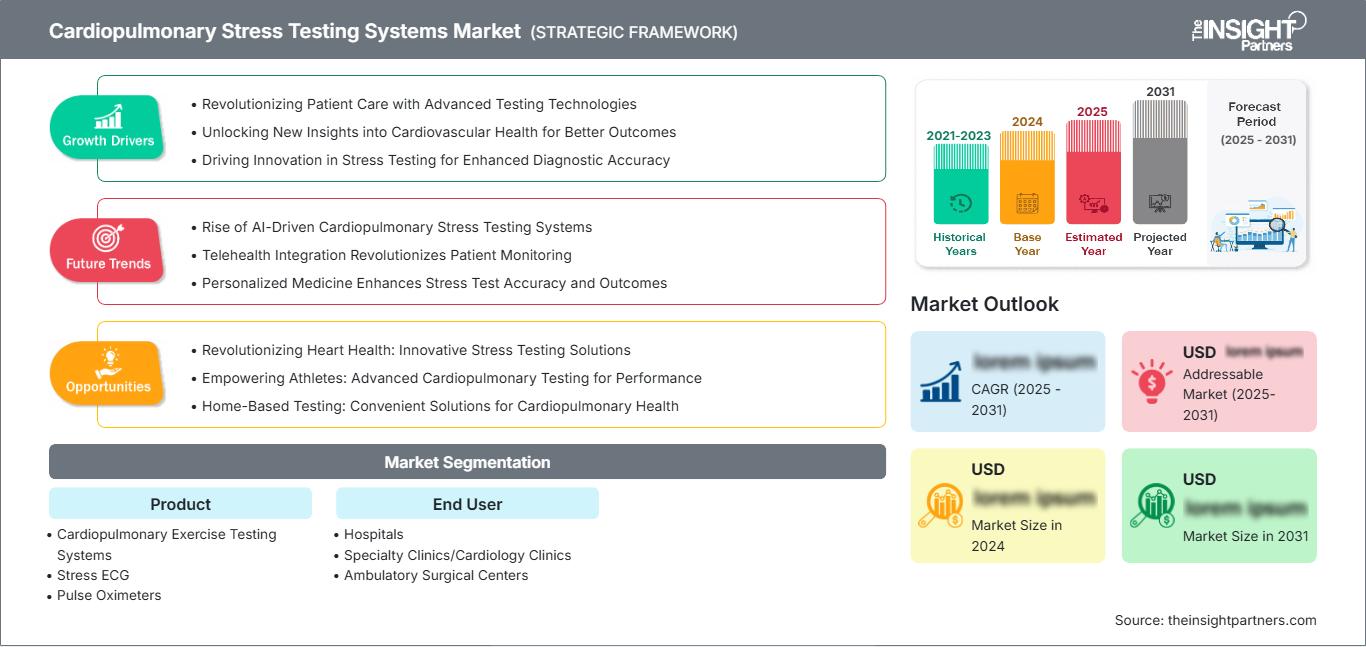
The Cardiopulmonary Stress Testing Systems Market was valued at US$ 4.48 billion in 2024 and is projected to reach US$ 6.60 billion by 2031, registering a CAGR of 5.7% during 2025-2031. Growth is supported by technological innovation, increasing cardiovascular disease burden, and expanding demand for comprehensive physiological assessment.
Get Sample PDF @ https://www.theinsightpartners.com/sample/TIPRE00004919
Rising Demand for Advanced Cardiovascular and Pulmonary Diagnostics
Healthcare providers are increasingly using stress testing systems to obtain detailed information about cardiovascular and respiratory function. These systems support the assessment of exercise capacity, cardiac abnormalities, pulmonary limitations, and treatment outcomes. Cardiopulmonary exercise testing systems, in particular, provide integrated measurements that can help clinicians evaluate multiple physiological parameters during exercise.
The growing emphasis on preventive healthcare and early diagnosis is also strengthening demand. Stress ECG systems, pulse oximeters, stress blood pressure monitors, and SPECT technologies continue to play important roles in identifying cardiovascular risks and supporting clinical decision-making. As healthcare systems focus on improving diagnostic accuracy and patient outcomes, demand for advanced and reliable testing technologies is expected to increase.
Technology Innovation Reshaping Testing Capabilities
Technological advancements are a major factor influencing industry development. Digital platforms, connected monitoring devices, advanced sensors, and automated data analysis are improving the efficiency and accuracy of cardiopulmonary assessments. AI-driven solutions are emerging as an important trend, with the potential to support faster interpretation of complex physiological data and assist clinicians in identifying patterns associated with cardiovascular and respiratory disorders.
Telehealth integration is another area of opportunity. Remote monitoring capabilities and connected diagnostic platforms can support continuous patient assessment and facilitate access to specialist care. Personalized medicine is also encouraging the use of more detailed physiological data to support individualized treatment strategies.
Product and End User Landscape
By product, the industry is segmented into:
- Cardiopulmonary Exercise Testing (CPET) Systems
- Stress ECG
- Pulse Oximeters
- Stress Blood Pressure Monitors
- Single-Photon Emission Computed Tomography (SPECT)
Each product category serves distinct diagnostic requirements. CPET systems are gaining attention for their ability to provide comprehensive information on cardiac, pulmonary, and metabolic responses to exercise. Stress ECG remains widely used in cardiovascular assessment, while pulse oximeters and blood pressure monitoring systems support the measurement of critical physiological parameters.
Based on end user, hospitals represent a major area of demand due to their broad diagnostic infrastructure and high patient volumes. Specialty clinics and cardiology clinics are also important adopters, particularly as cardiovascular care becomes increasingly specialized. Ambulatory surgical centers and diagnostic centers provide additional growth opportunities as outpatient healthcare services expand.
Regional Growth and Competitive Environment
North America remains a significant region, supported by advanced healthcare infrastructure, strong adoption of innovative diagnostic technologies, and increasing investment in cardiovascular care. Europe also presents substantial opportunities, while Asia Pacific is expected to benefit from improving healthcare infrastructure, growing disease awareness, and rising healthcare expenditure. South and Central America, along with the Middle East and Africa, offer longer-term expansion opportunities as access to advanced diagnostic services improves.
Key companies operating in the industry include:
- Koninklijke Philips N. V.
- Hill-rom Holdings Inc.
- General Electric Company
- MGC Diagnostics Corporation
- OSI Systems Inc.
- Masimo
- NIHON KOHDEN CORPORATION
- COSMED
- Halma plc
- Schiller AG
- Vyaire Medical Inc.
Companies are focusing on product innovation, improved software capabilities, digital connectivity, and strategic expansion to strengthen their competitive positions.
Interested in Purchasing this Report? Click here @ https://www.theinsightpartners.com/buy/TIPRE00004919
Future Outlook
The increasing adoption of AI-enabled analytics, telehealth-connected platforms, personalized diagnostic approaches, and advanced noninvasive testing technologies will shape future development. Continued demand for early cardiovascular and pulmonary disease detection, combined with expanding healthcare access across emerging economies, is expected to create significant opportunities for manufacturers and healthcare providers in the years ahead.
Related Report:
1) Lyophilized Injectable Market Key Companies and SWOT Analysis by 2028
2) Pharmaceutical Intermediates Market Key Players and Forecast by 2028
3) Generic Injectables Market Growth and Forecast by 2028
About Us –
The Insight Partners provides comprehensive syndicated and tailored market research services in the healthcare, technology, and industrial domains. Renowned for delivering strategic intelligence and practical insights, the firm empowers businesses to remain competitive in ever-evolving global markets.
Contact Us:
Ankit Mathur | The Insight Partners
E-mail: ankit.mathur@theinsightpartners.com
Phone: +1-646-491-9876
Also Available in : Korean German Japanese French Chinese Italian Spanish
