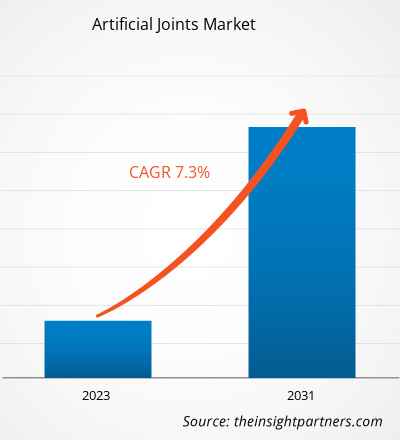
According to The Insight Partners, The Artificial Joints Market was valued at US$ 17.89 billion in 2021 and is expected to reach US$ 39.2 billion by 2031. The market is expected to register a CAGR of 7.3% from 2023–2031. Research & Development (R&D) activities is likely to remain key Artificial Joints Market trends.
The market expansion is primarily attributed to the growing incidence of degenerative joint diseases, increasing life expectancy, and technological advancements in implant materials and surgical procedures. Furthermore, growing awareness regarding mobility restoration and quality-of-life improvement is encouraging patients to opt for joint replacement surgeries. Research & Development (R&D) activities are expected to remain one of the most influential Artificial Joints Market trends throughout the forecast period.
Download Sample PDF – https://www.theinsightpartners.com/sample/TIPHE100001392
The North American Artificial Joints Market continues to maintain a dominant position in the global landscape, supported by a highly developed healthcare infrastructure, increasing prevalence of musculoskeletal disorders, and strong adoption of advanced orthopedic procedures. The United States represents the largest contributor to regional revenue due to the growing burden of osteoarthritis, rheumatoid arthritis, obesity, and sports-related injuries.
Rising Prevalence of Osteoarthritis and Joint Disorders Driving Market Growth
One of the major drivers fueling the Artificial Joints Market is the increasing prevalence of osteoarthritis and other chronic joint disorders worldwide. Osteoarthritis remains one of the leading causes of disability among older adults, creating substantial demand for joint replacement procedures. As the global population ages, healthcare systems are witnessing a surge in patients requiring knee and hip replacements to restore mobility and reduce chronic pain. The growing incidence of rheumatoid arthritis, osteoporosis, and traumatic injuries further contributes to market growth.
In addition, sedentary lifestyles, obesity, and increasing participation in sports activities have resulted in a higher incidence of joint damage among younger populations. This trend is expanding the patient pool for artificial joint implants and supporting long-term market expansion.
Technological Innovations Transforming the Artificial Joints Industry
Technological advancements in orthopedic implant design and surgical procedures are playing a critical role in the growth of the Artificial Joints Market. Manufacturers are focusing on developing highly durable implants using advanced materials such as titanium alloys, ceramic components, and highly cross-linked polyethylene. These innovations enhance implant longevity, reduce wear rates, and improve patient satisfaction.
The integration of robotics, computer-assisted navigation systems, and minimally invasive surgical techniques has further improved surgical precision and patient outcomes. Robotic-assisted joint replacement procedures allow surgeons to achieve greater implant alignment accuracy, reducing complications and shortening recovery periods. Such advancements are encouraging wider adoption of artificial joints among healthcare providers and patients alike.
Increasing Healthcare Expenditure and Access to Advanced Treatments
Growing healthcare expenditure across developed and emerging economies is another significant factor driving market growth. Governments and private healthcare organizations are investing heavily in orthopedic care infrastructure and advanced medical technologies. Improved access to specialized orthopedic services has enabled more patients to undergo joint replacement procedures.
Furthermore, increasing healthcare awareness and early diagnosis of orthopedic conditions are supporting market demand. Many healthcare providers are promoting preventive orthopedic care and timely surgical intervention, helping patients maintain mobility and independence. The expansion of medical tourism in countries offering cost-effective orthopedic procedures is also contributing to global market development.
Research and Development Activities Creating New Growth Opportunities
Research and Development (R&D) activities continue to shape the future of the Artificial Joints Market. Leading companies are investing in next-generation implant technologies aimed at improving biocompatibility, durability, and patient comfort. Innovations such as customized implants, 3D-printed prosthetics, and smart implants equipped with monitoring capabilities are gaining significant attention.
Researchers are also exploring advanced biomaterials and regenerative medicine approaches to enhance implant performance and reduce revision surgeries. These developments are expected to create substantial growth opportunities for manufacturers and healthcare providers throughout the forecast period.
Expanding Applications Across Joint Replacement Procedures
The Artificial Joints Market encompasses a wide range of applications, including hip replacement, knee replacement, shoulder replacement, ankle replacement, and elbow replacement procedures. Among these, knee and hip replacements account for the largest market share due to the high prevalence of degenerative conditions affecting these joints.
However, demand for shoulder and ankle replacements is steadily increasing as surgical techniques improve and awareness grows among patients. Healthcare providers are increasingly recommending joint replacement procedures as effective solutions for restoring mobility and improving quality of life in patients suffering from severe joint deterioration.
Competitive Landscape and Key Market Players
The Artificial Joints Market is highly competitive, with leading companies focusing on innovation, strategic partnerships, acquisitions, and product launches to strengthen their market positions. Continuous investment in R&D and advanced manufacturing technologies remains a key competitive strategy.
Top Players in the Artificial Joints Market
- Zimmer Biomet,
- Smith & Nephew,
- Stryker,
- Medtronic,
- Johnson & Johnson Services, Inc.,
- Exactech, Inc.,
- JRI Orthopedics Limited,
- SAMO SpA,
- Colfax Corporation,
- Braun Melsungen AG,
- Other Market Players
These companies are actively developing innovative orthopedic solutions to meet the growing demand for joint replacement procedures worldwide.
Get Premium Research Report Market Size and Report at:
https://www.theinsightpartners.com/buy/TIPHE100001392
Future Outlook
The Artificial Joints Market is poised for substantial growth through 2031, driven by rising orthopedic disease prevalence, technological advancements, increasing healthcare investments, and growing patient awareness regarding mobility restoration. Continued innovation in implant materials, robotic-assisted surgeries, and personalized orthopedic solutions is expected to transform the market landscape. As healthcare providers focus on improving patient outcomes and reducing recovery times, artificial joint technologies will continue to play a vital role in modern orthopedic care.
About Us
The Insight Partners is a one stop industry research provider of actionable intelligence. We help our clients in getting solutions to their research requirements through our syndicated and consulting research services. We specialize in industries such as Semiconductor and Electronics, Aerospace and Defense, Automotive and Transportation, Biotechnology, Healthcare IT, Manufacturing and Construction, Medical Device, Technology, Media and Telecommunications, Chemicals and Materials.
Contact Us
Ankit Mathur | The Insight Partners
E-mail: ankit.mathur@theinsightpartners.com
Phone: +1-646-491-9876
Also Available in : Korean | German | Japanese | French | Chinese | Italian | Spanish
