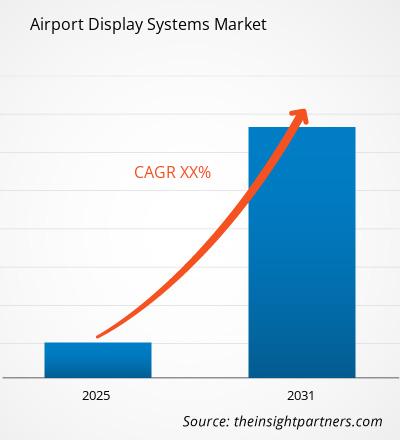
The global Airport Display Systems Market is experiencing unprecedented expansion, fueled by the rapid modernization of aviation infrastructure and the surging demand for real-time, automated passenger information delivery. According to the latest comprehensive industry analysis, the Airport Display Systems Market size is projected to reach US$ 7.94 Billion by 2034, up from US$ 4.38 Billion in 2025. The market is expected to expand at a steady Compound Annual Growth Rate (CAGR) of 6.83% over the forecast period from 2026 to 2034.
As global air traffic returns to robust trajectory levels, airports worldwide are prioritizing digital transformation to optimize terminal operations, minimize passenger dwell times, and generate revenue through dynamic digital out-of-home (DOOH) advertising. Modern airport display systems ranging from high-definition Flight Information Display Systems (FIDS) and gate displays to wayfinding kiosks and baggage claim boards have become central to managing crowd flow and enhancing overall passenger satisfaction.
Get a PDF Sample- https://www.theinsightpartners.com/sample/TIPRE00014069
Driving Factors Behind Market Growth
Airport Infrastructure Expansion and Upgrades: Emerging economies across Asia-Pacific, the Middle East, and Latin America are constructing mega-airports and expanding existing hubs to accommodate rising passenger traffic. Simultaneously, mature markets in North America and Europe are renovating aging terminals with smart digital display solutions.
Integration of IoT, Cloud Solutions, and AI: Traditional static displays are rapidly being replaced by intelligent, network-connected screens. Cloud-based FIDS platforms allow remote deployment, automated scheduling, and real-time data sync with airline operational databases, ensuring precise flight status updates.
Enhancing the Passenger Journey: Airlines and airport operators are increasingly focused on reducing passenger stress through interactive digital kiosks, contextual multi-lingual announcements, and personalized wayfinding solutions.
Monetization via Dynamic Advertising: High-brightness LED wall panels and ultra-HD digital signs strategically placed across high-footfall areas provide airports with lucrative advertising revenues, further incentivizing upgrades to modern video walls and display architectures.
Competitive Landscape & Key Industry Players
The market is characterized by strategic partnerships, technological collaborations, and continuous product innovation. Leading hardware manufacturers, software integration specialists, and aviation technology providers are expanding their portfolios to offer end-to-end flight information and signage solutions.
Key prominent players operating in the global Airport Display Systems Market include:
Amadeus IT Group
D.I.C.E Ltd.
Flyte Systems
Ikusi
Northrop Grumman
Raytheon Technologies Corporation
RESA
Siemens AG
SITA
Ultra Electronics
These industry leaders are actively focusing on modular software architecture, low-power display hardware, and unified terminal management platforms to cater to the evolving needs of regional and international air hubs.
Get Full Copy of This Report- https://www.theinsightpartners.com/buy/TIPRE00014069
Segment Insights
By Type
- Flight Information Display Systems
- Ground Information Display Systems
By Application
- Terminalside
- Landside
Future Outlook
Looking toward 2034, the Airport Display Systems Market is poised for transformative change driven by next-generation smart airport concepts. Key trends shaping the future outlook include:
Biometric and Personalized Display Messaging: Future terminal environments will feature opt-in personalized displays that adjust information such as gate directions, flight changes, or targeted retail offers based on passenger identity verification via facial recognition or mobile device proximity.
Augmented Reality (AR) and Interactive Digital Twins: Integration of digital twin technology with display networks will allow airport managers to simulate passenger movement and dynamically re-route foot traffic using dynamic screen guidance.
Sustainability Focus: In line with global net-zero commitments, manufacturers are prioritizing eco-friendly manufacturing, ultra-low power consumption modes, and recyclable display components to reduce carbon footprints across airport terminal operations.
Related Reports-
Airport Belt Loader Market Share, Demand & Growth by 2034
Airport Biometrics Market Trends, Demand & Growth by 2034
Airport Security Equipment Market Demand & Growth by 2034
About The Insight Partners
The Insight Partners is a leading market research and consulting firm delivering actionable insights through in-depth industry analysis and strategic intelligence. The firm supports clients across various industries in making informed business decisions by providing comprehensive market forecasts, competitive assessments, and growth opportunities.
Contact Us:
If you have any queries about this report or if you would like further information, please contact us:
Contact Person: Ankit Mathur
E-mail: sales@theinsightpartners.com
Phone: +1-646-491-9876
Also Available in : Korean| German| Japanese| French| Chinese| Italian| Spanish
