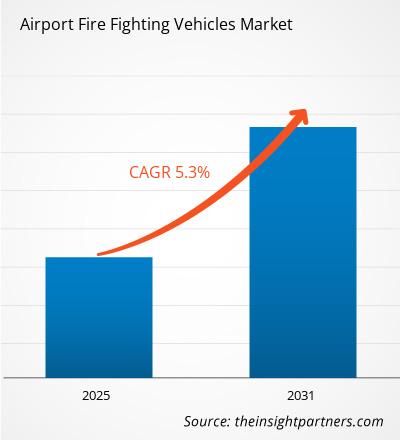
Modernization of global airport infrastructure, rigorous safety regulations, and rapid expansion in commercial passenger traffic are driving steady growth in the global Airport Fire Fighting Vehicles (ARFF) market. According to recent market analysis, the global Airport Fire Fighting Vehicles Market is expected to expand from US$ 1.32 Billion in 2025 to reach US$ 1.92 Billion by 2034, registering a Compound Annual Growth Rate (CAGR) of 4.21% during the forecast period of 2026 to 2034.
Airport Fire Fighting Vehicles commonly referred to as Aircraft Rescue and Firefighting (ARFF) vehicles are specialized apparatuses engineered to handle emergency responses involving aircraft incidents. Operating in high-velocity, high-hazard environments, these vehicles are equipped with rapid-acceleration chassis, large-capacity water and foam tanks, dry chemical discharge systems, and high-reaching extendable turrets (HRET). As air traffic resumes long-term upward trajectories and international safety mandates become stringent, airports globally are prioritizing the procurement of advanced fire-fighting assets.
Key Drivers Accelerating Market Growth
Global Airport Infrastructure Expansion: The construction of new Greenfield airports across rapidly developing regions in Asia-Pacific and the Middle East, paired with major terminal expansions in Europe and North America, is directly boosting demand for new emergency vehicle fleets.
Stringent Regulatory Mandates: Regulatory bodies such as the International Civil Aviation Organization (ICAO) and the Federal Aviation Administration (FAA) strictly govern airport safety response times and foam discharge capabilities. Compliance with these evolving response standards requires airports to continuously upgrade aging ARFF units.
Technological Advancements in Fire Suppression: Modern ARFF vehicles are shifting toward eco-friendly fluorine-free foams (F3), ultra-high-pressure fire suppression systems, and integrated infrared thermal imaging cameras to enhance visibility through dense smoke.
Get a PDF Sample- https://www.theinsightpartners.com/sample/TIPRE00025480
Competitive Landscape and Key Industry Players
The market is characterized by prominent international manufacturers, regional specialists, and engineering firms specializing in custom emergency response vehicles. Key players active in the global Airport Fire Fighting Vehicles market include:
CARROZZERIA CHINETTI S.R.L.
CHENGLI SPECIAL AUTOMOBILE CO., LTD.
E-ONE
Kronenburg
Oshkosh Corporation
Rosenbauer International AG
SIMON-CARMICHAEL International Group Limited
Vimal Fire Controls Pvt. Ltd.
WISS
ZIEGLER (CIMC Group)
These industry leaders are actively investing in research and development, strategic partnerships, and geographic expansion to strengthen their market footprint. Innovations focusing on vehicle ergonomics, hybrid propulsion systems, and automated turret operations remain key competitive differentiators.
Get Full Copy of This Report- https://www.theinsightpartners.com/buy/TIPRE00025480
Future Outlook (2026–2034)
Looking ahead, the Airport Fire Fighting Vehicles market is poised for a significant technological transformation focused on sustainability and digital integration:
Transition to Electric and Hybrid Fleets: In line with global aviation decarbonization targets, airport authorities are increasingly evaluating fully electric (EV) and plug-in hybrid ARFF vehicles. These eco-conscious models reduce carbon emissions on airfields without compromising the extreme acceleration and pumping power required for emergency situations.
Smart Firefighting and Autonomous Features: The future of ARFF fleets lies in smart connectivity. Modern vehicles are integrating telemetry, driver-assist systems, and telematics that monitor pump performance, foam tank levels, and vehicle health in real time.
Adoption of Alternative Extinguishing Agents: As global bans on PFAS-containing foams take effect, vehicle manufacturers are redesigning proportioning systems to ensure compatibility with viscous, environmentally friendly fluorine-free foams (F3).
As airports prepare for next-generation passenger aircraft and sustainable aviation practices, investment in modern, high-performance ARFF vehicles will remain an essential cornerstone of international aviation safety.
Related Reports-
Aerial Firefighting Market Share, Demand & Growth by 2034
Armored Fighting Vehicle Market Size, Share & Growth by 2034
About The Insight Partners
The Insight Partners is a leading market research and consulting firm delivering actionable insights through in-depth industry analysis and strategic intelligence. The firm supports clients across various industries in making informed business decisions by providing comprehensive market forecasts, competitive assessments, and growth opportunities.
Contact Us:
If you have any queries about this report or if you would like further information, please contact us:
Contact Person: Ankit Mathur
E-mail: sales@theinsightpartners.com
Phone: +1-646-491-9876
Also Available in : Korean| German| Japanese| French| Chinese| Italian| Spanish
