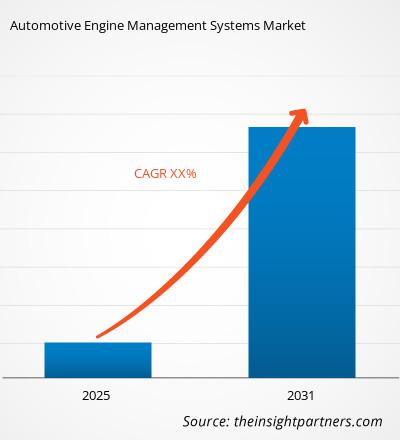
The global Automotive Engine Management Systems Market is set to experience steady expansion over the next decade, with market valuation projected to reach US$ 82.5 billion by 2031, according to the latest comprehensive industry research. The market is anticipated to expand at a Compound Annual Growth Rate (CAGR) of 4.6% during the forecast period from 2025 to 2031.
Growth in the automotive engine management systems industry is primarily fueled by rising global vehicle production, increasingly strict environmental and emissions regulations, and the rapid integration of electronic control units (ECUs) and advanced sensor networks in modern internal combustion engine (ICE) and hybrid vehicles.
Key Drivers Accelerating Market Growth
Strict Environmental Regulations: Governments worldwide are enforcing rigorous carbon emission norms and fuel economy mandates (such as Euro 7 and EPA standards). Automotive EMS solutions play a vital role in optimizing air-fuel ratios, ignition timing, and exhaust recirculation to minimize harmful emissions.
Expansion of Hybrid Electric Vehicles (HEVs): While full battery electric vehicles (BEVs) operate without traditional internal combustion engines, the surge in global demand for mild, full, and plug-in hybrid electric vehicles relies heavily on sophisticated engine management systems to seamlessly coordinate power transitions between electric motors and internal combustion engines.
Advances in Sensor and ECU Technologies: Modern EMS architectures rely on real-time data from oxygen sensors, throttle position sensors, engine temperature sensors, and mass air flow sensors. The miniaturization and enhanced precision of these components allow for higher fuel efficiency and optimal engine performance.
Get a PDF Sample- https://www.theinsightpartners.com/sample/TIPRE00004624
Industry Segmentation Highlights
By Component: Electronic Control Units (ECUs), Engine Sensors, Fuel Injection Systems, Ignition Systems, and Actuators. ECUs continue to hold a dominant revenue share due to increasing computational requirements for modern vehicle architectures.
By Vehicle Type: Passenger Cars, Light Commercial Vehicles (LCVs), and Heavy Commercial Vehicles (HCVs). The passenger car segment accounts for the largest share, driven by consumer preference for higher fuel economy and performance.
By Control Type: Gasoline Engine Management Systems and Diesel Engine Management Systems, with gasoline and gasoline-hybrid management systems showing strong growth trajectories.
Competitive Landscape & Key Industry Players
The global market is characterized by high competitive intensity, with leading Tier-1 suppliers and semiconductor manufacturers investing heavily in research and development to introduce lightweight, compact, and highly integrated control solutions.
Prominent key players operating in the global Automotive Engine Management Systems Market include:
Continental AG
Delphi Automotive PLC
Denso Corporation
Hella KGaA Hueck & Co.
Hitachi Automotive Systems Americas, Inc.
Infineon Technologies AG
NGK Spark Plug Co., Ltd.
Robert Bosch GmbH
Sanken Electric Co., Ltd.
Sensata Technologies Holding N.V.
These major players are focusing on strategic collaborations, technology licensing, and product innovations to strengthen their market footprint across emerging and developed economies.
Get Full Copy of This Report- https://www.theinsightpartners.com/buy/TIPRE00004624
Future Outlook (2025–2031)
Looking ahead, the Automotive Engine Management Systems Market is entering an evolutionary phase where traditional mechanical controls are almost entirely replaced by smart, software-driven electronic architectures.
Key future outlook trends shaping the industry include:
Integration of Artificial Intelligence and Predictive Analytics: Next-generation engine management systems are incorporating machine learning algorithms to predict component wear, optimize real-time fuel consumption, and provide predictive maintenance alerts to vehicle owners.
Over-the-Air (OTA) Updates: Modern ECUs are increasingly designed to support OTA software updates, allowing automakers to refine engine parameters, improve efficiency, and fix software vulnerabilities without requiring physical dealership visits.
Focus on Thermal and Energy Efficiency: As engine compartments become more compact and hybrid powertrains introduce higher thermal loads, key players are prioritizing high-temperature-resistant sensors and microcontrollers that operate reliably under harsh under-hood environments.
Emergence of Alternative Fuels: The rising adoption of synthetic e-fuels, hydrogen internal combustion engines (H2-ICE), and high-blend ethanol mixes will require adaptive engine management systems capable of dynamic fuel mapping and flexible combustion management.
As the automotive sector navigates the transition toward sustainable mobility, engine management systems will remain a cornerstone technology ensuring that thermal and hybrid powertrains deliver maximum performance with minimal environmental impact through 2031 and beyond.
Related Reports-
Engine Bush Market Share, Size & Demand by 2034
Engine Stand Market Outlook, Size & Demand by 2034
Diesel Engine Catalyst Market Trends, Size & Demand by 2034
Diesel Particulate Filter Market Share, Size & Analysis by 2034
About The Insight Partners
The Insight Partners is a leading market research and consulting firm delivering actionable insights through in-depth industry analysis and strategic intelligence. The firm supports clients across various industries in making informed business decisions by providing comprehensive market forecasts, competitive assessments, and growth opportunities.
Contact Us:
If you have any queries about this report or if you would like further information, please contact us:
Contact Person: Ankit Mathur
E-mail: sales@theinsightpartners.com
Phone: +1-646-491-9876
Also Available in : Korean| German| Japanese| French| Chinese| Italian| Spanish
