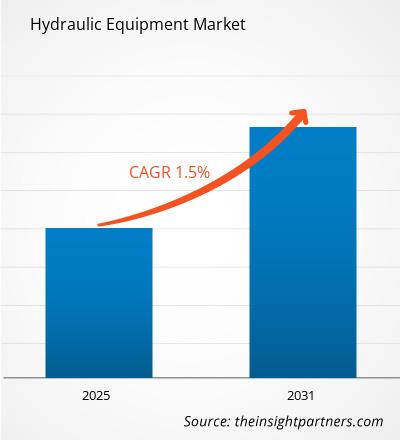
The global Hydraulic Equipment Market is experiencing robust expansion driven by increasing industrial automation, a surge in worldwide construction activities, and rapid advancements in electro-hydraulic systems. According to the latest comprehensive market intelligence report, the global Hydraulic Equipment market was valued at US$ 17.09 billion in 2025 and is projected to reach US$ 29.13 billion by 2034, expanding at a CAGR of 6.1% during the forecast period of 2026 to 2034.
Hydraulic equipment encompassing pumps, motors, valves, cylinders, and complete power units remains fundamental across diverse industrial sectors due to its high power density, reliability, and precision control capabilities. As heavy industries modernize and demand higher operational efficiency, hydraulic solutions continue to evolve to meet stringent energy and safety standards.
Key Market Drivers & Industry Trends
Growth in Construction & Infrastructure: Unprecedented urbanization and government investments in modern infrastructure across emerging economies are propelling the demand for heavy machinery equipped with high-performance hydraulic systems.
Transition Toward Electro-Hydraulic Integration: Market vendors are increasingly combining classic fluid power technology with modern electronics, microprocessors, and sensor systems. This integration significantly improves power efficiency, reduces fluid degradation, and enables real-time diagnostic monitoring.
Expansion in Industrial Automation: Manufacturing plants, automotive manufacturing units, and material handling sectors rely on modern hydraulic systems for high-force applications that require compact physical footprints.
Agricultural & Mining Modernization: Mechanization of agriculture and continuous demand for raw mineral extraction drive continuous replacement cycles and demand for specialized high-pressure hydraulic components.
Get a PDF Sample- https://www.theinsightpartners.com/sample/TIPRE00004036
Competitive Landscape & Key Industry Players
The global market features a blend of long-established multinational corporations and specialized engineering firms. Manufacturers are focusing on product innovation, strategic partnerships, regional expansion, and sustainable designs to solidify their market presence.
Prominent players operating in the global Hydraulic Equipment market include:
Bosch Limited
DAIKIN INDUSTRIES, Ltd.
Dana Motion Systems Italia S.r.l.
DONGYANG MECHATRONICS CHINA CO., LTD.
Eaton
Kawasaki Heavy Industries, Ltd.
Moog Inc.
PARKER HANNIFIN CORP
WEBER-HYDRAULIK GMBH
Wipro Infrastructure Engineering
Industry leaders continue to invest heavily in Research and Development (R&D) to produce eco-friendly, low-noise, leak-free, and energy-efficient hydraulic pumps and valves tailored for heavy-duty industrial and mobile applications.
Get Full Copy of This Report- https://www.theinsightpartners.com/buy/TIPRE00004036
Regional Insights
Asia-Pacific: Expected to maintain a dominant share throughout the forecast period, fueled by rapid industrialization, massive infrastructure development, and strong manufacturing bases in China, India, and Japan.
North America & Europe: Driven primarily by retrofit projects, adoption of smart IoT-enabled hydraulic systems, strict energy efficiency regulations, and continuous demand from defense, aerospace, and advanced industrial automation sectors.
Latin America & Middle East & Africa: Projected to exhibit healthy growth due to expanding mining activities, infrastructure initiatives, and investments in oil & gas exploration.
Future Outlook (2026–2034)
The future of the hydraulic equipment market will be largely defined by sustainability, digital integration, and intelligent power management. Key developments shaping the market trajectory include:
Smart & IoT-Connected Hydraulics: Predictive maintenance enabled by embedded sensors will become standard, drastically minimizing costly operational downtime in industrial plants and heavy construction fleets.
Hybrid & Electric-Hydraulic Actuation: The push toward low-carbon operations will accelerate adoption of hybrid electro-hydraulic actuators that consume power only when movement is required.
Biodegradable Fluid Compatibility: Environmental regulations will incentivize wider adoption of synthetic and bio-based hydraulic fluids, requiring compatible seals, hoses, and component designs.
Miniaturization and High Power Density: Engineering innovations will continue producing lighter, more compact hydraulic units capable of delivering higher pressure outputs with lower energy loss.
As industries globally pivot toward smarter, cleaner, and more efficient operational frameworks, hydraulic equipment manufacturers are well-positioned to capitalize on new opportunities created by the intersection of traditional fluid power and digital control technology.
Related Reports-
Mobile Hydraulic Equipment Market Trends, Size & Demand by 2034
Hydraulic Accumulators Market Share, Size & Demand by 2034
Hydraulic Valves Market Analysis, Size & Demand by 2034
Hydraulic Hose Market Growth, Size & Demand by 2034
Hydraulic Press Market Forecast, Size & Demand by 2034
Hydraulic Tools Market Scope, Size & Demand by 2034
Hydraulic Torque Wrench Market Outlook, Size & Demand by 2034
About The Insight Partners
The Insight Partners is a leading market research and consulting firm delivering actionable insights through in-depth industry analysis and strategic intelligence. The firm supports clients across various industries in making informed business decisions by providing comprehensive market forecasts, competitive assessments, and growth opportunities.
Contact Us:
If you have any queries about this report or if you would like further information, please contact us:
Contact Person: Ankit Mathur
E-mail: sales@theinsightpartners.com
Phone: +1-646-491-9876
Also Available in : Korean| German| Japanese| French| Chinese| Italian| Spanish
