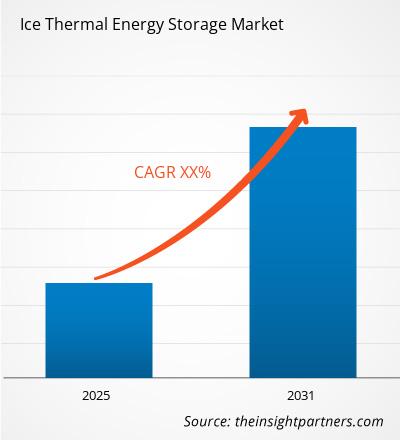
The Ice Thermal Energy Storage Market size is expected to reach US$ 596.52 Billion by 2034 from US$ 239.41 Billion in 2025. The global market is expected to grow at a CAGR of 10.68% from 2026 to 2034.
The latest released Ice Thermal Energy Storage Market study has evaluated the future growth potential of the global market and provides information and useful stats on market structure and size. The report is intended to provide Ice Thermal Energy Storage industry intelligence and strategic insights to help decision-makers make sound investment decisions and identify potential gaps and growth opportunities.
Get Sample Copy @ https://www.theinsightpartners.com/sample/TIPRE00029432
Additionally, the Ice Thermal Energy Storage report also identifies and analyses changing dynamics and emerging trends, along with essential drivers, challenges, opportunities, and restraints in the market.
Key Players Analysis:
CALMAC
Vogt Ice
Emerson Swan Inc.
FVB Energy Inc
AllCell Technologies LLC.
Linde
ERGINTECH
Halvorson Trane
Baltimore Aircoil Company
EVAPCO, Inc.
The Ice Thermal Energy Storage market report offers manufacturers, new businesses, and supply-chain stakeholders a structured assessment of industry sales and pricing performance. It provides insights into revenue, sales volume, and average selling prices across the total Ice Thermal Energy Storage market, with further analysis of individual companies, product types, applications, and regional markets.
Market Segmentation:
- Application (Refrigerator, Air Conditioner, Thermal Battery)
- EndUser (Commercial, Industrial)
Ice Thermal Energy Storage Market Dynamics, Regional Outlook, and Future Analysis –
Market Drivers –
The ice thermal energy storage market is driven by the need to reduce peak electricity demand and improve cooling system efficiency in commercial buildings, campuses, industrial facilities, and district cooling networks. Ice storage systems produce ice during lower-demand periods and use the stored cooling capacity when air-conditioning demand rises. Adoption is supported by cooling-intensive buildings, demand charges, electricity tariff differences, and energy management objectives.
Market Challenges –
Challenges include installation costs, space requirements, system complexity, and the need to coordinate ice production with cooling loads. Efficiency depends on the operating strategy, chiller performance, and electricity tariff structure. Retrofit installations may require significant engineering work, while maintenance, insulation, and control-system requirements can affect lifecycle economics and project payback.
Market Opportunities –
Opportunities include integration with commercial HVAC systems, district cooling, hospitals, data centers, airports, and large institutional facilities. Smart controls can optimize ice production and discharge according to building demand and electricity prices. Suppliers can develop modular storage tanks, improved heat exchangers, and integrated systems that combine thermal storage with high-efficiency chillers and renewable electricity.
Regional Analysis –
North America has opportunities through commercial building energy management and demand-charge optimization. Asia Pacific offers growth potential because of urbanization, rising air-conditioning demand, and large commercial developments. The Middle East may benefit from cooling-intensive climates and district cooling projects. Europe supports energy efficiency and building modernization, while adoption elsewhere depends on electricity tariffs, infrastructure, and project financing.
Future Analysis and Forecast –
The market is expected to benefit from increasing cooling demand and the need for flexible electricity consumption. Future systems may incorporate improved controls, higher storage efficiency, and integration with building automation and renewable energy. Growth will depend on the relationship between installation costs and energy savings, local tariff structures, available space, and the ability to optimize cooling operations over the system lifecycle.
Recent Industry Developments –
Industry trends include integration of ice storage with chillers, smart building controls, and district cooling networks. Building operators are evaluating thermal storage to shift electricity consumption away from peak periods. Product development emphasizes improved control strategies, reliable storage tanks, and integration with existing HVAC infrastructure.
Get Full Copy of This Report @ https://www.theinsightpartners.com/buy/TIPRE00029432
Ice Thermal Energy Storage Market Forecast
Overall, this Ice Thermal Energy Storage report provides a comprehensive perspective on the industry’s current performance, competitive landscape, and long-term development potential. By examining key trends, regional dynamics, growth opportunities, and emerging challenges, the study offers valuable insights into the factors shaping the future of the Ice Thermal Energy Storage market. These findings help manufacturers, investors, new entrants, and other industry stakeholders identify strategic priorities, assess business opportunities, strengthen their Ice Thermal Energy Storage market positioning, and develop informed strategies aligned with evolving industry requirements and future growth prospects.
About Us
The Insight Partners provide comprehensive analysis and insights into market trends that empower businesses to make informed decisions. Our reports are designed to equip stakeholders with the necessary information to navigate the complexities of various industries, including healthcare, technology, and finance. We are dedicated to delivering high-quality research that enables our clients to achieve their strategic objectives.
Contact Us:
Contact Person: Ankit Mathur
E-mail: ankit.mathur@theinsightpartners.com
Phone: +1-646-491-9876
