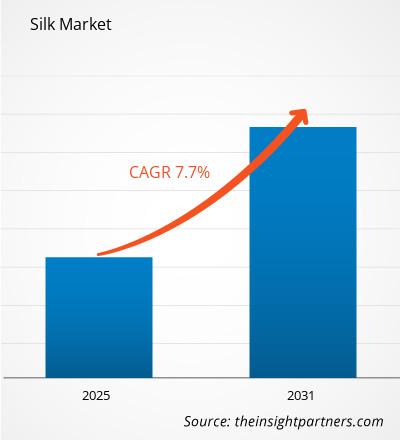
Few fibres carry as much history, or as much future, as silk. As the Silk Market climbs from US$ 20.91 Billion in 2025 to US$ 42.79 Billion by 2034, a centuries-old textile is being reinvented for runways, skincare shelves and operating rooms. The report projects an 8.28% CAGR from 2026 to 2034, and with historic data from 2021 to 2024 behind it, the released study maps where that growth will land.
What Is Silk?
Silk is a natural protein fibre spun by insects such as the mulberry silkworm, and more recently engineered from spider silk proteins in the laboratory. It is lightweight, strong, soft and biodegradable, with a lustre that synthetic fibres struggle to copy. Those qualities let the silk market serve fashion houses, cosmetics brands, medical researchers and carmakers at once.
Request a Sample Copy of the Report: https://www.theinsightpartners.com/sample/TIPRE00040407
What Is Driving Demand in the Silk Market?
Luxury still leads the story. Silk remains a symbol of luxury, and high-end brands and designers keep choosing it for premium clothing, accessories and home furnishings. As buyers shift toward high-quality, sustainable materials, the silk market gains fresh momentum, especially in emerging economies.
Sustainability is the second force. Silk is a natural, biodegradable fibre, and its renewable, less harmful production process compared with synthetic fibres speaks to buyers who care about their footprint. As the textile industry embraces greener choices, silk benefits from that preference.
Health and wellness adds a third. Silk is hypoallergenic, moisture-wicking and soft, and those properties have taken it into skincare items, bedding and even medical applications. Awareness of these benefits keeps growing, and so does the number of wellness products built around the fibre.
Opportunities widen the field further. Home furnishing demand for bedding, curtains, cushions and upholstery suits silk’s natural elegance, while wearable technology researchers explore smart clothing and health-monitoring wearables that value its lightweight comfort. Medical and biotech uses such as surgical sutures, wound dressings and tissue engineering draw on biocompatibility and strength, and the United States stands out as a key market.
Segmentation Overview: Silk Market by Type and Application
By Type:
Mulberry silk, tussar silk, spider silk and eri silk make up the type view. Mulberry silk anchors the luxury textile trade, while tussar and eri silk bring distinct textures and sourcing stories to designers and home décor brands. Spider silk is the standout, since it is expected to grow fastest during the forecast period as bioengineering turns a rare natural material into a producible one.
By Application:
Textile, cosmetic and medicine, and automotive applications complete the picture. Textiles remain the core, covering apparel, accessories and home furnishings. Cosmetic and medicine uses draw on silk’s hypoallergenic nature for skincare cloths, eye masks and pillowcases, as well as sutures, wound dressings and tissue engineering research.
Automotive adds a further opening, with interiors and upholstery looking for premium fibres that feel distinctive. Because the silk market spreads across such different buyers, weakness in one application seldom stalls the whole category.
Key Market Players in the Silk Market
- AMSilk GmbH
- Bolt Threads
- Seevix
- Spintex Engineering Ltd.
- Spiber Inc.
- Spidey Tek
- Inspidere BV
- Anhui silk Co. Ltd.
- Kraig Biocraft Laboratories Inc.
- Wujiang First Textile Co. Ltd.
- Wujiang Wanshiyi silk Co. Ltd.
- Zhejiang Jiaxin silk Corp. Ltd.
The report profiles these companies and analyses their competitive strategies and innovation developments. The list splits into two camps, with several names focused on spider silk and bioengineered proteins and others rooted in traditional silk production and textile manufacturing. That mix explains why the silk market can pair heritage supply chains with laboratory-grade innovation. Investors and partners watching the silk market can use these profiles to gauge where capacity and technology are concentrated.
Sustainability and Innovation Trends in Silk
Ethical and eco-friendly fashion is the headline trend. Consumers increasingly prefer silk produced through eco-friendly practices, and that conscious consumption pushes silk into high-end, sustainable collections. The shift is expected to be the key trend shaping the silk market.
Beauty and skincare form a second trend. Silk pillowcases, eye masks and skincare cloths attract buyers who value natural, hypoallergenic materials and the fibre’s reputation for helping prevent wrinkles and skin irritation. That reputation feeds the growing luxury beauty segment.
Technology is the third. Bioengineered silk and sustainable farming techniques lift production efficiency while limiting environmental impact, and they make the fibre more accessible and affordable. As quality improves and costs ease, silk travels further from fashion into medical and automotive uses. Spider silk developers in particular benefit from this progress.
Buy Premium Report: https://www.theinsightpartners.com/buy/TIPRE00040407
Regional Outlook for the Silk Market
Asia Pacific holds the largest share of the silk market. The region combines long-standing sericulture expertise with major textile manufacturing, and China, India, Japan and Australia are analysed individually in the report. That depth of production and processing capacity keeps the region at the centre of global silk trade.
North America looks to the United States, a key market supported by luxury and fashion demand, a preference for sustainable fabrics and growing health and wellness uses. Canada and Mexico sit alongside it. Europe, covering the UK, Germany, France, Russia and Italy, brings fashion heritage and design demand into the analysis.
South and Central America adds Brazil and Argentina, two emerging economies where rising consumer spending can widen the audience for premium textiles. The report sizes and forecasts every key segment at global, regional and country level. That detail lets brands, farmers and biotech developers compare opportunities market by market.
Related Reports:
Cell-Cultured Leather Market Growth Report and Size by 2030
Antimicrobial Textiles Market Demand, Share & Growth by 2034
Conductive Textiles Market Growth, Trends & Demand by 2034
Bioresorbable Polymers Market Size, Share & Trends by 2034
About The Insight Partners
The Insight Partners is among the leading market research and consulting firms in the world. We take pride in delivering exclusive reports along with sophisticated strategic and tactical insights into the industry. Reports are generated through a combination of primary and secondary research, solely aimed at giving our clientele a knowledge-based insight into the market and domain. This is done to assist clients in making wiser business decisions. A holistic perspective in every study undertaken forms an integral part of our research methodology and makes the report unique and reliable.
Contact Us:
If you have any queries about this report or if you would like further information, please contact us:
Phone: +1-646-491-9876
E-mail: sales@theinsightpartners.com
Also Available in: Korean | German | Japanese | French | Chinese | Italian | Spanish
