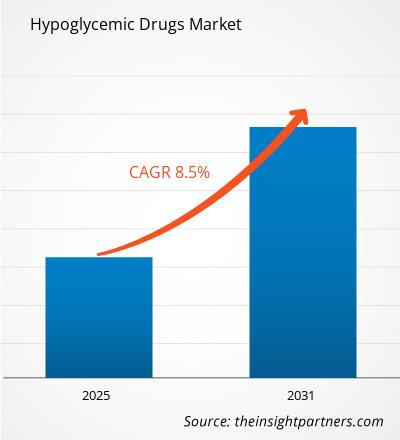
The Hypoglycemic Drugs Market size is expected to reach US$ 92.14 Billion by 2034 from US$ 67.55 Billion in 2025. The global market is expected to grow at a CAGR of 3.51% from 2026 to 2034.
The latest released Hypoglycemic Drugs Market study has evaluated the future growth potential of the global market and provides information and useful stats on market structure and size. The report is intended to provide Hypoglycemic Drugs industry intelligence and strategic insights to help decision-makers make sound investment decisions and identify potential gaps and growth opportunities.
Get Sample Copy @ https://www.theinsightpartners.com/sample/TIPRE00024470
Additionally, the Hypoglycemic Drugs report also identifies and analyses changing dynamics and emerging trends, along with essential drivers, challenges, opportunities, and restraints in the market.
Key Players Analysis:
Sanofi
Merck and Co.
Novo Nordisk
Takeda Pharmaceuticals
Eli Lilly
Pfizer
Boehringer Ingelheim
Novartis
Johnson and Johnson
AstraZeneca
The Hypoglycemic Drugs market report offers manufacturers, new businesses, and supply-chain stakeholders a structured assessment of industry sales and pricing performance. It provides insights into revenue, sales volume, and average selling prices across the total Hypoglycemic Drugs market, with further analysis of individual companies, product types, applications, and regional markets.
Market Segmentation:
- Type (Insulin, DPP-4, GLP-1, SGLT-2, Other)
- Application (Type 1 Diabetes, Type 2 Diabetes)
Hypoglycemic Drugs Market Dynamics, Regional Outlook, and Future Analysis –
Market Drivers –
The hypoglycemic drugs market is driven by the growing burden of diabetes, increased diagnosis, and the need to maintain blood glucose within clinically appropriate ranges. Treatment demand includes oral medicines and injectable therapies used according to diabetes type, disease progression, and patient characteristics. Greater awareness of diabetes complications and expansion of chronic disease management services also support the market.
Market Challenges –
Challenges include treatment costs, adverse effects, adherence difficulties, and unequal access to newer medicines. Generic competition can reduce prices, while reimbursement policies affect the availability of branded therapies. Clinical selection is complex because treatments differ in efficacy, contraindications, and effects on body weight or other health outcomes. Regulatory review and long-term safety assessment also shape development.
Market Opportunities –
Opportunities include medicines with improved glucose control, convenient dosing, favorable safety profiles, and benefits for selected cardiovascular or kidney outcomes. Development of combination therapies and more accessible formulations may improve treatment options. Emerging markets offer potential through better screening, broader insurance coverage, and improved access to primary care and diabetes education.
Regional Analysis –
North America is supported by high diabetes care expenditure, broad treatment availability, and ongoing pharmaceutical innovation. Europe benefits from structured diabetes management and established reimbursement systems. Asia Pacific presents substantial demand potential due to large patient populations and expanding diagnosis. Latin America and the Middle East and Africa face growing treatment needs, with access influenced by affordability, healthcare infrastructure, and medicine supply.
Future Analysis and Forecast –
Future development is expected to focus on personalized diabetes management, combination treatment, and medicines that address both glucose control and associated health risks. Easier dosing and improved adherence may remain important product priorities. Market performance will depend on clinical outcomes, pricing, reimbursement, access to diagnosis, and the ability of healthcare systems to support long-term diabetes treatment.
Recent Industry Developments –
Pharmaceutical development continues across oral glucose-lowering medicines, injectable therapies, and combination treatments. Research and clinical practice increasingly consider effects beyond blood glucose, including cardiovascular and kidney outcomes where supported by evidence. Manufacturers and healthcare systems also focus on affordability, patient adherence, and wider access to diabetes care.
Get Full Copy of This Report @ https://www.theinsightpartners.com/buy/TIPRE00024470
Hypoglycemic Drugs Market Forecast
Overall, this Hypoglycemic Drugs report provides a comprehensive perspective on the industry’s current performance, competitive landscape, and long-term development potential. By examining key trends, regional dynamics, growth opportunities, and emerging challenges, the study offers valuable insights into the factors shaping the future of the Hypoglycemic Drugs market. These findings help manufacturers, investors, new entrants, and other industry stakeholders identify strategic priorities, assess business opportunities, strengthen their Hypoglycemic Drugs market positioning, and develop informed strategies aligned with evolving industry requirements and future growth prospects.
About Us
The Insight Partners provide comprehensive analysis and insights into market trends that empower businesses to make informed decisions. Our reports are designed to equip stakeholders with the necessary information to navigate the complexities of various industries, including healthcare, technology, and finance. We are dedicated to delivering high-quality research that enables our clients to achieve their strategic objectives.
Contact Us:
Contact Person: Ankit Mathur
E-mail: ankit.mathur@theinsightpartners.com
Phone: +1-646-491-9876
