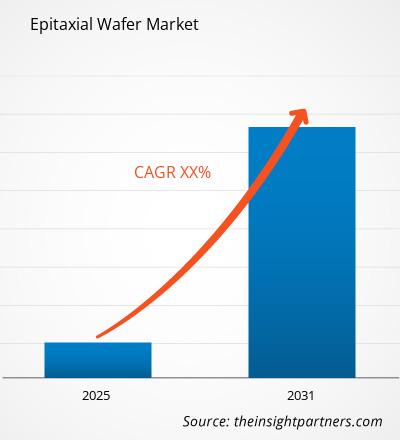
The global Epitaxial Wafer Market is projected to expand from US$ 4.43 billion in 2025 to US$ 11.83 billion by 2034, driven by rising semiconductor demand, electric vehicle adoption, and advances in power electronics.
The global epitaxial wafer market is anticipated to register a compound annual growth rate (CAGR) of 11.53% during the forecast period from 2026 to 2034. Increasing demand for high-performance semiconductor devices, expanding investments in advanced electronics, and the growing use of specialized semiconductor materials are expected to create new opportunities for market participants.
Epitaxial Wafer Market Overview
Epitaxial wafers are critical materials used in semiconductor manufacturing. They are produced by depositing a crystalline semiconductor layer onto a substrate, enabling precise control over the electrical and structural properties required for different electronic applications. These wafers are used in integrated circuits, power semiconductor devices, light-emitting diodes (LEDs), radio frequency components, and optoelectronic systems.
The growing dependence on semiconductors across automotive, telecommunications, consumer electronics, industrial automation, and renewable energy applications is increasing the importance of advanced wafer technologies. Manufacturers are focusing on improving semiconductor performance, energy efficiency, reliability, and production quality to meet the evolving requirements of end-use industries.
The expansion of data centers, artificial intelligence infrastructure, high-speed communication networks, and connected devices is also contributing to the need for advanced semiconductor components. These developments are expected to support demand for epitaxial wafers throughout the forecast period.
Get a PDF Sample- https://www.theinsightpartners.com/sample/TIPRE00017502
Key Growth Drivers of the Epitaxial Wafer Market
The increasing adoption of electric vehicles (EVs) is a significant factor supporting market growth. Electric vehicles require semiconductor components for power conversion, battery management, charging systems, and electric drivetrains. Epitaxial wafer technologies support the production of various semiconductor devices used in these applications.
Another important driver is the growing adoption of wide-bandgap semiconductor materials, particularly silicon carbide (SiC) and gallium nitride (GaN). These materials offer advantages in specific high-voltage, high-frequency, and high-temperature applications. Their use in power electronics, automotive systems, and telecommunications equipment is encouraging investment in advanced epitaxial wafer production.
The expansion of 5G networks, optical communications, and high-performance electronic devices is further supporting demand. Semiconductor manufacturers require materials with consistent crystalline quality and controlled electrical characteristics to develop devices that meet increasingly demanding performance specifications.
Additionally, continued investment in semiconductor manufacturing capacity is creating opportunities for wafer suppliers and equipment manufacturers. As semiconductor technologies evolve, epitaxial processes are expected to remain important for producing specialized electronic components.
Market Trends and Opportunities
Technological innovation is shaping the competitive environment of the epitaxial wafer market. Manufacturers are investing in deposition processes, defect reduction, thickness uniformity, and material quality to improve production yields and meet customer specifications.
The transition toward energy-efficient electronics presents opportunities for suppliers serving automotive, industrial, and renewable energy applications. Power semiconductor devices used in electric vehicle charging infrastructure, solar inverters, and industrial power systems may support demand for specialized epitaxial materials.
The development of advanced communication systems and optical devices also offers growth potential. High-frequency and optoelectronic applications require semiconductor materials engineered for specific performance characteristics, creating opportunities for companies with specialized manufacturing capabilities.
However, high production costs, complex fabrication processes, and stringent quality requirements remain important challenges. Manufacturers must invest in advanced equipment, technical expertise, and quality-control systems to maintain consistent output and competitive performance.
Key Players in the Epitaxial Wafer Market
The epitaxial wafer market includes companies involved in semiconductor materials, wafer manufacturing, and related production technologies. Key players identified in the market include:
Cree Inc.
GLC Semiconductor Group
II-VI Incorporated
Intelligent Epitaxy Technology Inc.
IQE PLC
Masimo Semiconductor
Nichia Corporation
SK Siltron Co. Ltd.
Sumitomo Electric Industries, Ltd.
Tokyo Electron Limited.
Market participants focus on technological development, product quality, manufacturing efficiency, research and development, and customer relationships. Capacity expansion and collaboration across the semiconductor supply chain may also help companies respond to evolving customer needs. The specific competitive position of each company varies according to its product portfolio and role in the industry.
Get Full Copy of This Report- https://www.theinsightpartners.com/buy/TIPRE00017502
Future Outlook
The global epitaxial wafer market is expected to experience substantial growth through 2034 as semiconductor applications expand across automotive electronics, telecommunications, computing, industrial systems, and energy infrastructure. The projected increase from US$ 4.43 billion in 2025 to US$ 11.83 billion by 2034, at a CAGR of 11.53% during 2026–2034, reflects the growing importance of advanced semiconductor materials.
Future opportunities are likely to be influenced by the adoption of silicon carbide and gallium nitride technologies, rising demand for energy-efficient power devices, and continued investment in advanced semiconductor manufacturing. Improvements in epitaxial deposition processes and wafer quality may also help manufacturers address technical challenges and meet increasingly specialized requirements.
Companies that strengthen their manufacturing capabilities, invest in material innovation, and build strategic relationships with semiconductor producers may be better positioned to capture emerging opportunities. Overall, epitaxial wafers are expected to remain an important component of the semiconductor ecosystem as industries continue to develop more efficient and advanced electronic technologies.
About The Insight Partners
The Insight Partners is a leading market research and consulting firm delivering actionable insights through in-depth industry analysis and strategic intelligence. The firm supports clients across various industries in making informed business decisions by providing comprehensive market forecasts, competitive assessments, and growth opportunities.
Contact Us:
If you have any queries about this report or if you would like further information, please contact us:
Contact Person: Ankit Mathur
E-mail: sales@theinsightpartners.com
Phone: +1-646-491-9876
Also Available in : Korean | German | Japanese | French | Chinese | Italian | Spanish
