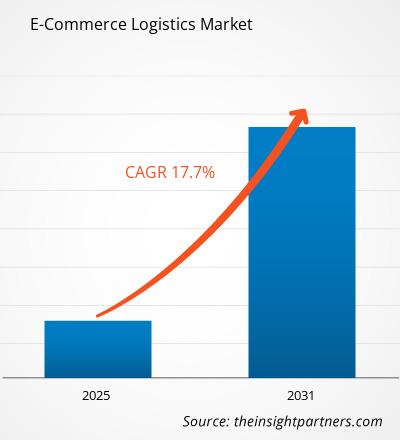
The global e-commerce logistics market is on the brink of an unprecedented transformation, driven by digital acceleration, shifting consumer expectations, and technological innovations across supply chain ecosystems. According to the latest market intelligence report, the global E-Commerce Logistics Market size is projected to reach US$ 2,461.32 billion by 2034, soaring from US$ 537.31 billion in 2025. The market is anticipated to register a compounding annual growth rate (CAGR) of 18.42% during the forecast period from 2026 to 2034.
This exponential growth trajectory highlights the structural shift in retail operations worldwide. As digital commerce evolves from a secondary sales channel into the primary engine of global retail, logistics networks are undergoing rapid modernization to accommodate high delivery volumes, shortened fulfillment cycles, and increasingly complex cross-border shipping networks.
Market Drivers & Industry Dynamics
The robust growth of the e-commerce logistics market is underpinned by several macro and industry-specific drivers:
Surge in Cross-Border E-Commerce: The proliferation of digital marketplaces and simplified international payment gateways has enabled consumers to purchase goods seamlessly from overseas vendors, creating immense demand for scalable international logistics solutions.
Rise of Same-Day and Next-Day Delivery: On-demand delivery standards are forcing logistics providers to overhaul fulfillment strategies. Micro-fulfillment centers (MFCs) and urban hub networks are being deployed near high-density population zones to meet tight fulfillment timelines.
Technological Integration: Machine learning, artificial intelligence (AI), dynamic routing algorithms, and automated guided vehicles (AGVs) are optimizing warehouse management, line-haul transportation, and last-mile operations.
Shift Toward Omnichannel Logistics: Modern retailers are integrating online platforms with physical storefronts, requiring flexible order processing, reverse logistics handling, and real-time inventory visibility.
Get a PDF Sample- https://www.theinsightpartners.com/sample/TIPTE100000892
Competitive Landscape & Key Market Players
The competitive environment of the global e-commerce logistics market is characterized by strategic alliances, massive capital investments in fulfillment infrastructure, and a focus on sustainability. Prominent market players listed in the report include:
Amazon
DHL International GmbH
FedEx Corporation
United Parcel Service, Inc. (UPS)
Aramex International
CEVA Logistics (Ceva Holdings LLC)
S.F. Express
Clipper Logistics Plc.
Kenco Group, Inc.
Gati Limited
Industry leaders are aggressively investing in smart logistics facilities, autonomous fleet trials, and green last-mile delivery initiatives (such as electric delivery vehicles) to reduce carbon footprints while maintaining operational efficiency.
Get Full Copy of This Report- https://www.theinsightpartners.com/buy/TIPTE100000892
Regional Insights
Asia-Pacific: Retains its position as the largest regional market, propelled by expanding middle-class populations, rapid smartphone penetration, and massive e-commerce adoption in economies such as China, India, and Southeast Asian nations.
North America & Europe: Continue to lead in advanced fulfillment automation, robotized warehousing, and sustainable packaging solutions, with strong consumer demand for expedited delivery services.
Latin America & Middle East/Africa: Represent high-growth emerging frontiers where logistics infrastructure development and digital infrastructure upgrades are creating expanding opportunities for regional and global players alike.
Future Outlook (2026–2034)
Looking ahead, the e-commerce logistics market is poised to transition from expansion-driven development to intelligence-driven optimization. Key trends shaping the future of the market include:
Autonomous Last-Mile Delivery: Drones, autonomous delivery vans, and sidewalk robots will move from pilot programs to mainstream deployment in urban and suburban geographies.
AI-Driven Demand Forecasting: Predictive analytics will enable predictive inventory positioning, allowing logistics companies to ship items before orders are formally placed based on consumer purchase trends.
Green & Sustainable Logistics: Carbon-neutral warehousing, eco-friendly packaging, and fully electrified delivery fleets will become mandatory benchmarks due to stricter regulatory mandates and growing consumer eco-awareness.
Resilient & Transparent Supply Chains: Blockchain technology and IoT tracking sensors will deliver end-to-end trace-and-track transparency, ensuring seamless handling of cold-chain e-commerce (such as online groceries and biopharmaceuticals).
Related Reports-
Cash Logistics Market Size, Share & Growth by 2034
Fmcg Logistics Market Trends, Size & Growth by 2034
About The Insight Partners
The Insight Partners is a leading market research and consulting firm delivering actionable insights through in-depth industry analysis and strategic intelligence. The firm supports clients across various industries in making informed business decisions by providing comprehensive market forecasts, competitive assessments, and growth opportunities.
Contact Us:
If you have any queries about this report or if you would like further information, please contact us:
Contact Person: Ankit Mathur
E-mail: sales@theinsightpartners.com
Phone: +1-646-491-9876
Also Available in : Korean| German| Japanese| French| Chinese| Italian| Spanish
