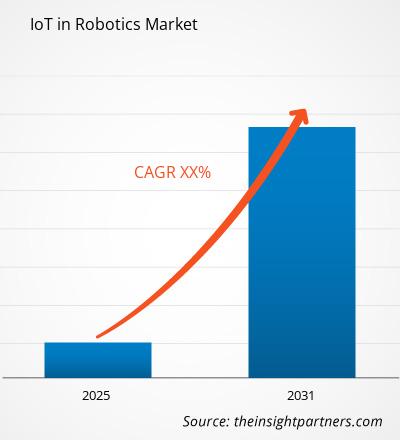
The global IoT In Robotics Market size is projected to reach US$ 38.06 billion by 2034, increasing from US$ 10.95 billion in 2025. The market is anticipated to register a compound annual growth rate (CAGR) of 14.85% during the forecast period from 2026 to 2034. Growing investments in industrial automation, connected manufacturing, real-time monitoring, and intelligent robotic systems are supporting the adoption of Internet of Things (IoT) technologies in robotics.
IoT in robotics combines robotic equipment with connected sensors, communication networks, software platforms, and data analytics. This integration enables robots to exchange information with other machines and digital systems, allowing organizations to monitor operations, evaluate performance, and make data-informed decisions. As businesses pursue greater productivity and operational flexibility, connected robotics is becoming an important part of digital transformation initiatives.
Increasing Adoption of Connected Robotics
Manufacturers are increasingly using connected technologies to improve visibility across production processes. IoT-enabled robotic systems can collect operational data, communicate equipment status, and provide information that helps operators understand performance. This connectivity can support better coordination between robotic equipment and other manufacturing systems.
In industrial environments, robots perform tasks such as assembly, material handling, inspection, and repetitive production operations. Connecting these systems to monitoring platforms can help organizations identify workflow issues and evaluate equipment utilization. Access to timely information also supports decisions about production planning and maintenance requirements.
The growing adoption of smart factories is contributing to this development. Businesses are investing in digital infrastructure that connects machines, production lines, and enterprise software. IoT-enabled robotics can contribute to these environments by helping organizations manage automated processes with greater visibility and consistency.
Get a PDF Sample- https://www.theinsightpartners.com/sample/TIPTE100000227
Real-Time Monitoring and Predictive Maintenance
Real-time monitoring is an important application of IoT in robotics. Connected sensors can collect information about robotic equipment, including operating conditions, activity, and performance indicators. Monitoring platforms can make this information available to operators and maintenance teams, helping them identify unusual patterns that may require investigation.
Predictive maintenance is another potential benefit. By analyzing equipment data over time, organizations can look for signs of wear, abnormal operation, or declining performance. This information can help maintenance teams prioritize inspections and plan servicing before certain issues lead to significant operational interruptions.
These capabilities can be valuable in facilities where equipment availability directly affects production output. However, effective predictive maintenance depends on reliable sensors, appropriate analytics, accurate data, and qualified technical oversight. IoT technologies support maintenance planning but do not remove the need for professional inspections and repairs.
Applications Across Industrial and Service Environments
IoT-enabled robotics has applications across manufacturing, warehousing, logistics, healthcare, and other environments where automation can improve operational processes. In warehouses, connected robots may support material movement and inventory workflows. In manufacturing facilities, connected systems can help coordinate robotic activities and provide operational data for performance evaluation.
Robotic applications in healthcare and service environments may also benefit from connectivity and remote monitoring, depending on the equipment and operational requirements. Data exchange can support system oversight and coordination with wider digital infrastructure.
The benefits of connected robotics depend on the task being performed, the quality of integration, and the reliability of the underlying technology. Organizations must assess whether a solution addresses a specific operational need and whether its expected benefits justify implementation and ongoing support costs.
Technology Development and Market Challenges
Advances in sensors, wireless communication, cloud computing, edge computing, and artificial intelligence are creating opportunities for more capable connected robotic systems. These technologies can help organizations process operational information, improve responsiveness, and coordinate automated activities.
Despite these opportunities, implementation can involve challenges. Integrating new systems with existing machines and software may require technical expertise and capital investment. Organizations must also manage cybersecurity, data privacy, network reliability, and compatibility between equipment from different suppliers.
Cybersecurity is particularly important when robots are connected to enterprise networks or remote monitoring platforms. Weak security practices can expose connected systems to unauthorized access and operational risks. Businesses therefore need appropriate access controls, secure communications, software updates, and ongoing system monitoring.
Technology providers that offer reliable connectivity, practical integration support, and solutions suited to customer requirements may be better positioned to address these challenges.
Key Players in the IoT in Robotics Market
Key companies operating in the IoT in robotics market include:
- ABB Ltd.
- Cisco Systems, Inc.
- Fanuc Corporation
- General Electric Corp.
- Intel Corporation
- Kuka AG
- Microsoft Corporation
- NXP Semiconductors N.V.
- Omron Corporation
- Robert Bosch GmbH
These companies participate in areas related to robotics, industrial automation, connectivity, semiconductors, and digital technology. Market competition is shaped by technological capabilities, system reliability, integration options, software support, and the ability to meet evolving customer requirements. Collaboration between robotics manufacturers and technology providers can also help businesses develop connected automation solutions.
Get Full Copy of This Report- https://www.theinsightpartners.com/buy/TIPTE100000227
Future Outlook
The IoT in robotics market is expected to experience continued growth as organizations invest in automation, connected equipment, and data-driven operations. The market is projected to increase from US$ 10.95 billion in 2025 to US$ 38.06 billion by 2034, registering a CAGR of 14.85% during 2026–2034.
Future developments are likely to focus on improving connectivity, strengthening real-time analytics, enabling more effective remote monitoring, and integrating robotic systems with broader industrial platforms. As smart manufacturing initiatives expand, connected robotics may play a greater role in equipment management, process coordination, and operational decision-making.
Long-term adoption will depend on addressing implementation costs, cybersecurity risks, interoperability, and the availability of skilled personnel. Businesses will also need to assess the practical value of connected systems against their operational priorities.
Overall, IoT integration is helping transform robotics from isolated automated equipment into connected systems that can share information and support data-informed decisions. Continued technological development and industrial investment are expected to shape the market’s evolution through 2034.
Related Report-
IoT Chip Market Trends, Share & Demand by 2034
About The Insight Partners
The Insight Partners is a leading market research and consulting firm delivering actionable insights through in-depth industry analysis and strategic intelligence. The firm supports clients across various industries in making informed business decisions by providing comprehensive market forecasts, competitive assessments, and growth opportunities.
Contact Us:
If you have any queries about this report or if you would like further information, please contact us:
Contact Person: Ankit Mathur
E-mail: sales@theinsightpartners.com
Phone: +1-646-491-9876
Also Available in :
Korean | German | Japanese | French | Chinese | Italian | Spanish
