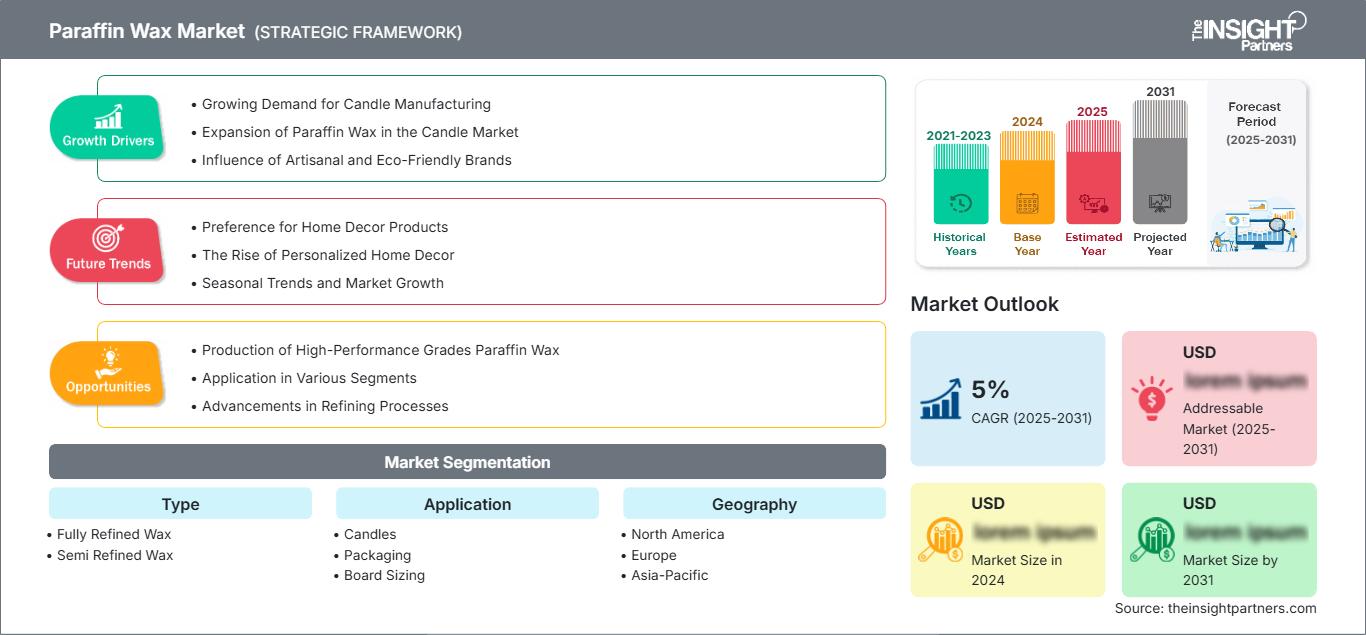
Candles, corrugated boxes and rubber tyres share one quiet ingredient, and it comes straight from the crude oil refining chain. With the Paraffin Wax Market valued at US$ 5.62 billion in 2025 and expected to reach US$ 7.06 billion by 2034, this mature segment is advancing at a CAGR of 2.57% during 2026-2034. The pace is measured, yet remarkably dependable, and that steadiness keeps refiners, converters and brand owners committed to the paraffin wax market year after year.
What Is Paraffin Wax and Why Does It Matter?
Paraffin wax is a petroleum-derived, colourless to white solid produced when lubricating oils are dewaxed and refined. Its low melting point, moisture resistance and clean-burning behaviour make it a versatile industrial input. Buyers value it because few alternatives match its cost efficiency at scale, which anchors the paraffin wax market.
Request a Sample Copy of the Report: https://www.theinsightpartners.com/sample/TIPRE00011255
What Is Driving the Paraffin Wax Market?
So what keeps demand ticking upward in a market that is hardly a high-growth story? The answer starts with candles. Home fragrance has become a year-round purchase rather than a seasonal gift, and consumers now treat scented candles as everyday décor. Candle makers still rely heavily on paraffin wax because it holds fragrance well, takes colour evenly and melts at a predictable temperature. That combination supports consistent volumes across the paraffin wax market, especially where price sensitivity is high.
Packaging is the second pillar. Wax coatings protect corrugated cartons, paper cups and food wraps from moisture and grease, and the rise of e-commerce and cold chain logistics has widened that need. Produce, seafood and frozen goods all travel in cartons that must survive humidity, and wax-treated board does that economically. Beyond that, board sizing uses wax emulsions to control water absorption in paperboard, giving mills another dependable outlet for paraffin wax.
Industrial uses add further ballast. Rubber processors blend paraffin wax into tyres and technical rubber goods as an anti-ozonant, protecting products against cracking in sunlight and stress. As global vehicle fleets expand and ageing, replacement tyre demand stays robust, and this quietly supports the paraffin wax market. Adhesives, polishes and coatings round out the picture, ensuring that no single sector controls the demand curve.
Supply conditions matter just as much. Paraffin wax is a by-product of lubricant base oil production, so its availability tracks refinery output and lubricant market cycles. Integrated refiners with dewaxing capacity enjoy a structural cost advantage, while changes in crude slates and base oil demand can tighten or loosen supply. This link explains why the paraffin wax market grows steadily rather than spectacularly, and why a 2.57% CAGR is a credible reflection of its fundamentals.
Segmentation Overview
By Type: Fully refined wax leads on quality, with very low oil content and high purity that suit food-contact packaging, cosmetics and premium candles. Semi refined wax serves buyers who prioritise cost, finding wide use in board sizing, general candle production and rubber compounding. The Others category covers crude and specialised grades that meet niche technical requirements. Together these types allow suppliers to match specification and price across the paraffin wax market.
By Application: Candles remain the most recognisable outlet, supported by gifting, wellness and décor trends. Packaging consumes substantial volumes through coated cartons, cups and wraps, helped by food service growth and online retail. Board sizing relies on wax to give paper and board resistance to water penetration. Rubber applications use wax to extend the service life of tyres and moulded products. The Others segment captures adhesives, polishes, textiles and coatings, which add diversity to paraffin wax demand.
Key Market Players
- Exxon Mobil Corporation
- Fushun Hengyi Petro and Chemical Co., Ltd.
- Honeywell International Inc.
- Nippon Seiro Co., Ltd.
- Numaligarh Refinery Limited
- Petro-Canada Lubricants Inc.
- Petróleo Brasileiro S.A. – Petrobras
- Repsol, S.A.
- Sasol Limited
- China Petroleum & Chemical Corporation
Most of these companies sit at the junction of refining and lubricants, which gives them reliable feedstock and strong distribution. Sasol and Nippon Seiro are known for specialised wax grades, while Honeywell contributes process technology. Competition in the paraffin wax market revolves around purity, consistency and logistics reach rather than headline price alone.
Sustainability and Innovation Trends
Environmental scrutiny is reshaping the paraffin wax market, though it has not displaced it. Brands are testing blends that combine paraffin wax with soy, palm or other plant-derived waxes to lower the fossil content of candles. Packaging buyers want wax coatings that support recyclability, pushing suppliers to refine formulations that repulp cleanly. Meanwhile, producers are investing in higher-purity grades and cleaner refining processes to meet food-contact and cosmetic standards. Innovation of this kind will not shrink the paraffin wax market, but it will decide which suppliers win premium contracts.
Buy Premium Report: https://www.theinsightpartners.com/buy/TIPRE00011255
Regional Outlook
North America combines a large candle and home fragrance culture with a sophisticated packaging sector, keeping demand for refined grades firm. Europe leans toward quality and compliance, with strict food-contact rules favouring fully refined wax and encouraging blends with renewable waxes. Asia Pacific anchors global production and consumption, driven by refining capacity, a vast manufacturing base and growing consumer spending in China and India. South and Central America benefits from regional refining activity and expanding packaging needs, with Petrobras a visible supplier. Across all four regions, the paraffin wax market is shaped by local refinery output and end-use strength.
Related Reports:
Bitumen Market Growth, Share & Trends by 2034
White Oil Market Size, Share, and Analysis by 2031
About The Insight Partners
The Insight Partners is among the leading market research and consulting firms in the world. We take pride in delivering exclusive reports along with sophisticated strategic and tactical insights into the industry. Reports are generated through a combination of primary and secondary research, solely aimed at giving our clientele a knowledge-based insight into the market and domain. This is done to assist clients in making wiser business decisions. A holistic perspective in every study undertaken forms an integral part of our research methodology and makes the report unique and reliable.
Contact Us:
If you have any queries about this report or if you would like further information, please contact us:
Phone: +1-646-491-9876
E-mail: sales@theinsightpartners.com
Also Available in: Korean | German | Japanese | French | Chinese | Italian | Spanish
