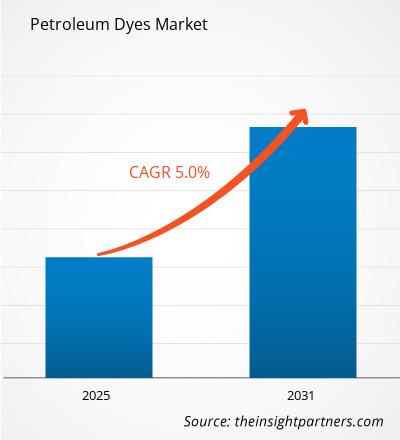
Red diesel, blue aviation gasoline, yellow-tinted kerosene: a splash of colour does far more work in a fuel tank than most people realise. Colour tells a tax inspector which fuel is which, warns a pilot which grade is flowing, and helps a refinery spot contamination. This quiet but vital role is why the Petroleum Dyes Market is projected to climb from US$ 1.33 billion in 2025 to US$ 2.01 billion by 2034, a CAGR of 4.74% during 2026-2034. For a niche chemical segment, that is a confident pace.
What Is a Petroleum Dye and Why Does It Matter?
Petroleum dyes are oil-soluble colourants added in tiny quantities to fuels, lubricants and related products. They identify grades, mark tax status, brand products and reveal leaks or tampering. Because the doses are small but the compliance stakes are high, the petroleum dyes market rewards consistency and technical trust.
Request a Sample Copy of the Report: https://www.theinsightpartners.com/sample/TIPRE00020341
What Is Driving the Petroleum Dyes Market?
So why is demand for a few drops of colour rising? Fuel fraud sits at the centre of the answer. Governments tax road fuels at higher rates than those used in farming, construction or heating, and the gap tempts criminals to pass off cheap, rebated fuel as taxed product. Dyes make the difference visible at a glance. As authorities tighten enforcement and expand roadside testing, the petroleum dyes market benefits from stricter compliance regimes in many countries.
Fuel theft and adulteration add a second layer of demand. Mixing kerosene into diesel or gasoline cuts costs for dishonest sellers but damages engines and harms emissions. Dyes, often paired with chemical markers, let fuel owners and regulators trace products through the supply chain and prove where contamination occurred. Beyond that, brand owners use distinctive colours to protect their products from counterfeiting, which gives the petroleum dyes market a commercial angle as well as a regulatory one.
Safety and quality control matter just as much. Aviation fuel grades must never be confused, and a clear colour code helps ground crews and pilots verify what they are loading. Lubricating oils and greases also use dyes so that technicians can spot leaks, distinguish product types and avoid costly mix-ups. As industrial fleets grow and maintenance programmes become more systematic, these everyday uses keep the petroleum dyes market moving upward.
Economic growth plays its part too. Rising vehicle ownership, expanding transport networks and larger industrial activity in emerging economies all lift fuel consumption, and every extra litre moving through a regulated supply chain is a candidate for marking. Of course, the dyes themselves are a small share of fuel cost, which makes buyers willing to pay for reliability. That dynamic supports the 4.74% CAGR forecast for the petroleum dyes market.
Segmentation Overview
By Product: Red dyes are the most widely recognised, commonly used to flag lower-taxed or off-road diesel and similar fuels. Blue dyes appear in certain gasoline and aviation applications, where colour helps distinguish grades. Yellow dyes serve identification and branding uses across several fuel and oil types. The Others category covers green, orange and specialised shades developed for local regulations or proprietary marking schemes. Together these colours give suppliers a flexible palette across the petroleum dyes market.
By Application: Gasoline uses dyes for grade identification, branding and tamper detection. Diesel fuel is a core outlet, driven by tax differentiation and anti-adulteration programmes. Aviation fuel relies on colour for safety, helping prevent grade confusion during handling. Lubricating oils and greases use dyes for product differentiation and leak detection. The Others segment includes heating oils, solvents and industrial fluids, which extend the reach of the petroleum dyes market.
Key Market Players
- A.S. Harrison and Co Pty Ltd.
- Authentix, Inc.
- BASF SE
- Fuel Theft Solutions Ltd
- Improchem. Pty Ltd.
- Innospec Inc.
- John Hogg and Co Ltd.
- Sunbelt Corporation
- The Dow Chemical Co.
- United Colour Manufacturing Co.
BASF SE and The Dow Chemical Co. bring chemical breadth and global supply capability. Authentix, Inc., Innospec Inc. and Fuel Theft Solutions Ltd are closely associated with fuel marking, authentication and anti-fraud solutions. A.S. Harrison and Co Pty Ltd., Improchem. Pty Ltd., John Hogg and Co Ltd., Sunbelt Corporation and United Colour Manufacturing Co. serve regional and specialist customers. Competition in the petroleum dyes market turns on colour stability, solubility, regulatory approvals and reliable delivery.
Sustainability and Innovation Trends
Innovation in the petroleum dyes market increasingly goes beyond colour. Suppliers are developing dyes that remain stable in cleaner fuels, including low-sulphur grades and biofuel blends, where chemistry can interact with additives. Covert markers, which are invisible to the eye but detectable with simple field tests, are gaining ground as fraudsters learn to bleach or dilute visible dyes. Meanwhile, producers are working on formulations with lower environmental impact and tighter handling controls, in response to stricter chemical regulations. Suppliers that combine visible colour with traceable chemistry will hold an edge in the petroleum dyes market.
Buy Premium Report: https://www.theinsightpartners.com/buy/TIPRE00020341
Regional Outlook
North America combines a mature fuel distribution system with active tax enforcement, supporting steady demand for red and blue dyes. Europe relies on strict fuel quality rules and revenue protection programmes, encouraging adoption of advanced marking technologies. Asia Pacific stands out for rapidly rising fuel consumption and expanding regulatory oversight, making it a central growth engine for the petroleum dyes market. South and Central America offers opportunity as governments work to curb fuel smuggling and adulteration. Across these four regions, enforcement intensity and fuel demand determine how quickly the petroleum dyes market advances.
Related Reports:
Aromatic Solvents Market Demand, Share & Growth by 2034
Bitumen Market Growth, Share & Trends by 2034
About The Insight Partners
The Insight Partners is among the leading market research and consulting firms in the world. We take pride in delivering exclusive reports along with sophisticated strategic and tactical insights into the industry. Reports are generated through a combination of primary and secondary research, solely aimed at giving our clientele a knowledge-based insight into the market and domain. This is done to assist clients in making wiser business decisions. A holistic perspective in every study undertaken forms an integral part of our research methodology and makes the report unique and reliable.
Contact Us:
If you have any queries about this report or if you would like further information, please contact us:
Phone: +1-646-491-9876
E-mail: sales@theinsightpartners.com
Also Available in: Korean | German | Japanese | French | Chinese | Italian | Spanish
