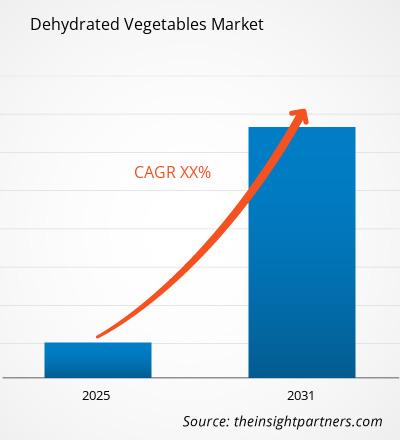
A bag of dried carrots in the pantry does something fresh produce cannot: it waits. That simple advantage is feeding a big commercial opportunity, and the Dehydrated Vegetables Market is expected to expand from US$ 16.47 Billion in 2025 to US$ 27.32 Billion by 2034, registering a CAGR of 5.79% from 2026 to 2034. Food manufacturers, restaurants and households all want ingredients that store easily, travel well and cut waste, and the dehydrated vegetables market delivers on every count.
What Are Dehydrated Vegetables?
Dehydrated vegetables are vegetables from which most of the water has been removed through methods such as air drying, vacuum drying or freeze-drying. Removing moisture slows spoilage, concentrates flavour and reduces weight, which lowers storage and transport costs. Processors sell them as slices, cubes, flakes or minced pieces for soups, snacks, sauces and ready meals.
Request a Sample Copy of the Report: https://www.theinsightpartners.com/sample/TIPRE00019549
What Is Driving Demand in the Dehydrated Vegetables Market?
Convenience is the strongest force. Busy consumers lean on instant noodles, soup mixes, ready meals and seasoning blends, and nearly all of them rely on dried vegetables for colour, texture and nutrition. Manufacturers value the consistency: a dried carrot cube behaves the same in every batch, regardless of the season or harvest. That predictability keeps the dehydrated vegetables market firmly connected to the fast-growing packaged food sector.
Shelf life and food waste add a second, very practical layer. Fresh vegetables can spoil within days, and losses along the supply chain are a persistent headache for growers and retailers. Drying turns surplus or imperfect produce into a stable product that lasts months. What makes this particularly significant is the cost advantage: lighter, smaller packages reduce freight expenses and free up warehouse space, which matters for exporters serving distant markets.
Health and clean-label trends also play a part. Shoppers look for plant-based foods, vegetable-rich snacks and ingredients without artificial additives. Dried vegetables can deliver fibre, vitamins and minerals in a compact form, and many products contain only one ingredient. Freeze-drying and gentler drying technologies preserve more colour and nutrients, helping premium brands justify higher prices. Foodservice operators, airlines, military catering and outdoor-meal makers form another reliable customer group because they need lightweight, long-lasting ingredients.
Challenges remain, of course. Drying is energy-intensive, raw material prices swing with weather and harvest conditions, and food safety standards demand careful control of moisture, microbial load and contaminants. Processors that invest in efficient dryers, traceable sourcing and quality certification are best placed to win large contracts in the dehydrated vegetables market.
Segmentation Overview of the Dehydrated Vegetables Market
By Product: Carrot, beans, peas, corn and potatoes make up staple categories with broad use in soups, snacks and prepared meals. Broccoli and mushrooms attract growing interest from premium and health-focused brands, while the Others category covers onions, tomatoes, peppers, spinach and similar items.
By Form: Slice and cubes suit soups, stews and ready meals where visible pieces matter. Flakes dissolve quickly and work well in sauces, baby food and seasoning blends. Minced and chopped forms deliver flavour efficiently in dry mixes and snack coatings, and the Others group includes powders and granules for specialised formulations.
By Nature: Organic products are expanding as consumers seek certified, pesticide-conscious foods and retailers widen their natural ranges. Conventional products still account for the bulk of volume thanks to lower prices and strong demand from large food manufacturers.
Key Market Players in the Dehydrated Vegetables Market
- Harmony House Foods, Inc
- Dole Food Company
- Naturex S.A
- Mercer Foods, LLC.
- Viva Bella Orchards Inc
- Traina Dried Vegetable Inc.
- Montagu Dried Vegetable And Nuts (Pty) Ltd
- Chengde Shenli Food Co. Ltd.
- Seawind Foods
- Delixious
Dole Food Company brings global scale in fresh and processed produce, while Naturex is widely linked with plant-based natural ingredients. Harmony House Foods and Mercer Foods are associated with dried and freeze-dried products for retail, foodservice and emergency food uses. Traina Dried Vegetable, Montagu Dried Vegetable And Nuts, Chengde Shenli Food, Viva Bella Orchards, Seawind Foods and Delixious add regional strength across processing, sourcing and private-label supply. Competition centres on product quality, drying technology, price stability and certifications.
Sustainability and Innovation Trends in Dehydrated Vegetables
Waste reduction is the central sustainability story. Drying lets processors convert surplus and cosmetically imperfect vegetables into valuable ingredients, which eases pressure on farmers and cuts landfill volumes. Producers are also adopting heat-pump dryers, solar-assisted drying and improved heat recovery to lower energy use. In packaging, recyclable films and nitrogen-flushed pouches extend freshness while reducing material weight. On the product side, brands are experimenting with vegetable powders, crunchy snack formats and blended vegetable mixes aimed at health-conscious buyers. As buyers scrutinise supply chains more closely, traceable, sustainably processed products will stand out in the dehydrated vegetables market.
Buy Premium Report: https://www.theinsightpartners.com/buy/TIPRE00019549
Regional Outlook
North America benefits from a large packaged food industry, strong foodservice demand and established dried-vegetable suppliers. Europe values organic and clean-label products, and its processors serve soup, sauce and snack manufacturers across the region. Asia Pacific stands out for both production and consumption, with China, India and Southeast Asia combining large agricultural output, expanding instant food markets and growing export capacity. South and Central America is developing steadily, as local growers and processors look to add value to harvests and reach international buyers.
Related Reports:
Sodium Benzoate Market Demand, Share & Growth by 2034
Spout and Non-Spout Liquid Pouch Packaging Market Size, Growth & Demand by 2034
Portion Cups Market Size, Demand & Growth by 2034
About The Insight Partners
The Insight Partners is among the leading market research and consulting firms in the world. We take pride in delivering exclusive reports along with sophisticated strategic and tactical insights into the industry. Reports are generated through a combination of primary and secondary research, solely aimed at giving our clientele a knowledge-based insight into the market and domain. This is done to assist clients in making wiser business decisions. A holistic perspective in every study undertaken forms an integral part of our research methodology and makes the report unique and reliable.
Contact Us:
If you have any queries about this report or if you would like further information, please contact us:
Phone: +1-646-491-9876
E-mail: sales@theinsightpartners.com
Also Available in: Korean | German | Japanese | French | Chinese | Italian | Spanish
