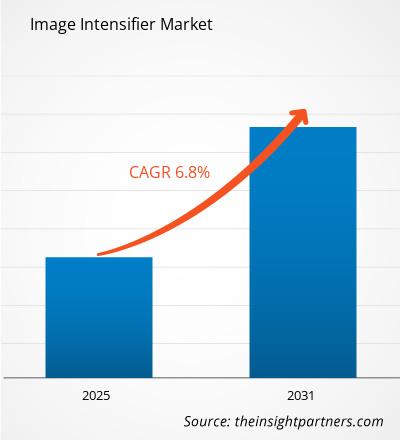
Image Intensifier Market is expected to benefit from continued demand for low-light imaging solutions. Surveillance, defense, aviation, and specialized imaging applications require equipment that can operate in limited illumination. Improvements in device design may broaden adoption. Manufacturers are focusing on performance and integration. These factors are expected to influence market development.
The global Image Intensifier Market was valued at US$ 1.69 billion in 2025 and is expected to reach US$ 2.29 billion by 2034. The market is estimated to record a CAGR of 3.43% during 2026–2034. Increasing demand for night vision equipment, surveillance technologies, and low-light imaging solutions is supporting market development. Image intensifiers improve visibility by amplifying available light, making them useful in environments where conventional imaging systems may provide limited visibility.
Image intensifier technology converts low levels of available light into a brighter visible image. These devices are used in night vision equipment and other specialized imaging systems. Their ability to enhance visibility in dark environments supports applications across defense, law enforcement, security, aviation, and scientific fields.
Demand for Night Vision and Surveillance Applications
Defense and security applications are important contributors to the image intensifier market. Military personnel use night vision equipment to improve visibility during nighttime operations and in environments with limited illumination. Image intensifier tubes are key components in many such systems, helping users observe their surroundings and improve situational awareness.
Get Access Report Sample: https://www.theinsightpartners.com/sample/TIPRE00003865
Law enforcement and public safety organizations also use low-light imaging equipment for surveillance, patrols, and search operations. Security requirements at borders and critical infrastructure sites are creating continued interest in reliable observation technologies. These applications require devices that deliver consistent image quality under challenging lighting conditions.
The growing need for effective monitoring solutions is encouraging manufacturers to improve image intensifier performance. Device sensitivity, image clarity, durability, and compatibility with existing equipment remain important considerations for buyers.
Technological Advancements in Image Intensifiers
Product innovation is shaping the development of the image intensifier market. Manufacturers are focusing on improving light sensitivity, image resolution, device size, and operational reliability. These improvements can help users obtain clearer images in low-light conditions while supporting the integration of imaging systems into different equipment platforms.
Advances in optical components and photonics are also influencing product development. Improvements in manufacturing processes and quality control can support more consistent device performance. Compact designs are particularly relevant for portable night vision equipment, where weight and ease of use can influence product selection.
Integration with other imaging technologies is another area of development. Equipment manufacturers are evaluating solutions that combine optical systems and electronic components to meet specific operational requirements. These developments are creating opportunities for companies that can provide reliable and application-focused products.
Applications Across Defense, Aviation, and Specialized Imaging
Defense remains a significant application area because night vision capabilities are important for operations conducted in darkness or poorly illuminated environments. Image intensifiers support observation systems used by military personnel and other defense users. Equipment modernization and the need for dependable imaging performance can influence procurement decisions.
Aviation and aerospace applications also require specialized imaging technologies. Low-light observation systems can support activities where visibility is limited. Devices used in these environments must meet demanding requirements for reliability and performance.
Beyond defense and security, image intensification can support scientific and specialized imaging applications. Certain medical, laboratory, and research environments require equipment capable of capturing low-light signals. These applications demonstrate the technology’s relevance beyond conventional night vision systems.
Market Challenges and Growth Opportunities
The image intensifier market faces challenges related to technological competition, equipment costs, and application-specific performance requirements. Buyers may compare image intensifiers with alternative low-light imaging technologies based on image quality, operating conditions, cost, and system compatibility. Manufacturers must demonstrate the suitability of their products for different use cases.
Maintaining consistent quality is another important consideration. Image intensifier devices rely on specialized components and precise manufacturing processes. Testing, quality assurance, and technical support are essential for meeting customer expectations, particularly in demanding defense and security environments.
At the same time, opportunities are emerging through equipment modernization, surveillance requirements, and demand for compact night vision devices. Suppliers that improve performance, durability, and integration capabilities can address the changing needs of customers across multiple industries.
Competitive Landscape and Key Players
Companies in the image intensifier market focus on product development, optical technology, manufacturing quality, and specialized imaging solutions. Performance, reliability, technical expertise, and customer support are important factors shaping competition.
Key players in the image intensifier market include:
- Argus Imaging
- Canon Medical Systems Corporation
- Teledyne FLIR LLC
- JSC Katod
- L3Harris Technologies, Inc.
- Photek Limited
- PHOTONIS
- Siemens Healthineers AG
- Thales S.A.
- Exosens
- Hamamatsu Photonics K.K.
These companies contribute to the market through imaging technologies, optical components, specialized equipment, and related solutions. Continued product development and improvements in low-light imaging capabilities are expected to influence competitive activity.
Get Full Copy of This Report- https://www.theinsightpartners.com/buy/TIPRE00003865
Future Outlook
The global image intensifier market is expected to grow steadily through 2034, supported by demand for night vision equipment and low-light imaging technologies. The market is projected to increase from US$ 1.69 billion in 2025 to US$ 2.29 billion by 2034, registering a CAGR of 3.43% during 2026–2034.
Ongoing developments in optical technology, photonics, and device design are expected to shape future market opportunities. Defense modernization, surveillance requirements, aviation applications, and specialized imaging needs will continue to influence demand. Manufacturers that focus on image quality, reliability, compact designs, and application-specific solutions are positioned to address evolving customer requirements.
About The Insight Partners
The Insight Partners is a leading market research and consulting firm delivering actionable insights through in-depth industry analysis and strategic intelligence. The firm supports clients across various industries in making informed business decisions by providing comprehensive market forecasts, competitive assessments, and growth opportunities.
Contact Us:
If you have any queries about this report or if you would like further information, please contact us:
Contact Person: Ankit Mathur
E-mail: sales@theinsightpartners.com
Phone: +1-646-491-9876
Also Available in :
