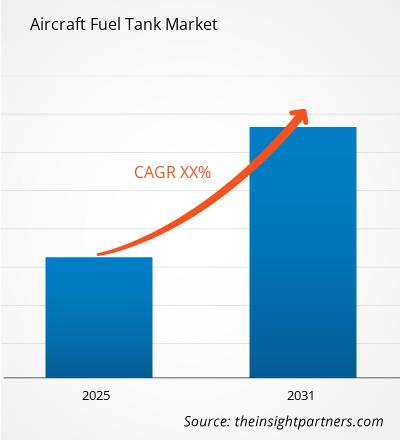
The global Aircraft Fuel Tank Market is poised for steady, long-term expansion over the next decade. Driven by rising commercial passenger traffic, global defense fleet modernization, and continuous innovation in lightweight storage architectures, the Aircraft Fuel Tank Market size is expected to reach US$ 1,168.14 Million by 2034, up from US$ 984.93 Million in 2025. According to strategic industry assessments, the sector is anticipated to register a Compound Annual Growth Rate (CAGR) of 1.91% during the forecast period spanning 2026–2034.
As commercial airlines accelerate retrofits to achieve lower fuel burn and defense organizations demand extended ferry ranges, the aircraft fuel tank industry is undergoing a structural transition toward modular, lightweight, and digitally integrated fuel containment solutions.
Key Drivers of Market Expansion
Fleet Renewal and Production Escalation- Major commercial aircraft original equipment manufacturers (OEMs) continue to scale up production rates for single-aisle and wide-body platforms. Demand for next-generation narrow-body aircraft engineered for longer non-stop routes is increasing the requirement for advanced auxiliary fuel tanks and optimized integral wing box structures.
Transition to Lightweight Composites and Bladders- Airlines and defense operators are progressively migrating from traditional metallic structures toward high-strength carbon-fiber composite shells and flexible polymer bladders. By reducing dry structural weight, composite fuel containment systems directly contribute to lowering greenhouse gas emissions and operational expenditure per seat-mile.
Military Modernization and Extended-Range Operations- Geopolitical posture and multi-role mission mandates are driving sustained procurement of external drop tanks, self-sealing tactical bladders, and aerial refueling receiver tanks. Armed forces across North America, Europe, and Asia-Pacific continue to retro-fit existing multi-mission fighter and transport platforms with crashworthy, self-sealing containment systems designed to withstand combat environments.
Integration of Digital Health and Inerting Sensors- Modern fuel tank architectures are increasingly incorporating smart digital probes, fiber-optic strain sensors, and automated nitrogen-generation inerting modules. Real-time fuel gauging and condition-based monitoring mitigate micro-crack propagation, prevent accidental ignition, and streamline maintenance intervals.
Get a PDF Sample- https://www.theinsightpartners.com/sample/TIPRE00006608
Industry Segmentation Highlights
By Type
- External
- Internal
By Material
- Carbon-based Composite
- Metallic Alloys
- Hybrid
By Aircraft Type
- Commercial Aircraft
- Business Aircraft
Key Industry Players
The competitive landscape of the Aircraft Fuel Tank Market features established aerospace tier-1 suppliers, material specialists, and defense engineering conglomerates focusing on proprietary designs, strategic acquisitions, and lightweight material innovations. Prominent companies operating within the global market include:
Aero Tec Laboratories Inc
Cobham Plc
Elbit Systems Ltd.
General Dynamics Corporation
GKN Aerospace
Marshall Aerospace and Defense Group
Meggitt Plc (a Parker Hannifin Corporation company)
Northstar
Robertson Fuel Systems LLC
Safran SA
Get Full Copy of This Report- https://www.theinsightpartners.com/buy/TIPRE00006608
Future Outlook (2026–2034 and Beyond)
The future of the Aircraft Fuel Tank market extends beyond conventional liquid hydrocarbon containment. As the global aerospace sector advances toward its 2050 net-zero targets, fuel tank engineering is positioned at the center of radical architectural evolution. Over the coming years, industry R&D investments will increasingly focus on hydrogen-compatible cryogenic fuel containment systems and Sustainable Aviation Fuel (SAF) high-blend compatibility.
Key elements shaping the market’s future outlook include:
Cryogenic and Hydrogen Storage Architectures: The emerging roadmap for zero-emission commercial flight will demand specialized Type IV and Type V linerless cryogenic hydrogen tanks. Suppliers participating in early prototype development for blended-wing and hydrogen-powered concepts stand to capture long-term technological leadership.
Additive Manufacturing and Automated Fiber Placement: OEMs and Tier-1 integrators are leveraging 3D-printed fluid components and automated fiber placement (AFP) to produce complex fuel tank geometry without joint seams, decreasing structural leak risk while slashing lead times.
Robust Aftermarket and Retrofit Demand: Aircraft operational longevity requires structural fuel bladder overhauls and mandatory inerting system upgrades. MRO providers and fuel tank component specialists are expected to capitalize on steady recurring aftermarket revenues through 2034.
With fleet expansions accelerating globally and structural efficiency becoming paramount, manufacturers that prioritize smart monitoring, composite weight reduction, and advanced safety standards are set to lead the next era of aviation fuel containment.
Related Reports-
Aircraft Fuel Tank Inerting System Market Trends, Share & Demand by 2034
Fuel Cell Uav Market Size, Share & Demand by 2034
About The Insight Partners
The Insight Partners is a leading market research and consulting firm delivering actionable insights through in-depth industry analysis and strategic intelligence. The firm supports clients across various industries in making informed decisions by providing comprehensive market forecasts, competitive assessments, and growth opportunities.
Contact Us:
If you have any queries about this report or if you would like further information, please contact us:
Contact Person: Ankit Mathur
E-mail: sales@theinsightpartners.com
Phone: +1-646-491-9876
Also Available in : Korean| German| Japanese| French| Chinese| Italian| Spanish
