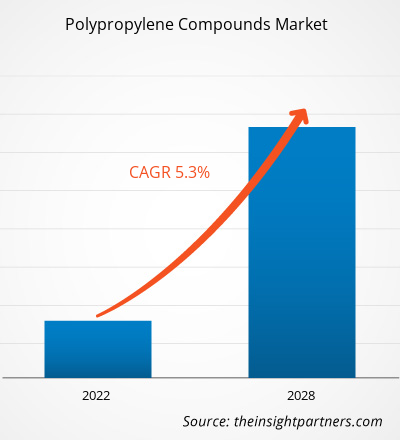
Look under the dashboard of a modern car, inside a washing machine or behind a food tray, and you will probably find a polypropylene compound at work. According to The Insight Partners, the Polypropylene Compounds Market was valued at US$ 22.44 Billion in 2025 and is projected to reach US$ 36.96 Billion by 2034, registering a 5.7% CAGR during the forecast period 2026 to 2034. Few engineering materials combine low cost, light weight and design freedom as effectively.
Why does this material keep winning new applications? Plain polypropylene is useful, but compounding turns it into something far more capable by blending it with fillers, fibres, elastomers and additives. The polypropylene compounds market therefore grows by solving specific problems, such as stiffness, impact strength, heat resistance or surface finish, for each customer.
What Are Polypropylene Compounds?
Polypropylene compounds are engineered materials made by combining polypropylene resin with minerals, glass fibre, rubber phases or additives to improve performance. The result is a plastic tailored for a given part, whether a bumper, an appliance housing or a building component. Compounders adjust the formula to balance strength, weight, processability and cost.
Request a Sample Copy of the Report: https://www.theinsightpartners.com/sample/TIPRE00016556
What Is Driving Demand for Polypropylene Compounds?
Automotive lightweighting is the biggest single force. Carmakers need to reduce vehicle weight to meet emissions rules and extend electric vehicle range, and polypropylene compounds replace heavier metal and engineering plastics in bumpers, door panels, dashboards and under-bonnet parts. A material that is cheaper than most alternatives and easy to recycle gives vehicle designers a strong reason to specify it.
Electronics and appliances add steady volume. Manufacturers of washing machines, refrigerators, power tools and consumer devices want durable, good-looking housings that can be moulded at speed, and filled or reinforced grades deliver that at low cost. Because these industries launch new models every year, the polypropylene compounds market benefits from constant redesign.
Packaging and construction broaden the base further. Food and household packaging needs clean, impact-resistant plastics, while pipes, fittings and building products call for materials that resist moisture and ageing. Compounds engineered for these uses let converters meet performance targets without moving to costlier resins.
Beyond that, sustainability is turning from a constraint into a selling point. Polypropylene is recyclable, and compounders are developing grades that include recycled content, bio-based fillers and lower-emission formulations. Brand owners under pressure to cut virgin plastic use increasingly choose such compounds, which keeps demand moving upward across the polypropylene compounds market.
Segmentation Overview
By Type:
Mineral filled PP compounds, usually containing talc or calcium carbonate, offer stiffness and dimensional stability at a competitive price.
Compounded TPO blends polypropylene with elastomers for excellent impact strength, which suits automotive exteriors and interiors.
Compounded TPV combines rubber-like flexibility with thermoplastic processing, serving seals and soft-touch parts.
Glass reinforced grades deliver high strength and heat resistance for structural components.
Others covers specialty compounds with flame retardants, colour masterbatches or conductive additives.
By End User:
Automotive is the largest consumer, drawing on compounds for interior trim, exterior parts and under-bonnet components.
Electricals and electronics rely on them for housings, connectors and appliance parts.
Packaging uses them for containers, closures and films that need clarity and toughness.
Building and construction applies them in pipes, panels and fittings.
Textiles uses polypropylene fibres and nonwovens in carpets, geotextiles and hygiene products.
Others includes furniture, toys and agricultural products.
Key Market Players
- LyondellBasell Industries Holdings B.V.
- Exxon Mobil Corporation
- Sumitomo Chemical Co., Ltd
- Borealis AG
- Rialti S.p.A.
- Trinseo
- SABIC
- Total
Integrated producers such as LyondellBasell Industries Holdings B.V., Exxon Mobil Corporation and SABIC combine resin production with global compounding networks. Borealis AG and Sumitomo Chemical Co., Ltd lean on application development and close relationships with automotive customers. Specialists including Rialti S.p.A., Trinseo and Total sharpen their positions through tailored grades and regional manufacturing strength.
Sustainability and Innovation Trends in Polypropylene Compounds
Recycled-content compounds are moving from pilot projects into regular supply, particularly for automotive and appliance parts. Compounders are also developing lighter foamed grades, low-odour materials for vehicle interiors and bio-based fillers that reduce carbon footprints. Better processing technology lets manufacturers use thinner walls and shorter cycle times, saving both material and energy.
Buy Premium Report: https://www.theinsightpartners.com/buy/TIPRE00016556
Regional Outlook
Asia Pacific leads consumption, backed by large automotive and electronics manufacturing in China, India, Japan and South Korea. North America draws on vehicle production, packaging and a strong replacement market for lightweight materials. Europe pairs advanced automotive engineering with strict recycling and emissions goals, encouraging high-performance and recycled compounds. South and Central America shows steady growth tied to automotive assembly and expanding consumer goods demand.
Related Reports:
Thermoplastic Vulcanizate (TPV) Market Key Players and Forecast by 2027
Industrial Rubber Market Trends, Size & Forecast by 2034
CFRTP Market Growth, Trends & Forecast by 2034
About The Insight Partners
The Insight Partners is among the leading market research and consulting firms in the world. We take pride in delivering exclusive reports along with sophisticated strategic and tactical insights into the industry. Reports are generated through a combination of primary and secondary research, solely aimed at giving our clientele a knowledge-based insight into the market and domain. This is done to assist clients in making wiser business decisions. A holistic perspective in every study undertaken forms an integral part of our research methodology and makes the report unique and reliable.
Contact Us:
If you have any queries about this report or if you would like further information, please contact us:
Phone: +1-646-491-9876
Also Available in: Korean | German | Japanese | French | Chinese | Italian | Spanish
